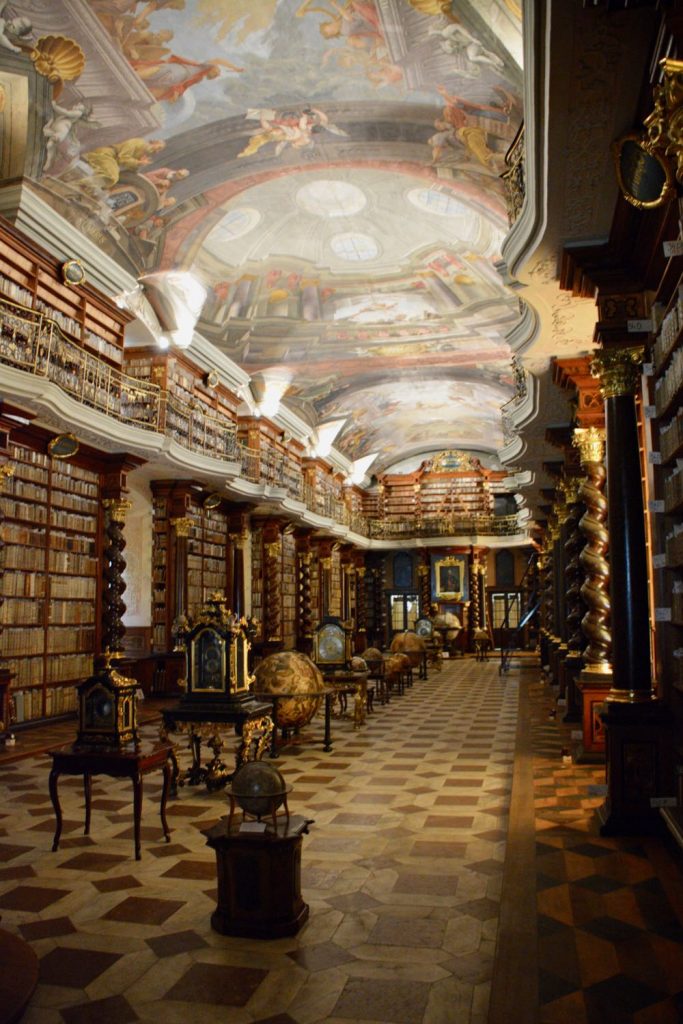
Please note, dear reader: this page can be a wonderful addition to the book, showing the real images behind the story. But you may prefer to experience the story for yourself first as you read. In that case, this is the moment to stop scrolling and return only after you have finished the book. Then you can see how closely your own imagination matches the reality. Below, for example, is the library of the Clementinum from Chapter III, but do you really want to see that already?
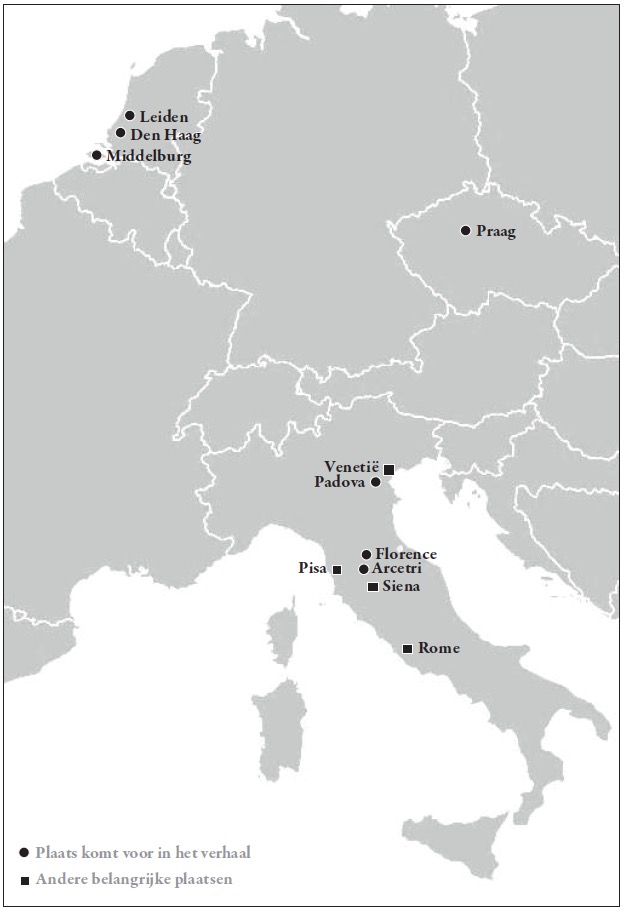
Galileo’s Map
Not every city that played an important role in Galileo’s life appears in the novel. Even so, I want to give an impression of both, so that you can decide for yourself.
As for the other cities: he was born in Pisa, demonstrated his telescope from the Campanile in Venice, stood trial before the Inquisition in Rome, and was required to stay with a friend in Siena before spending the rest of his life under house arrest in Arcetri, where he died in 1642.
Galileo himself was never in Middelburg, Leiden or The Hague, yet they proved to be important places in his life and are therefore part of this book.
A story across three countries
The story takes place mainly in Italy, but it begins and ends in the Netherlands, or Holland as it was known at the time. Prague also plays an important role. This is a long page featuring photographs of the locations that appear in the book, in the following order:
Italy: Padua, Florence, Arcetri, Venice, Pisa, Siena
Czech Republic: Prague
The Netherlands: The Hague, Leiden, Middelburg
Pisa – Italy
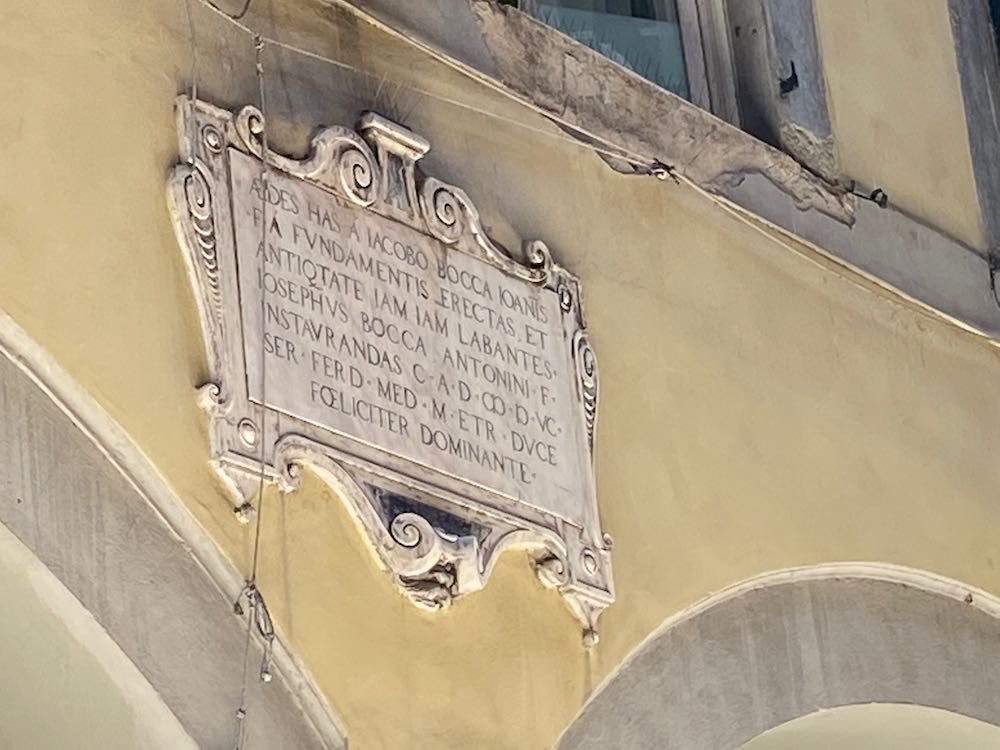
His father’s house, Pisa
Even before Galileo was born, his father Vincenzo lived here, in the historic centre of Pisa.
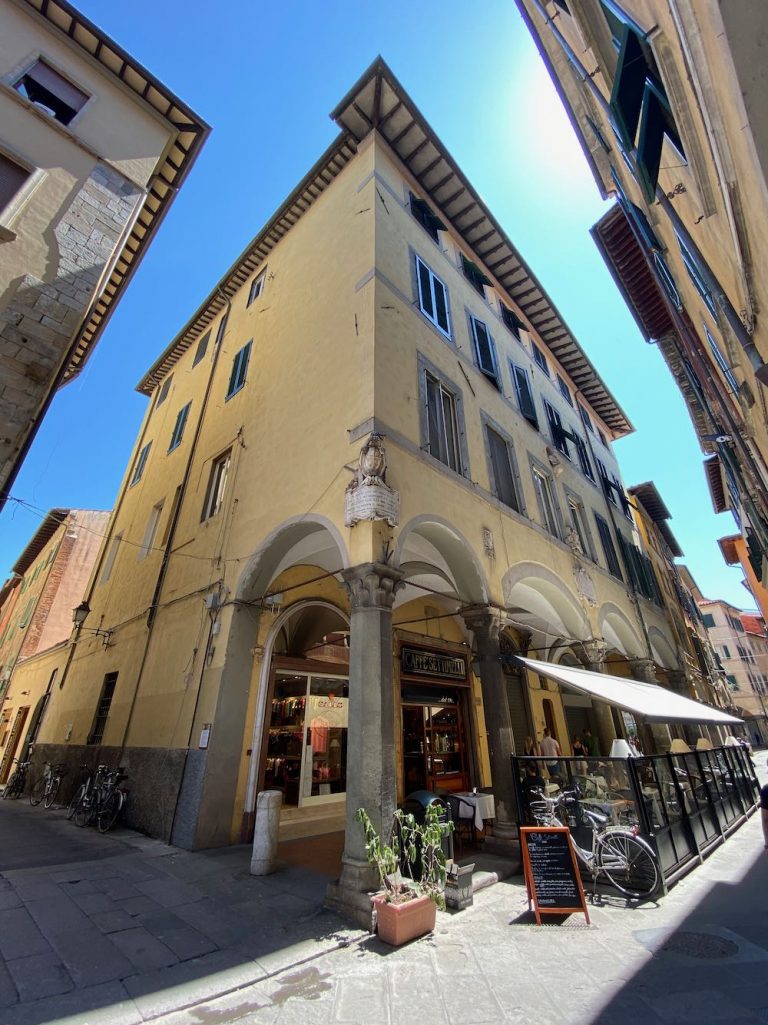
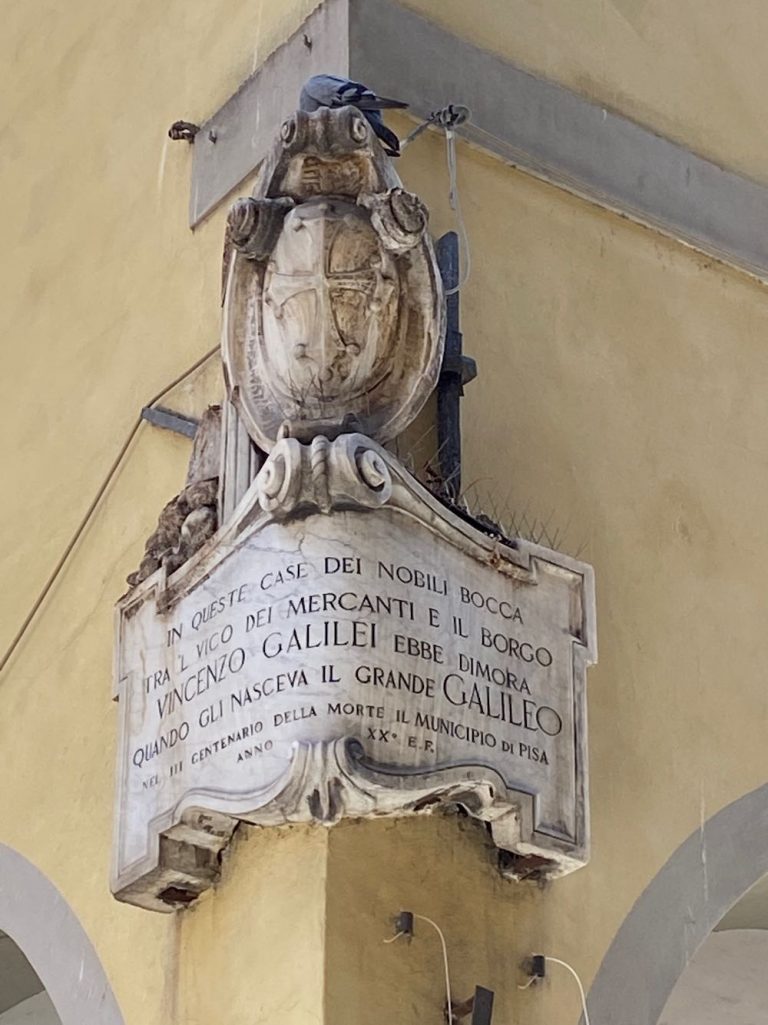
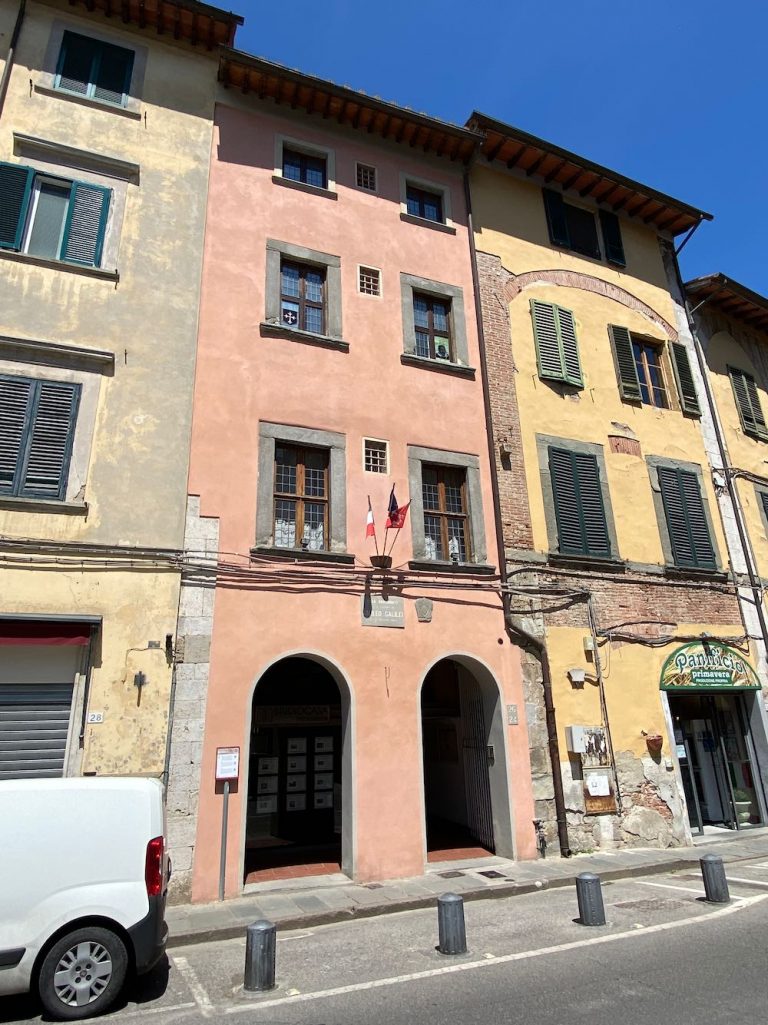
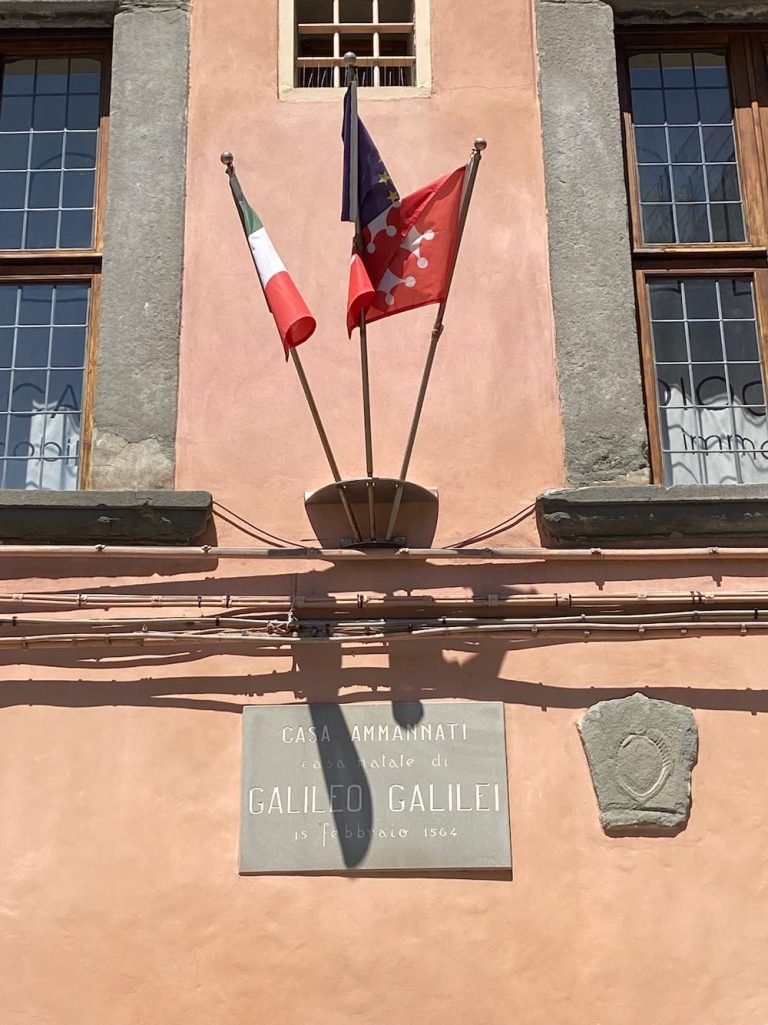
Birth house, Pisa
Galileo was born in this house, which belonged to his mother’s family, on 15 February 1564.
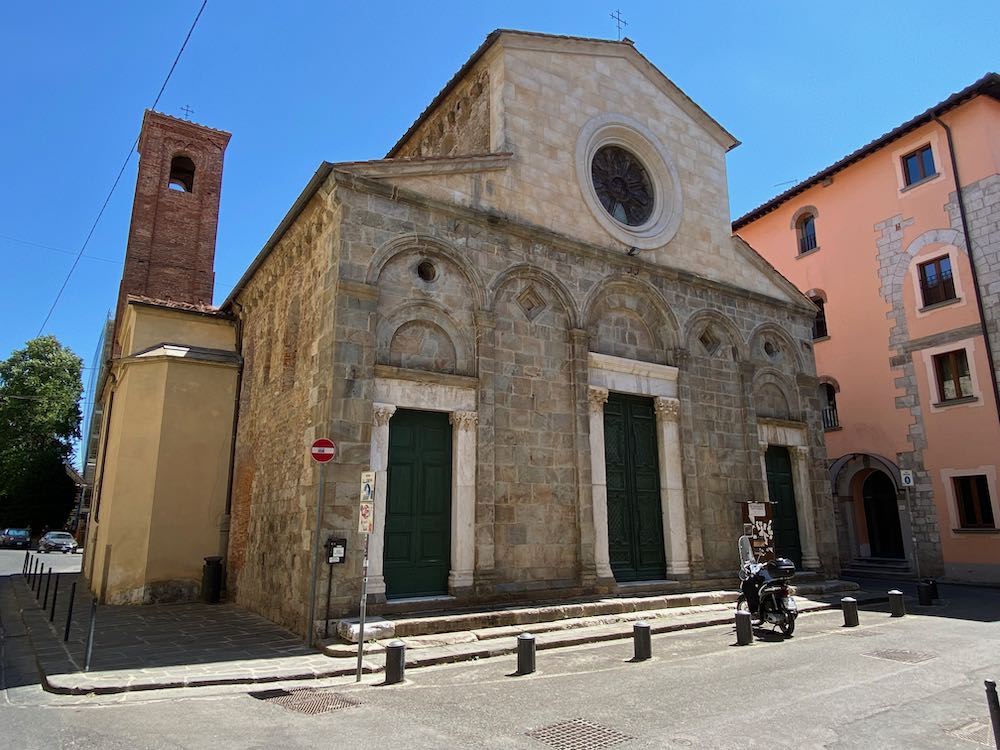
Baptism church, Pisa
Galileo was baptised not in Pisa Cathedral, but in this small church. It stands very close to his birthplace.
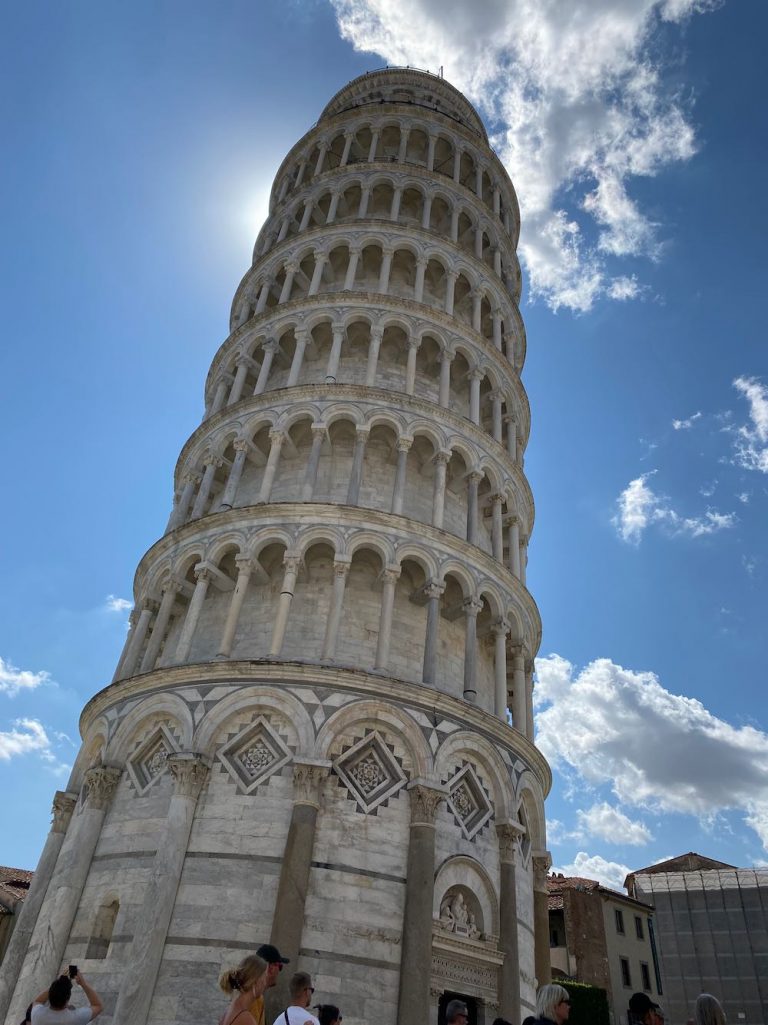
Pisa Cathedral, Pisa
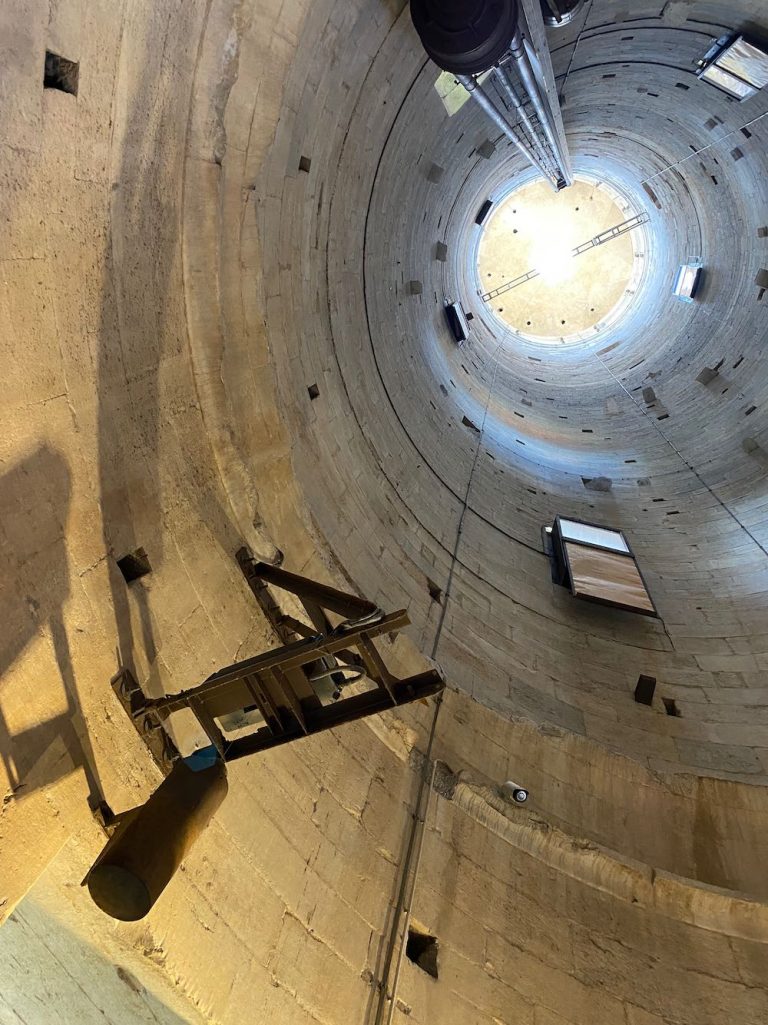
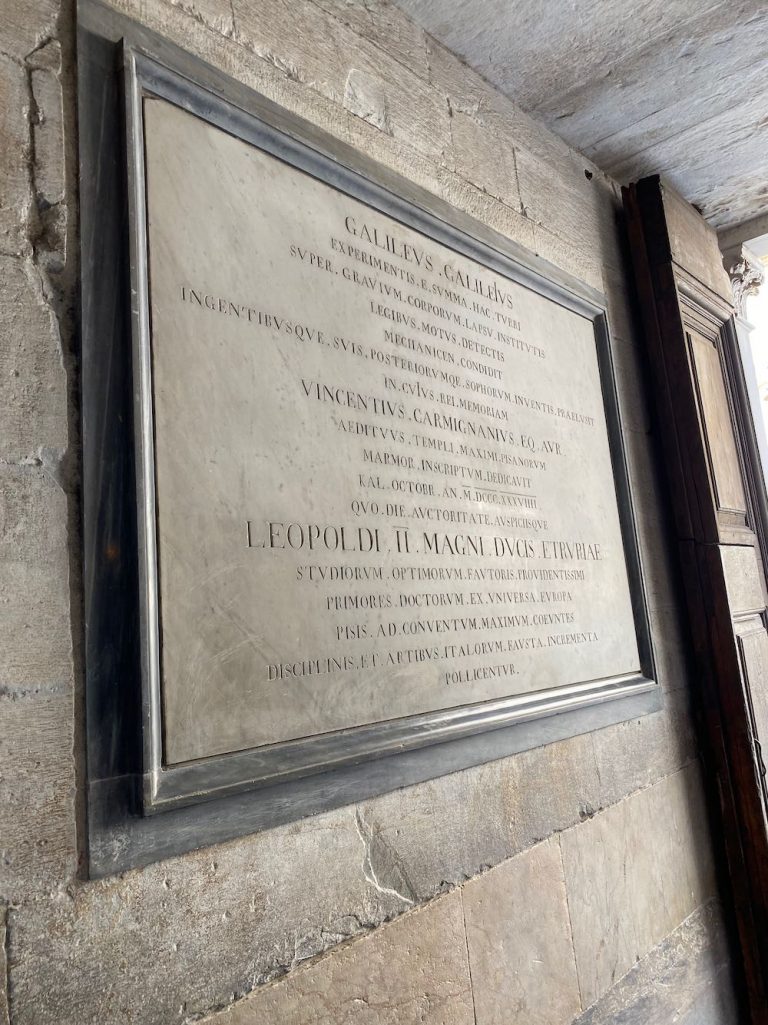
There is no longer any concrete evidence for it, but the plaque does state that Galileo carried out experiments from the Tower of Pisa: dropping a cannonball and a musket ball, made of the same material and in the same shape but of different weight, from the top to show that they would reach the ground at the same time. It was meant to demonstrate that weight has no effect on the speed of falling, at least in a vacuum.
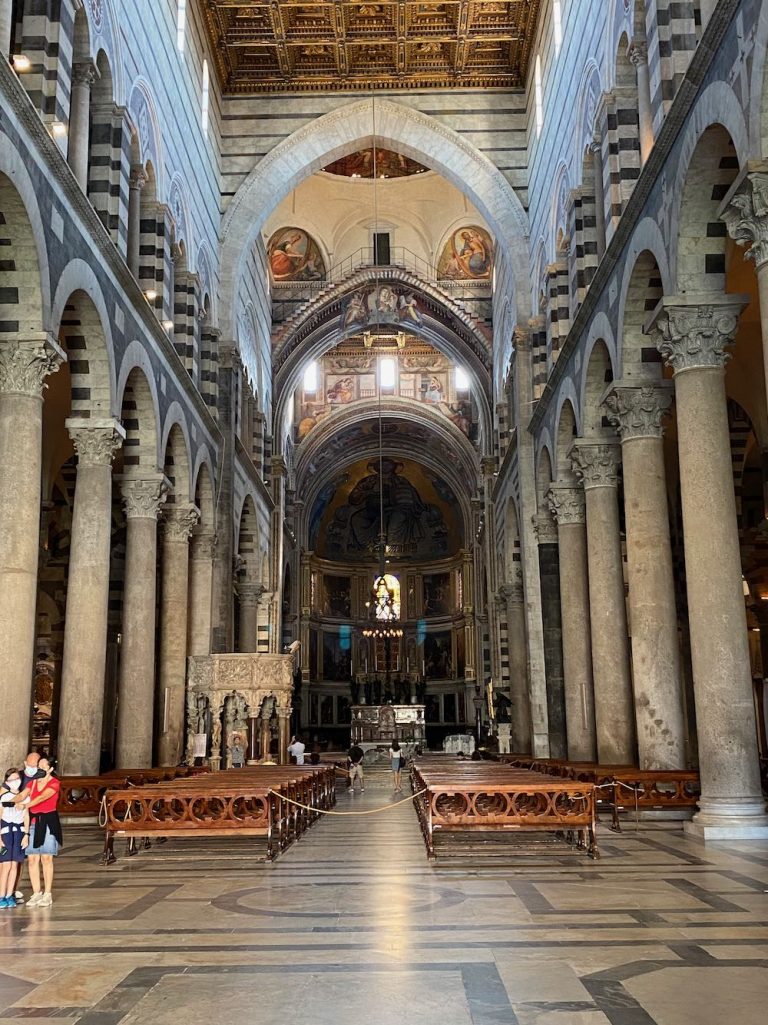
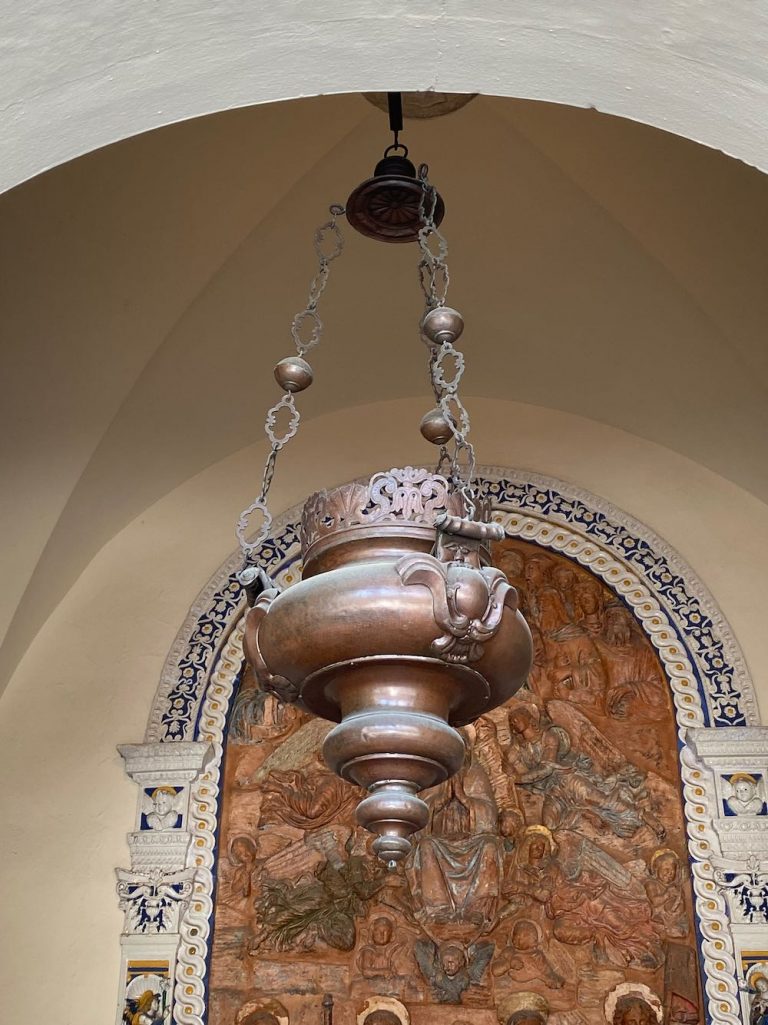
The bottom two photographs show the cathedral itself and the original lamp that is said to have once hung there. When Galileo saw the lamp swinging in the wind, he began to think about the pendulum and discovered that a pendulum takes the same amount of time for both a short swing and a wide one. That lamp now hangs in the Campo Santo Monumentale, the covered cemetery beside the cathedral. This is described on the’About Galileo’ page.
“During a Mass in Pisa Cathedral, something happened that would leave a lasting mark on him. As the incense curled upward and the singing rose through the vast space, he saw a heavy bronze lamp gently swaying on a long chain. Most of the worshippers looked up in devotion. Galileo looked up as an observer. He began to count, first with his breathing, then with the pulse in his neck. To his astonishment, each swing took the same amount of time, whether the arc was wide or small. The lamp became a clock. His heartbeat became an instrument.” (Context on Galileo as a person, at the back of the book and on this website)
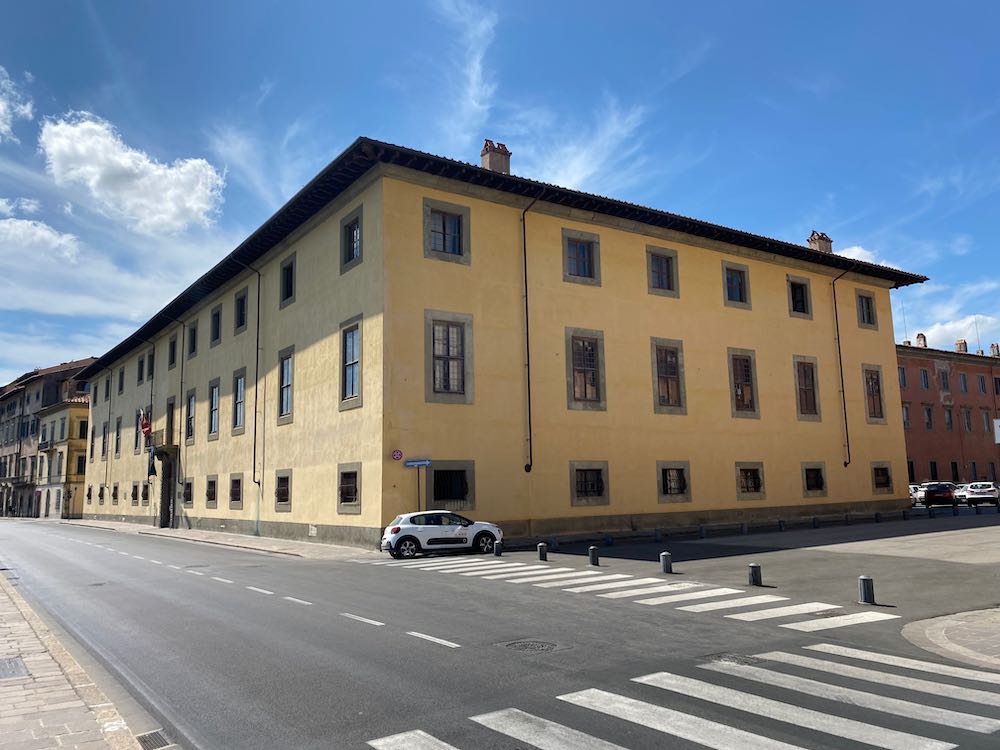
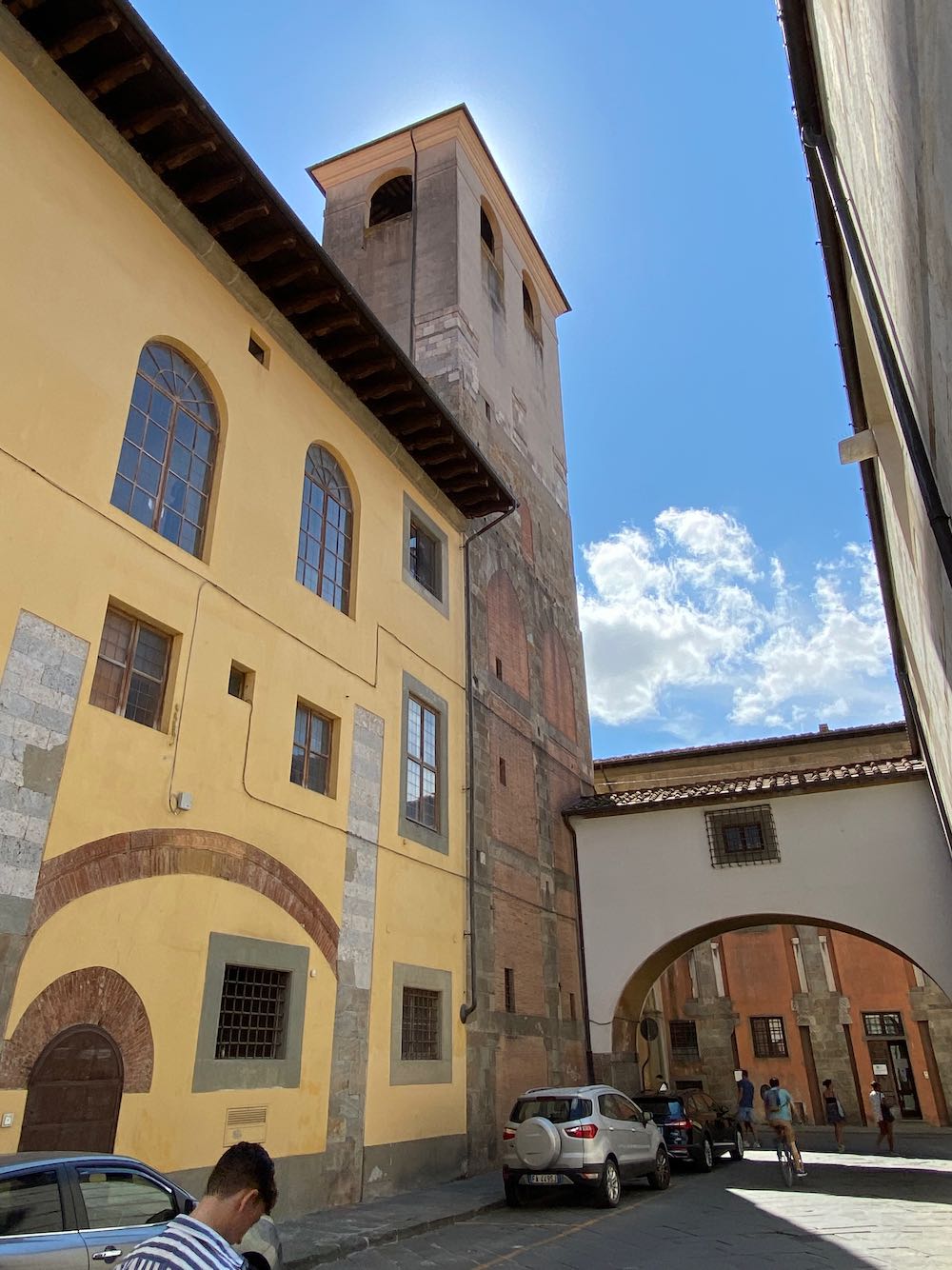
Palazzo dei Medici, Pisa
Galileo was born in Pisa and studied at the university there. After four years, however, he left without completing his studies, only to return later as Professor of Mathematics. After that, he went on to work in Padua. When he entered the service of the rulers of Tuscany, the Medici family, he also worked in their palace in Pisa.
Padua – Italy
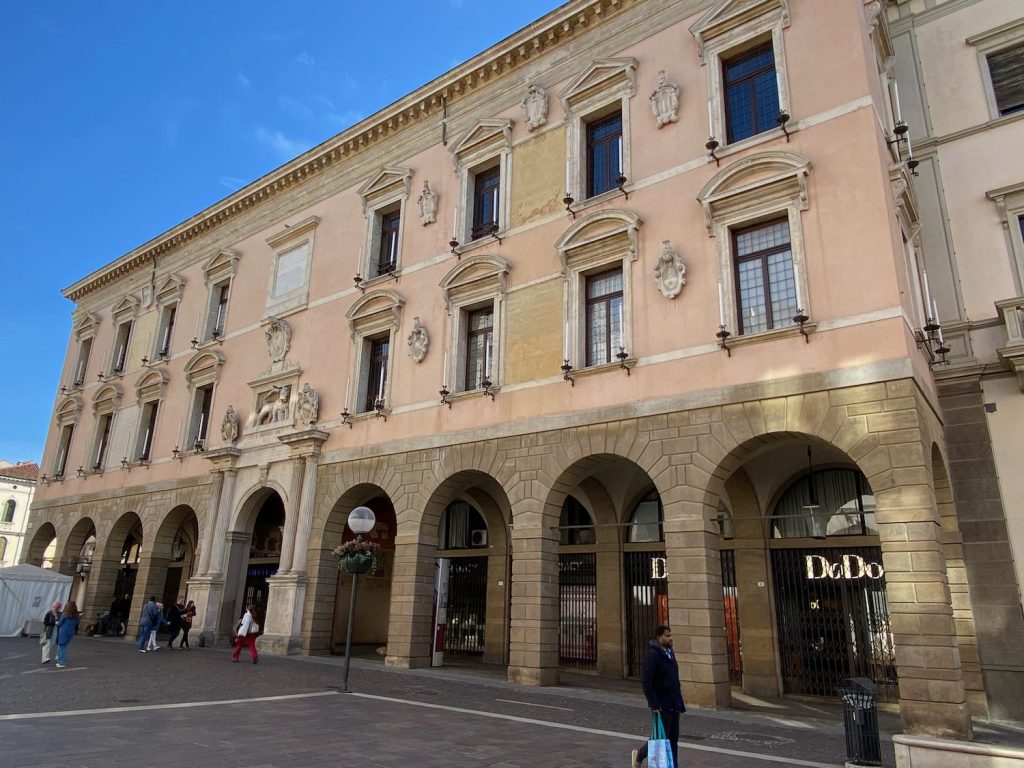
Padua, Palazzo Bo with the Aula Magna and the Anatomical Theatre
Palazzo Bo in Padua, Italy: the 800-year-old university where Galileo taught mathematics for ten years. The University of Padua was founded not by a king or a bishop, but by its own professors and students. What follows is an extensive set of photographs. Since Galileo later said that his years in Padua were the happiest of his life, this place is given the attention it deserves.
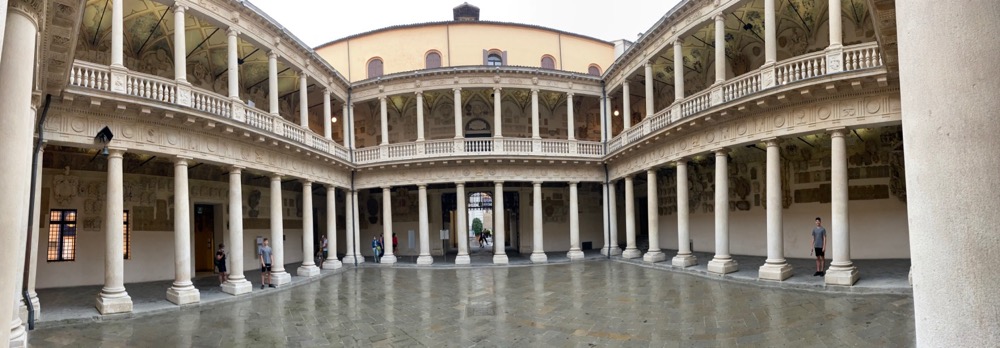
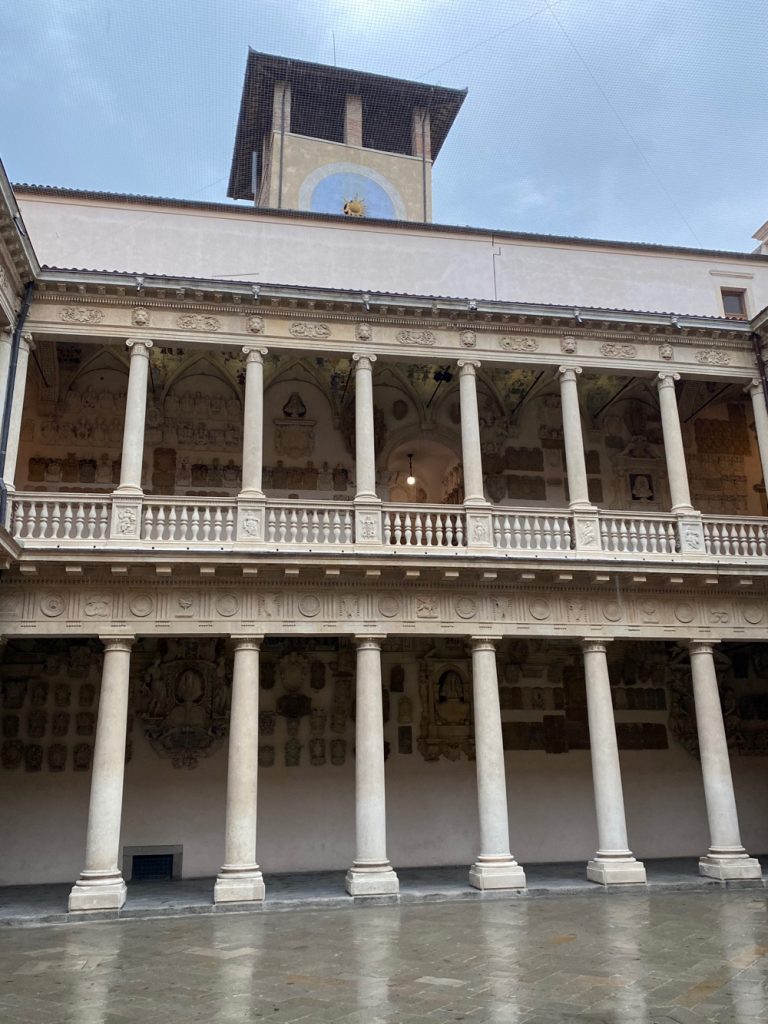
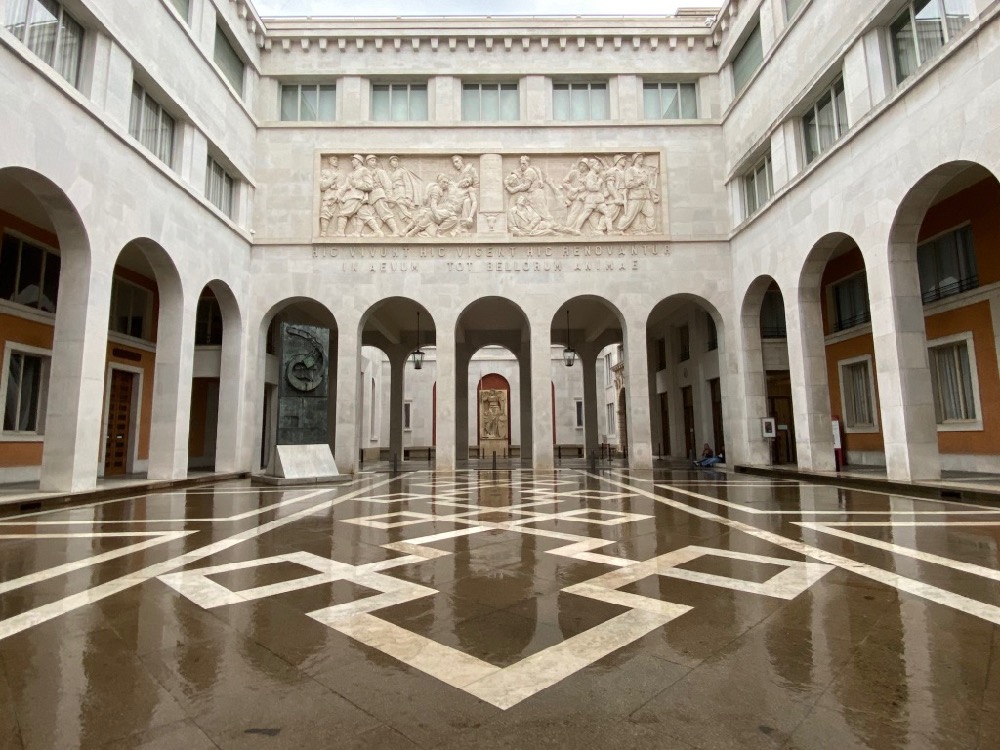
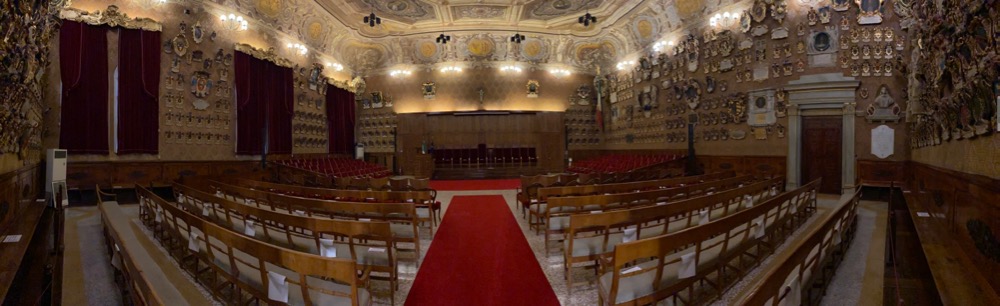
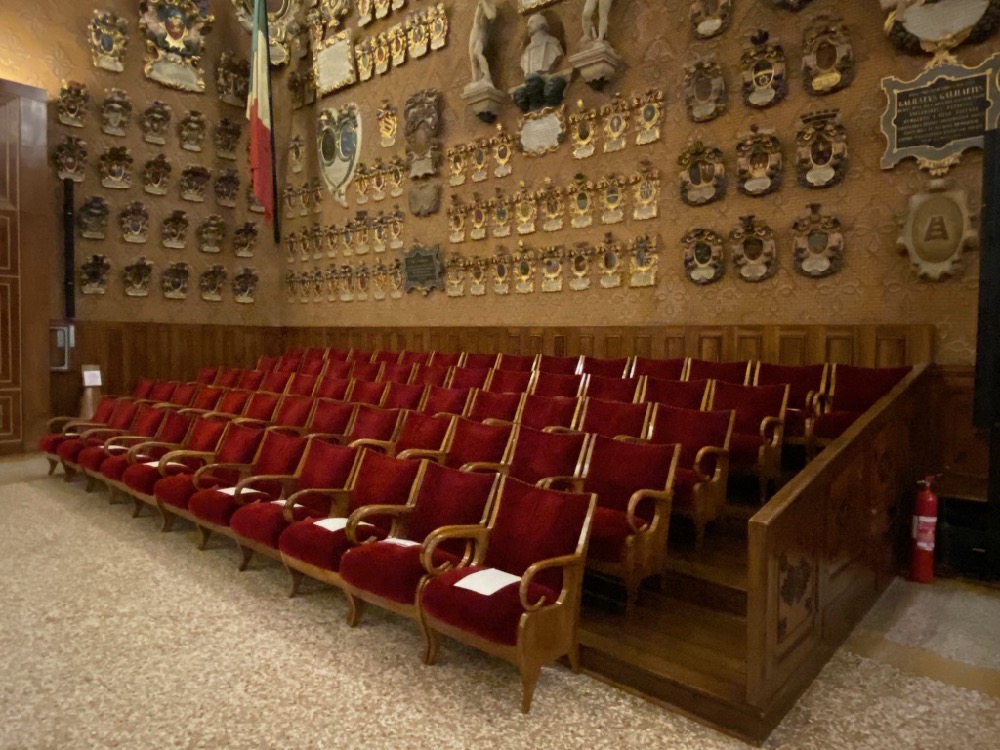
The Aula Magna
The great hall, the Aula Magna: truly impressive. Six hundred students could fit in here when Galileo was lecturing. It is a magnificent, spacious hall where you can easily imagine yourself transported four hundred years back in time.
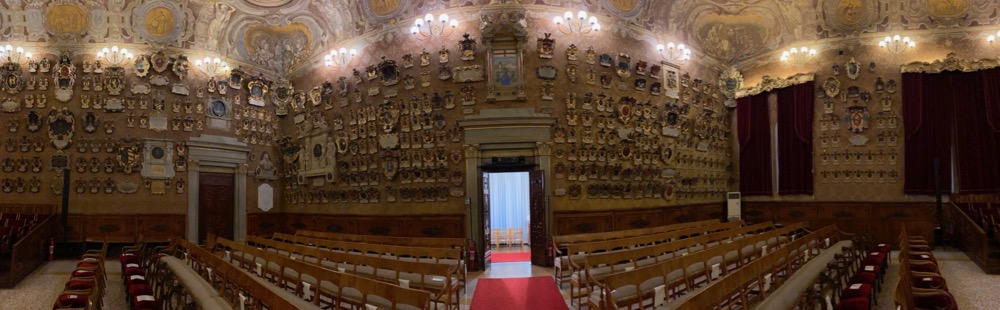
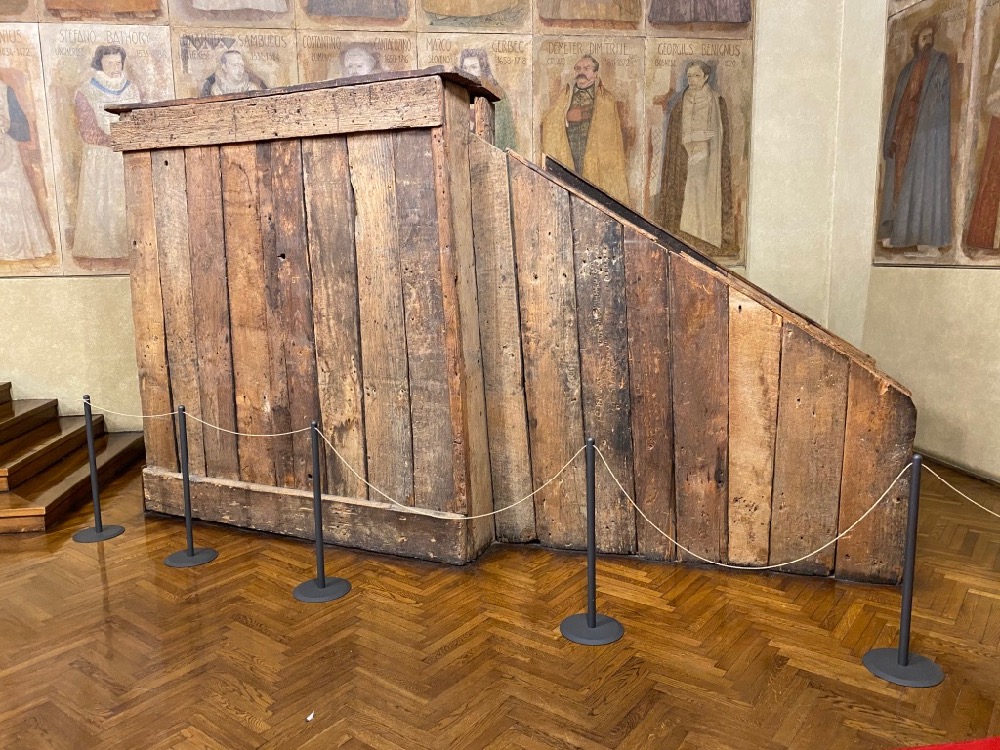
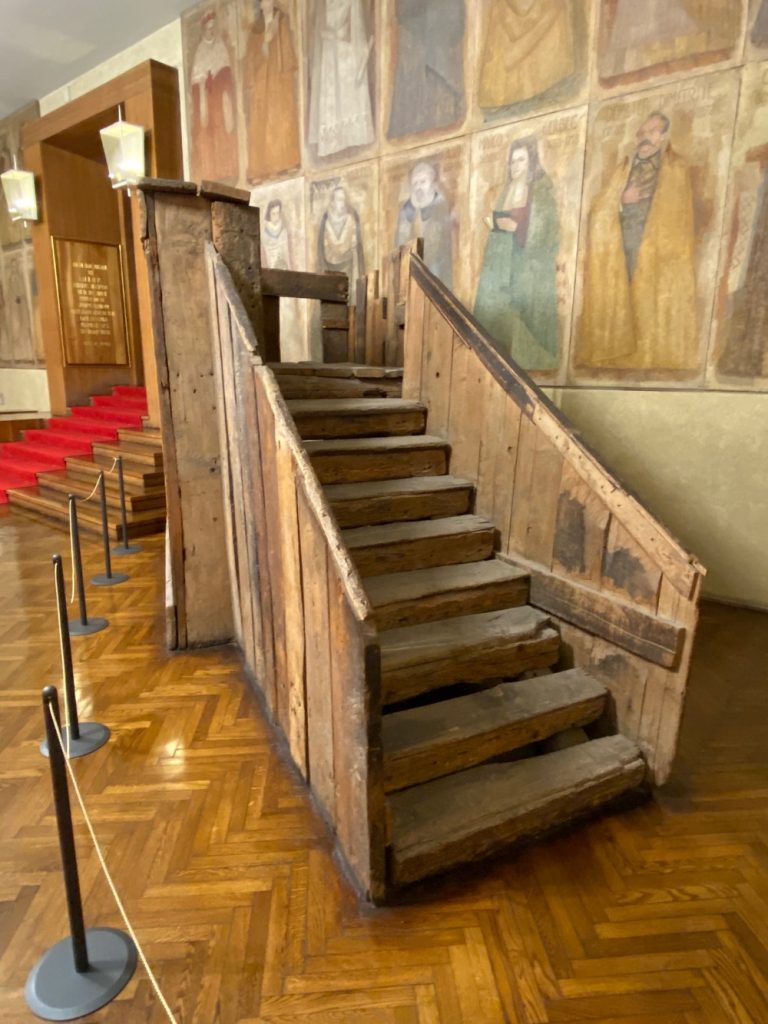
Galileo’s lectern
The students wanted to be able to hear and see Galileo clearly, so they gave him this platform from which to teach in the great hall. The spirit of freedom on which the university was founded endured there for a long time.
“He moved towards the lectern. The steps were low and broad, their edges worn smooth by generations of people wanting to stand a little higher in order to be seen more clearly, or to see more clearly themselves. Vincent placed his hand on the lectern. Not flat, not possessively, but as if asking a question. The coolness of the wood travelled from his fingertips into his skin, as though he were lifting its shadow. “Please do not touch,” someone below said softly through a cough, presumably the attendant.” (Chapter I)
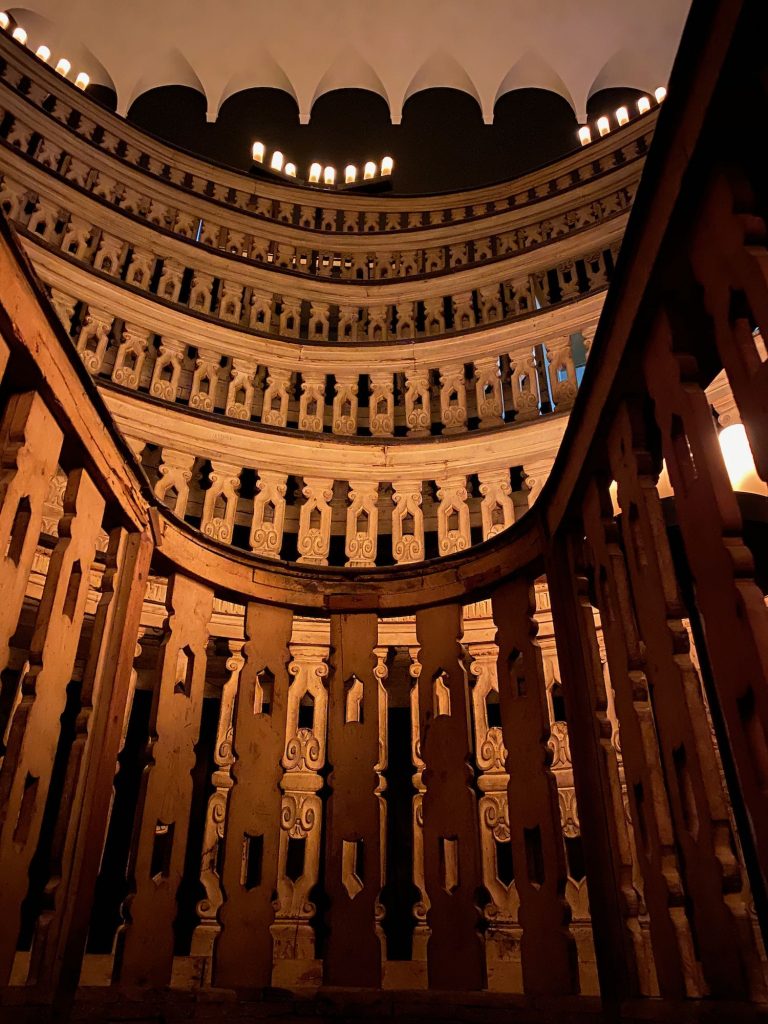
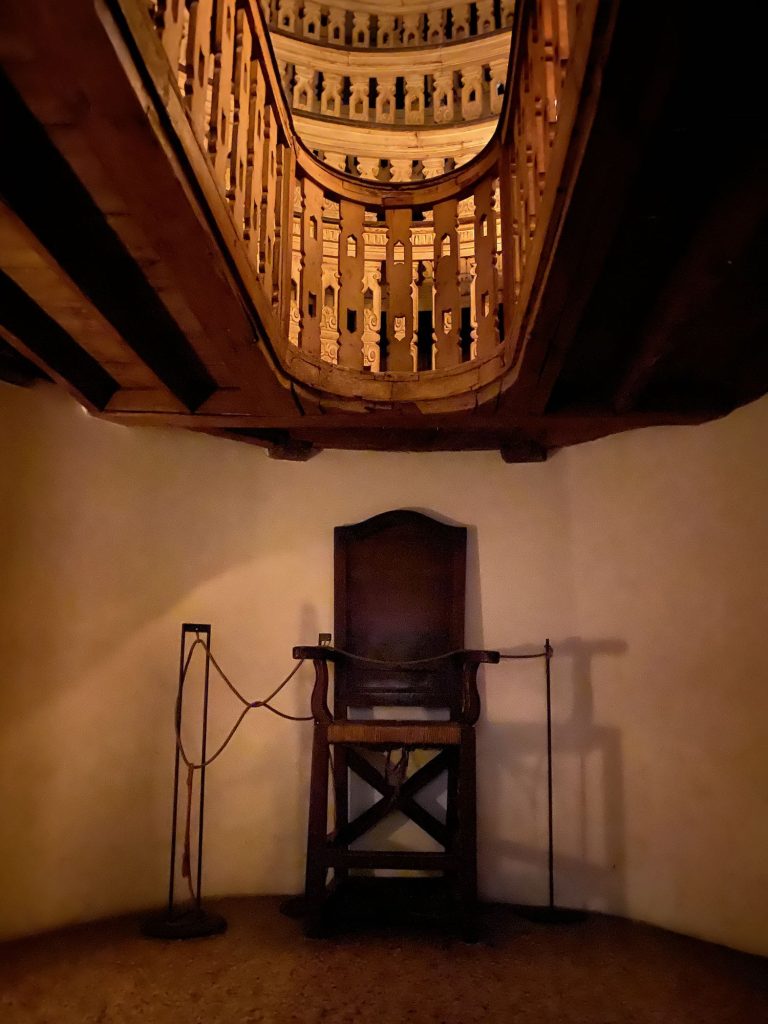
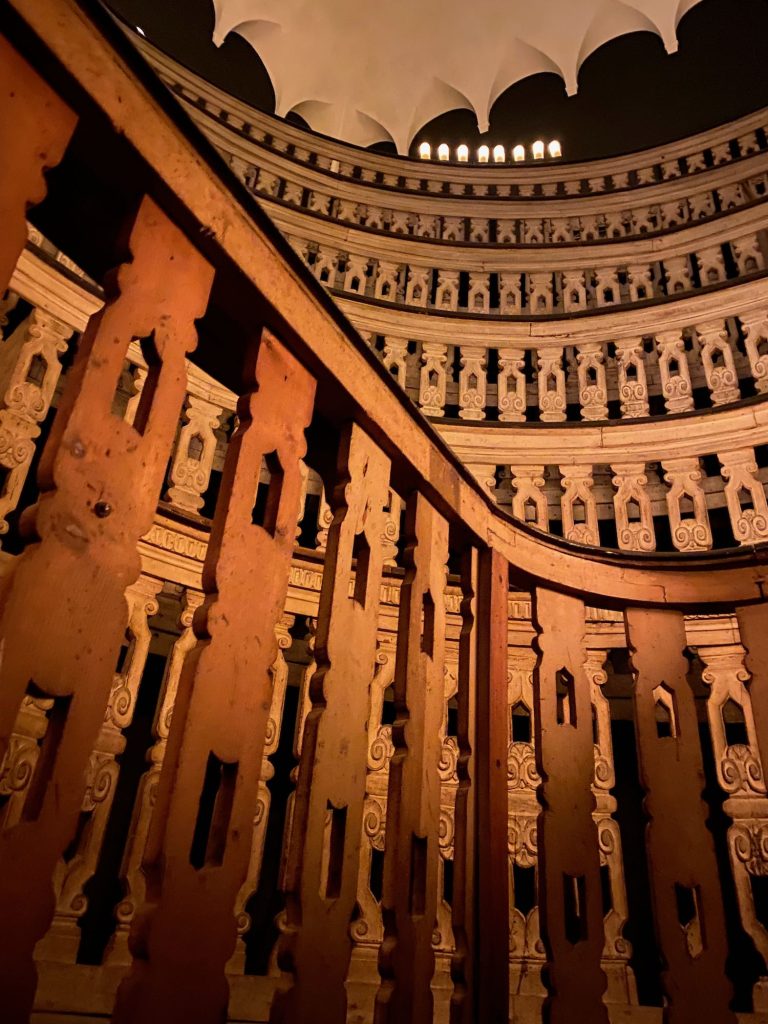
The Anatomical Theatre
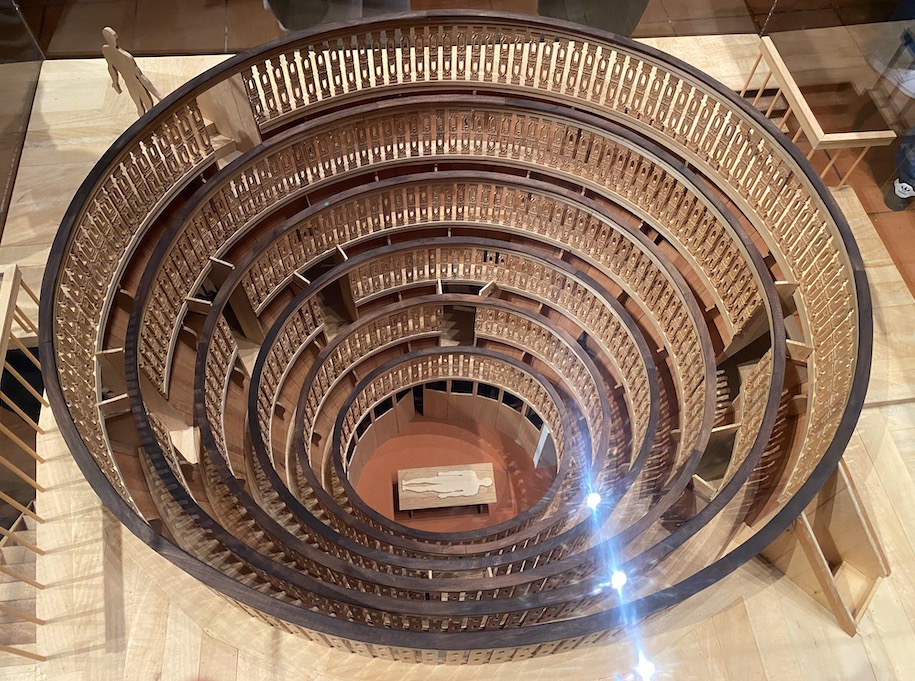
The University of Padua is also known for the anatomical theatre that can still be seen inside Palazzo Bo. Here, hundreds of medical students stood looking down from above as their professors dissected a body by candlelight.
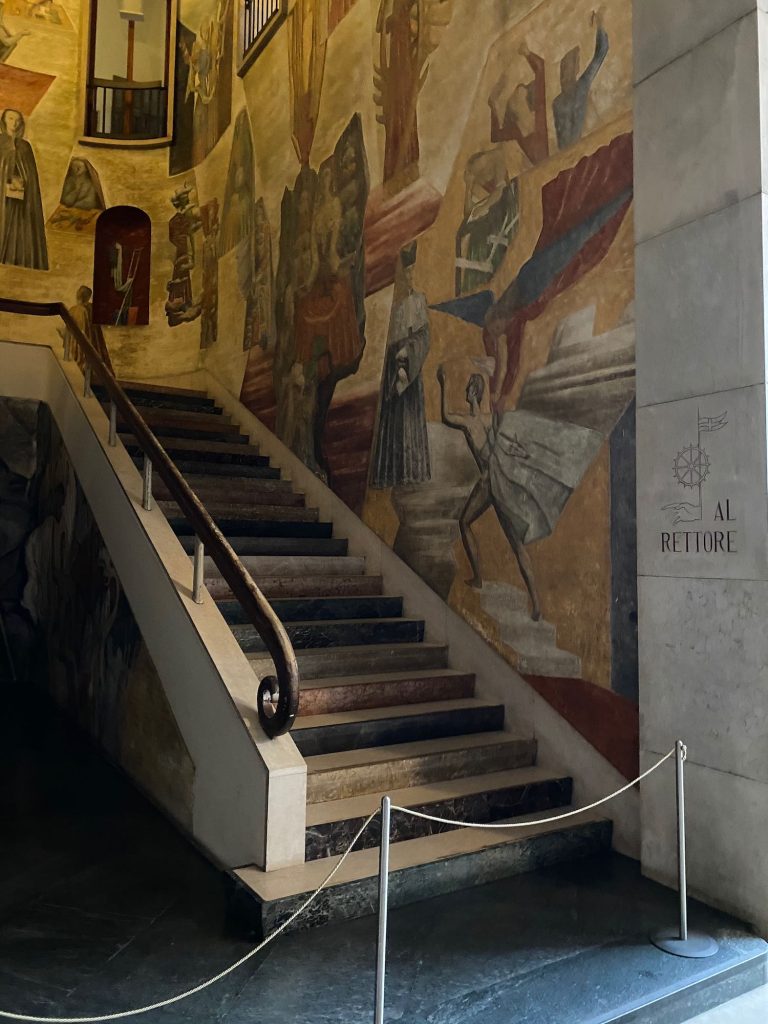
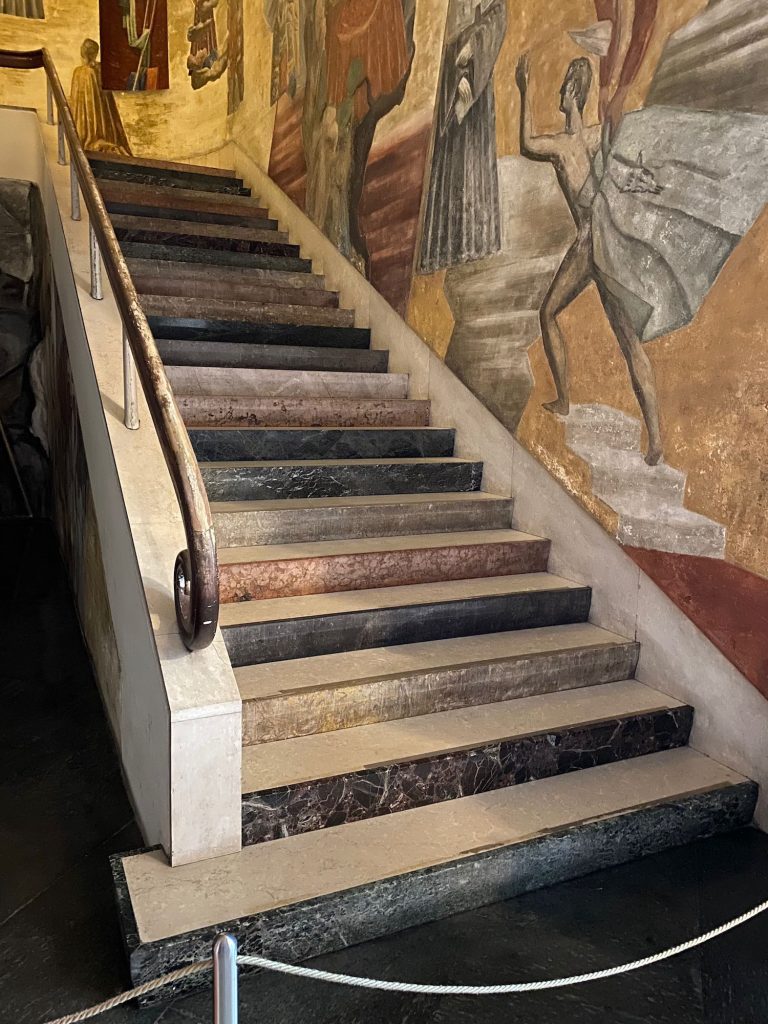
The staircase and the note
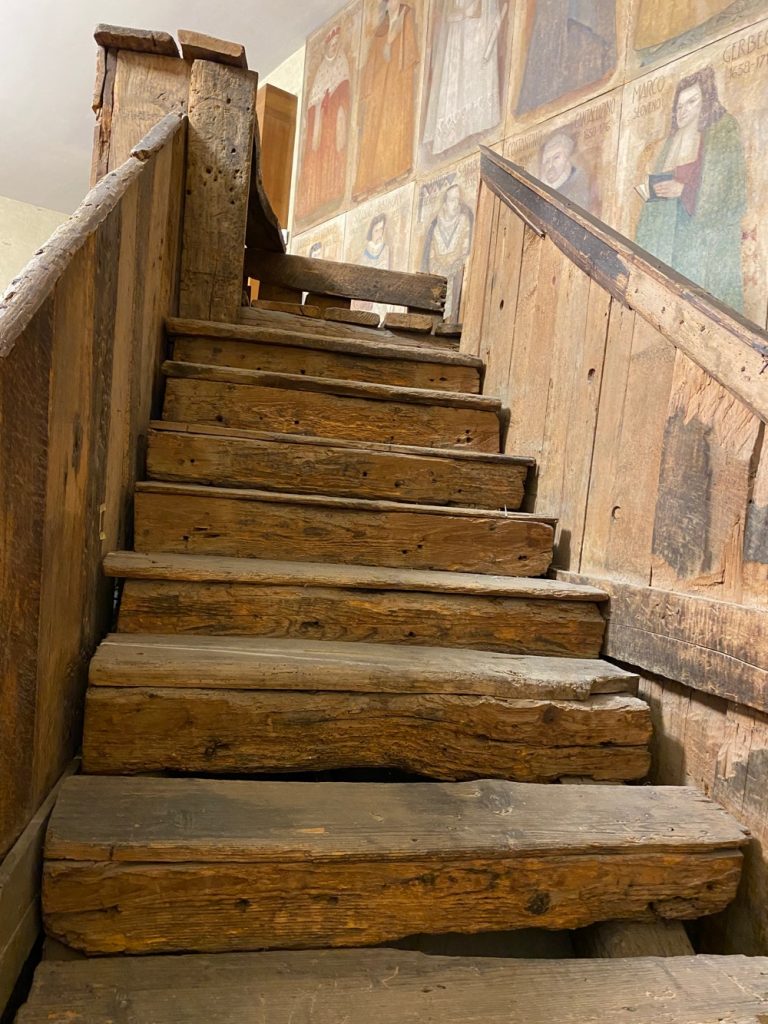
Bas tends to think more in images than in words. This is the staircase in Palazzo Bo where, in the story, Vincent shows the note he has found to Sienna.
“Do you have the note with you?” Sienna asked. She had wanted to save the question for later, but it felt wrong to leave it unspoken. Vincent nodded and pulled his backpack around to the front. “Not here,” Sienna said. She helped him with his bag and led him to the still-empty courtyard of Palazzo Bo. The Aula Magna was not yet open to visitors. Sitting on the beautiful staircase, Vincent took control of his backpack again. (Chapter III)
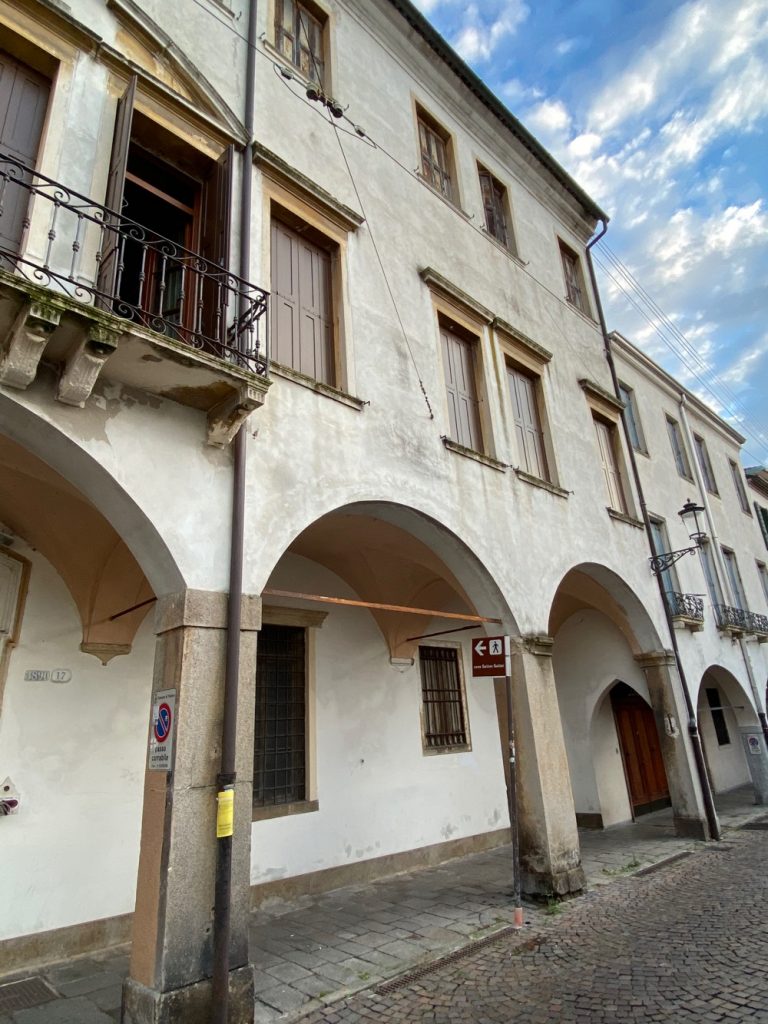
Padua, Galileo’s house
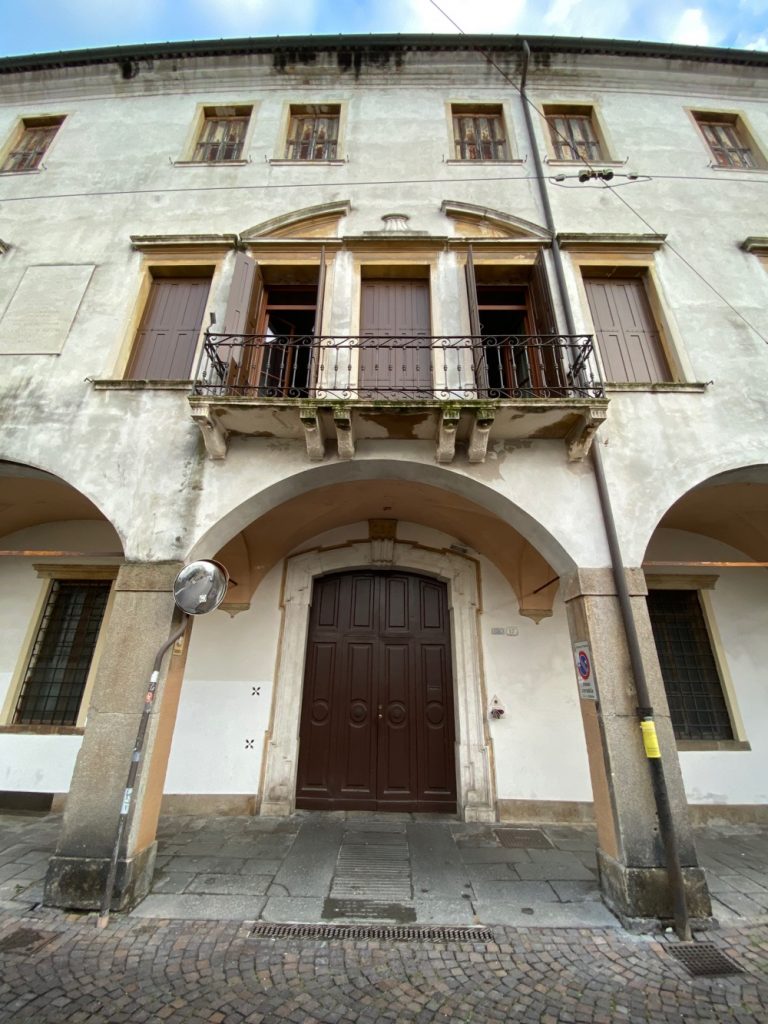
The house where Galileo lived with his partner, his children born outside marriage, and student lodgers whose rent helped cover the household expenses.
Venice – Italy
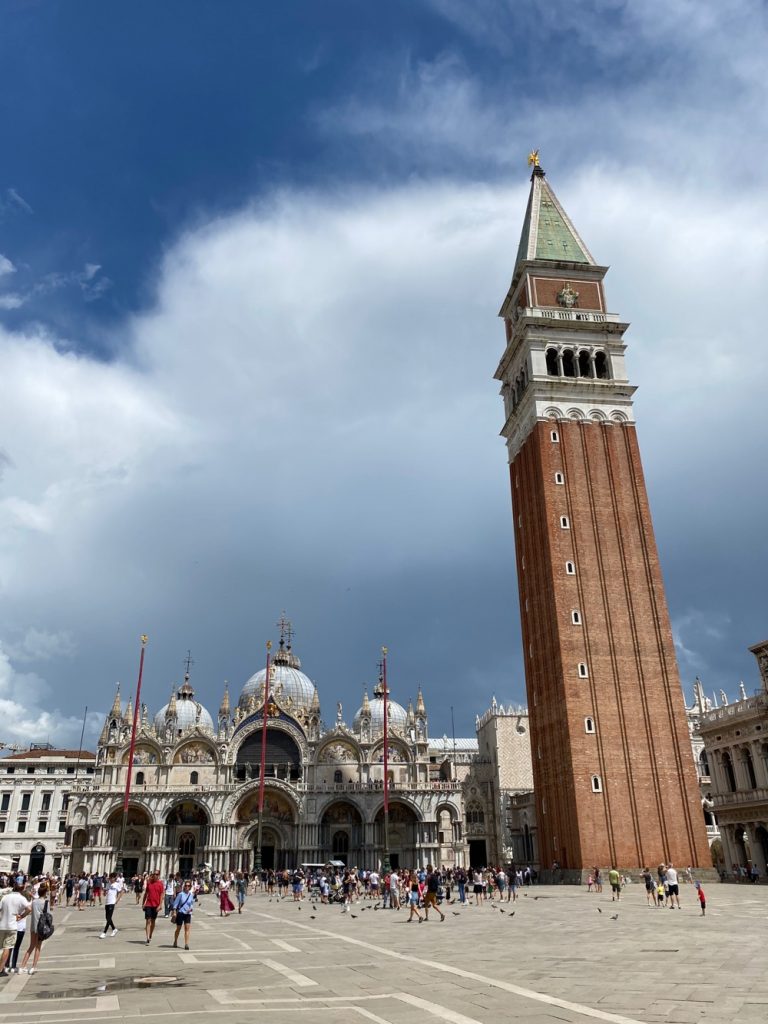
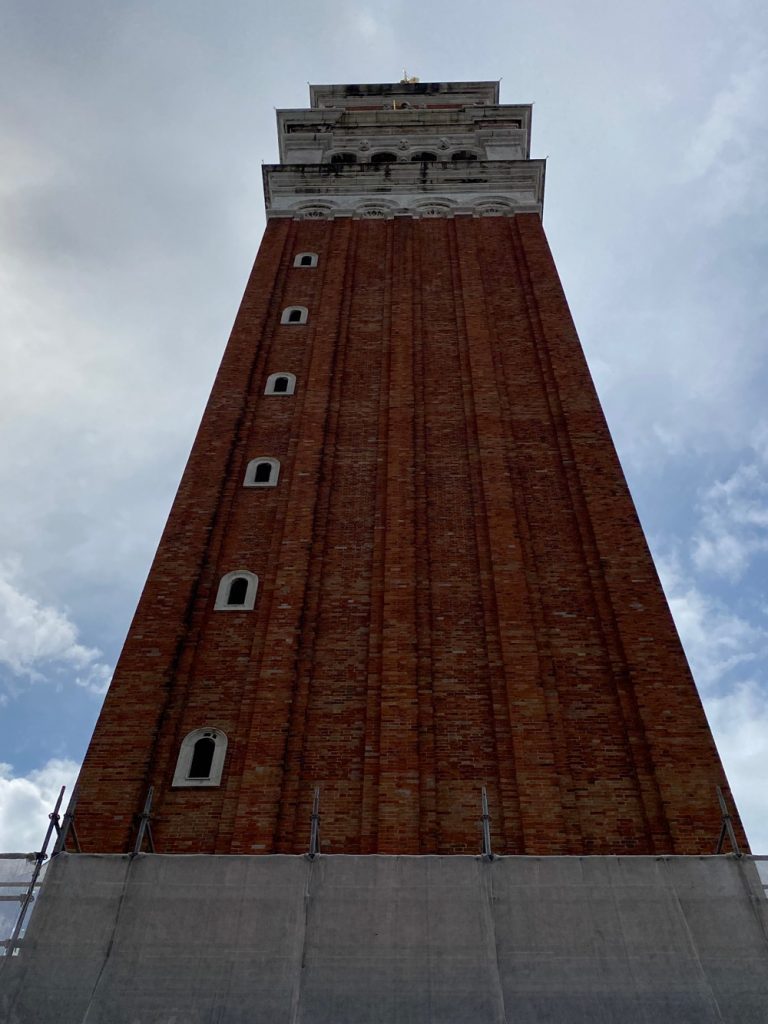
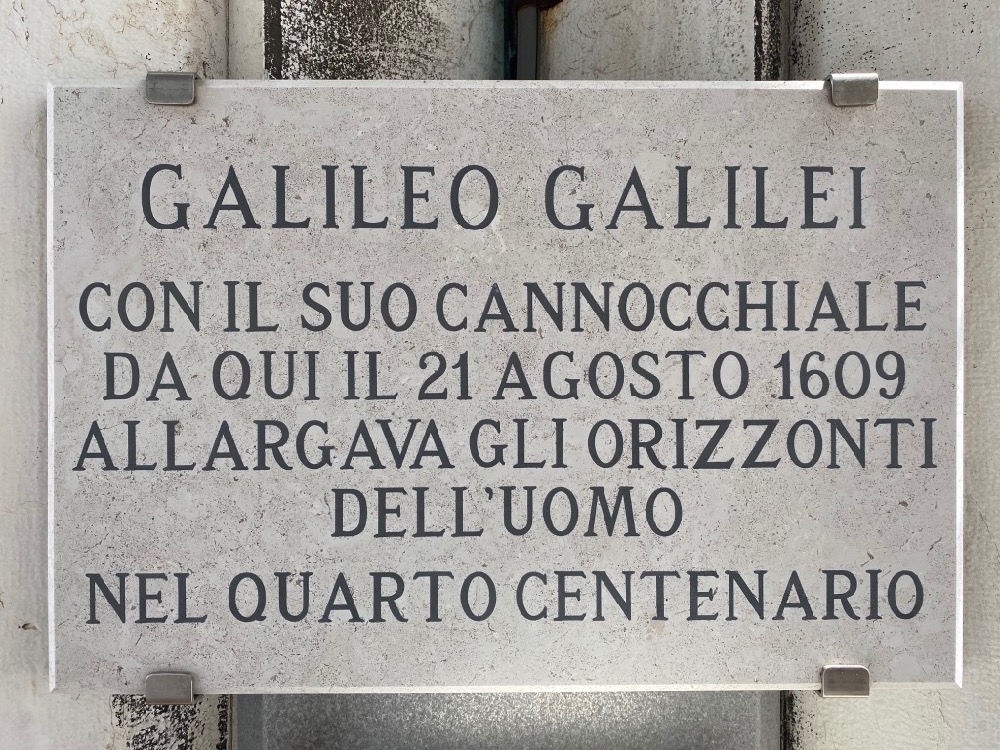
Venice, the Campanile
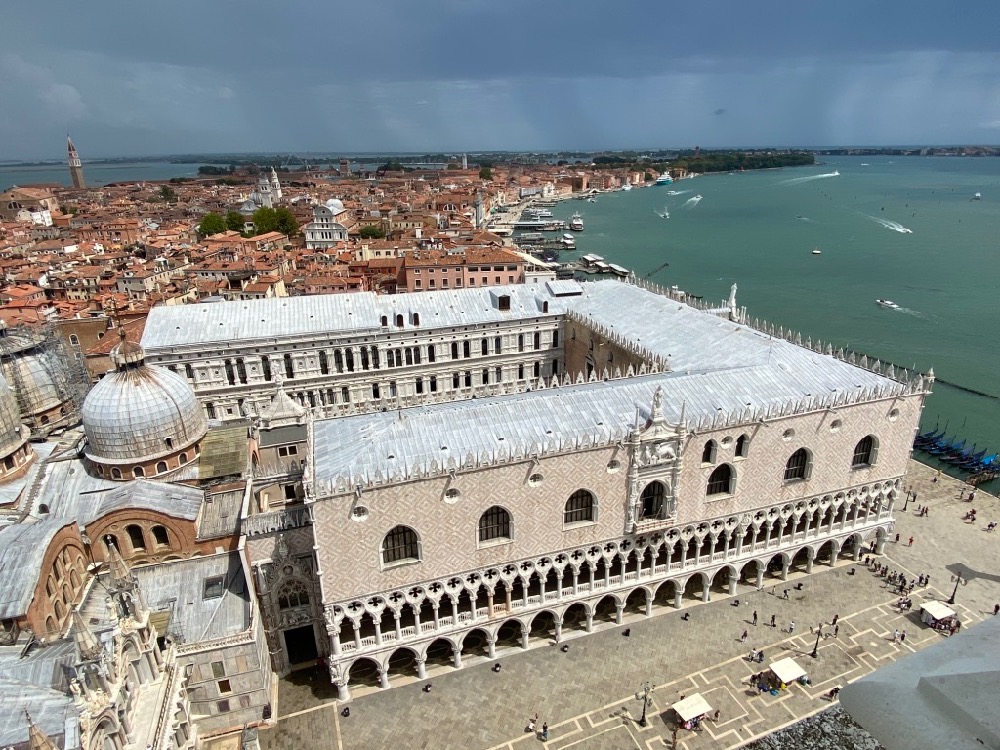
It was from the Campanile in St Mark’s Square that Galileo showed the Doge of Venice what “his” telescope could do, something especially valuable for military use. As a result, his salary was doubled and his position as professor in Padua was further strengthened. On the viewing platform, sixty metres up the hundred-metre tower, you will also find the plaque that commemorates this moment. The tower offers a magnificent view of the Doge’s Palace, seat of power in the Venetian Republic.
Florence – Italy
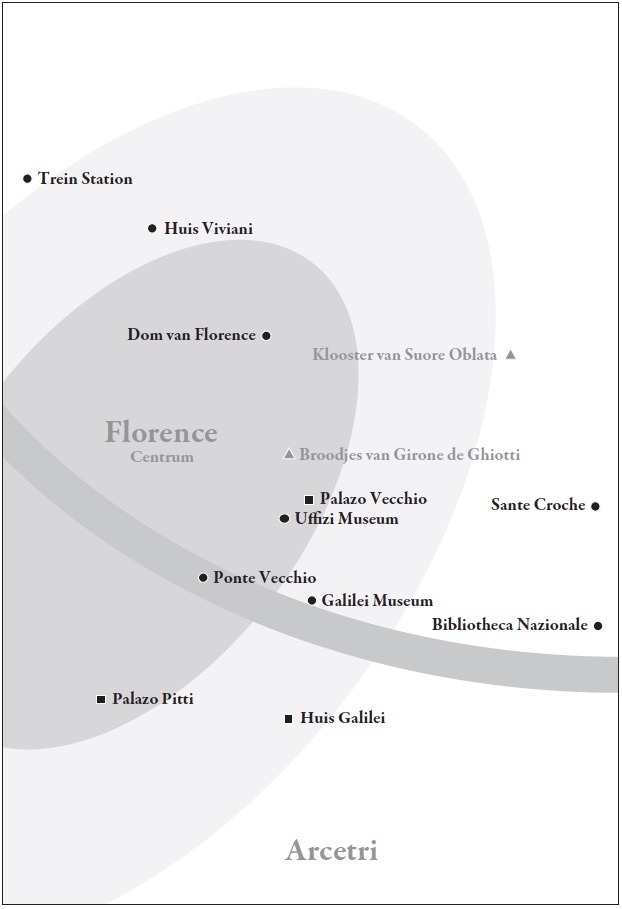
A great deal happens in Florence, both in Galileo’s life and in the story itself. For that reason, here is a simple map of the most important places, so that you can at least get a sense of them. It also marks the convent where the author spent a week working on the book. He wanted to experience something of how Maria Celeste must have lived, even if it was four hundred years later. The best sandwich shop in Florence is also marked on the map.
Cathedral of Santa Maria del Fiore, Florence
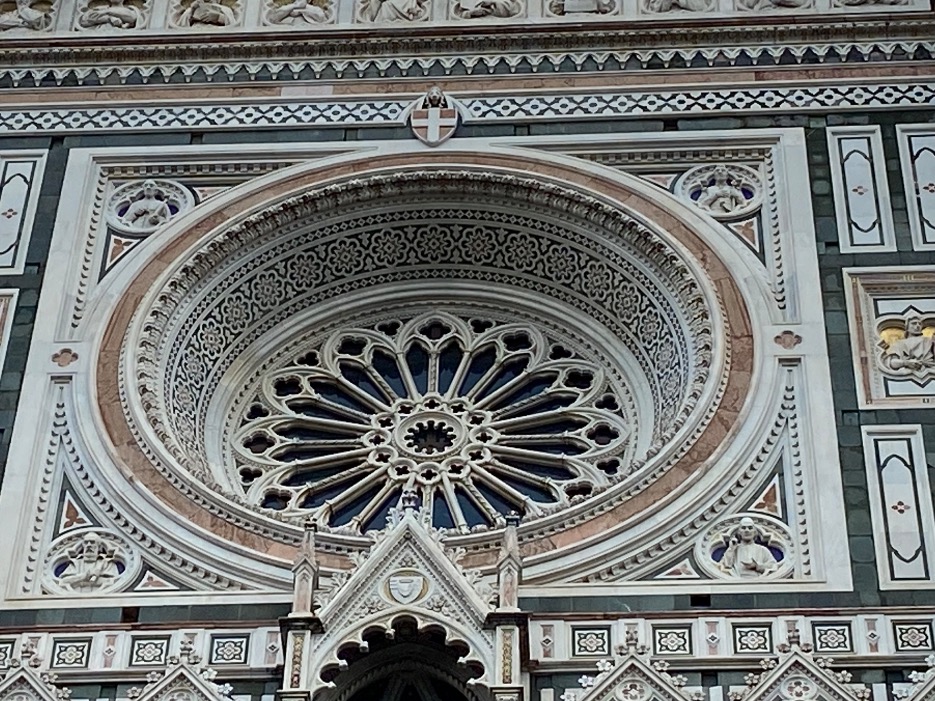
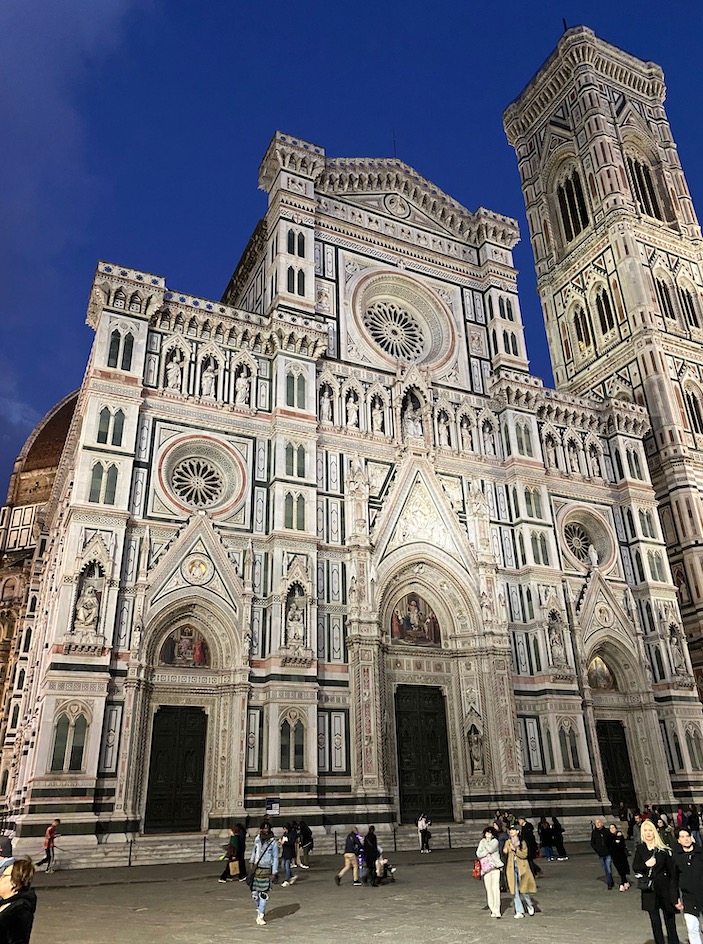
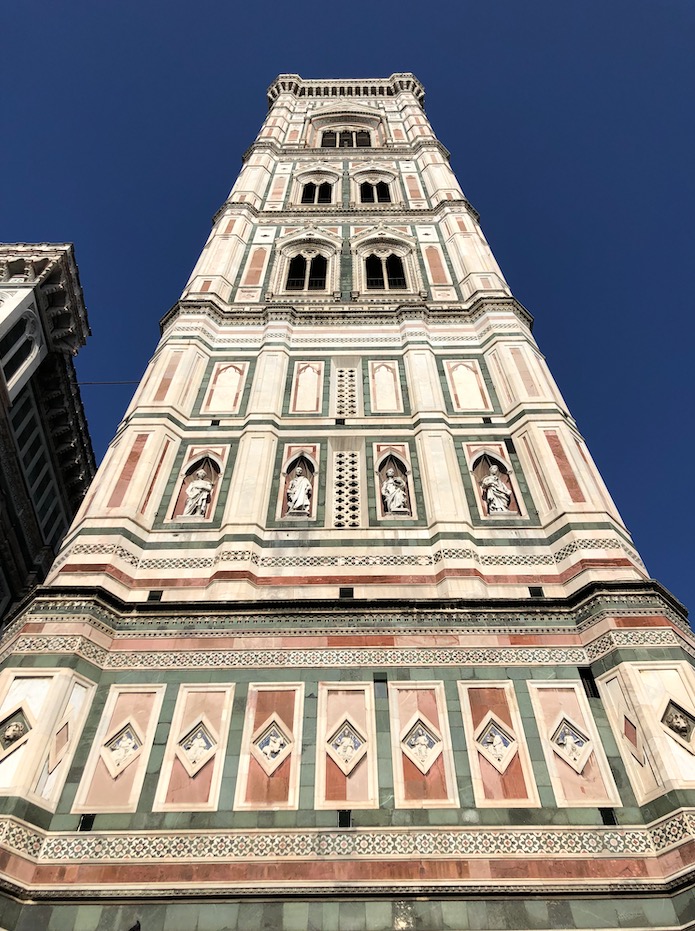
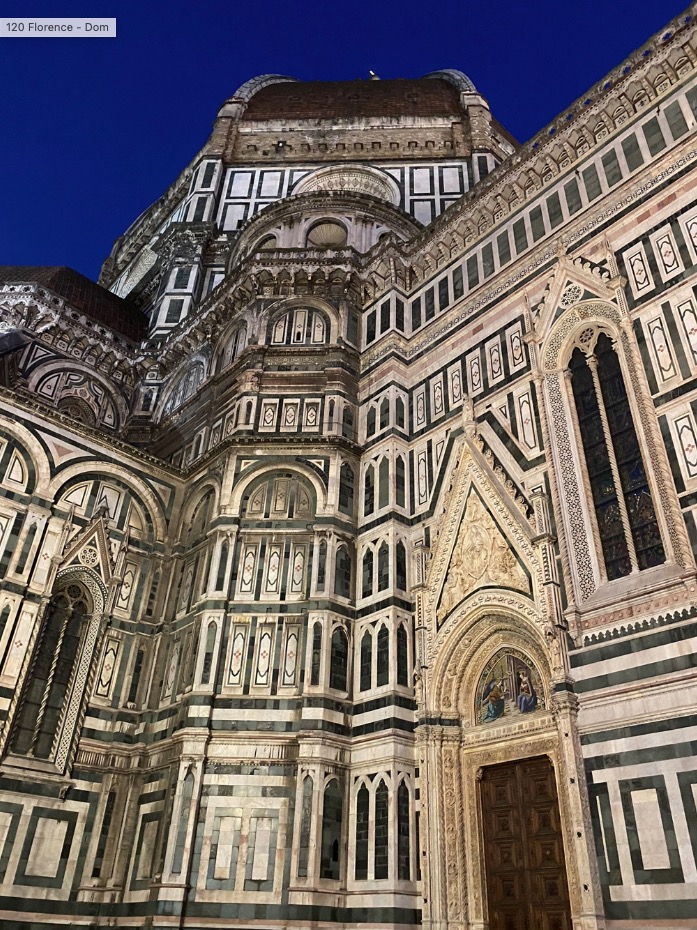
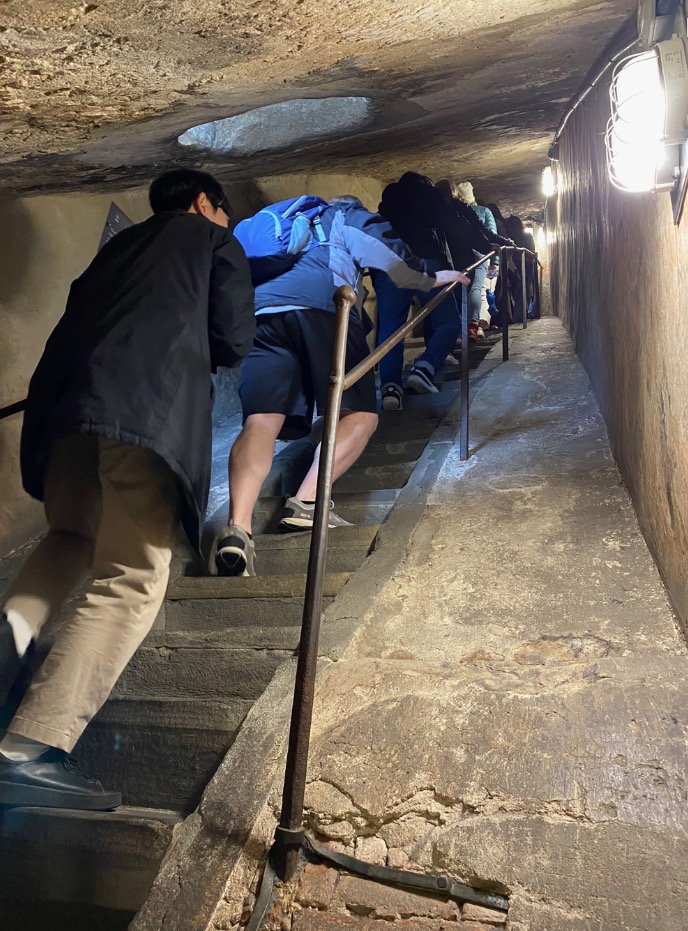
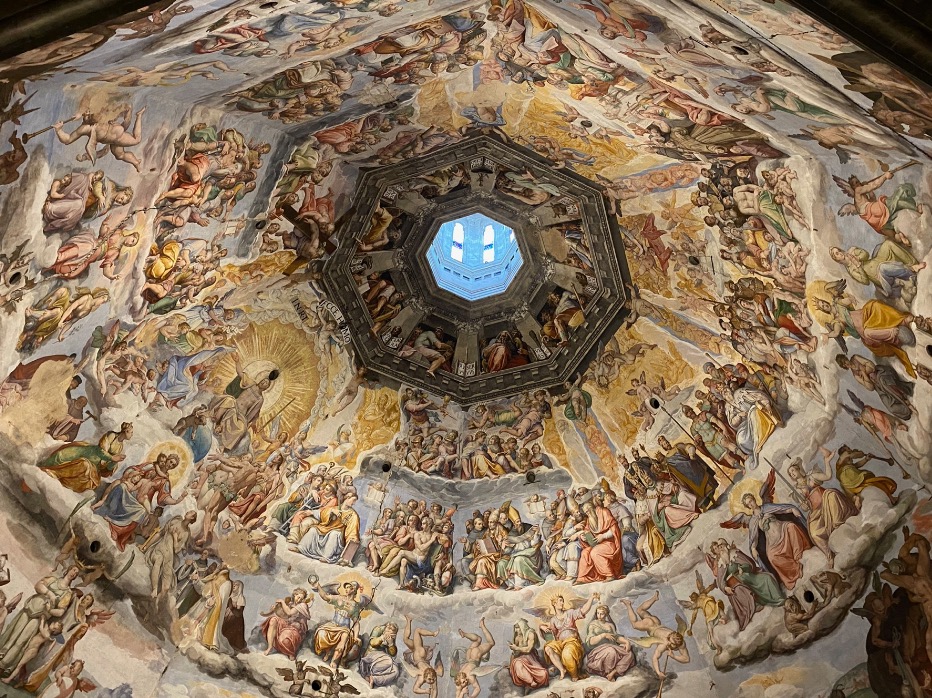
Florence Cathedral is magnificent, with its separate bell tower, baptistery and richly decorated façade. Inside, it is not as beautiful as Siena Cathedral, but in Florence you can climb between the inner and outer shells of the double dome all the way to the top. This can be seen clearly in the photograph at bottom left, although it does not fully convey how steep and cramped the climb really is. If you want to do this climb yourself, it is wise to book in advance. Just pause for a moment to consider how extraordinary this building must have seemed in Galileo’s time, towering above everything around it. And even then it was already three hundred years old, since the cathedral was built between 1296 and 1436.
“Sienna moved at once. Her decision came quickly and decisively, as if her body knew what had to be done before her mind did. ‘Let’s go. Before it gets dark.’ He did not hesitate. ‘Yes.’ He took out his phone to check the route. Together they walked towards the edge of the square, farther away from the Cathedral of Santa Maria del Fiore. But as they walked away, Vincent noticed movement behind him.” (Chapter VII)
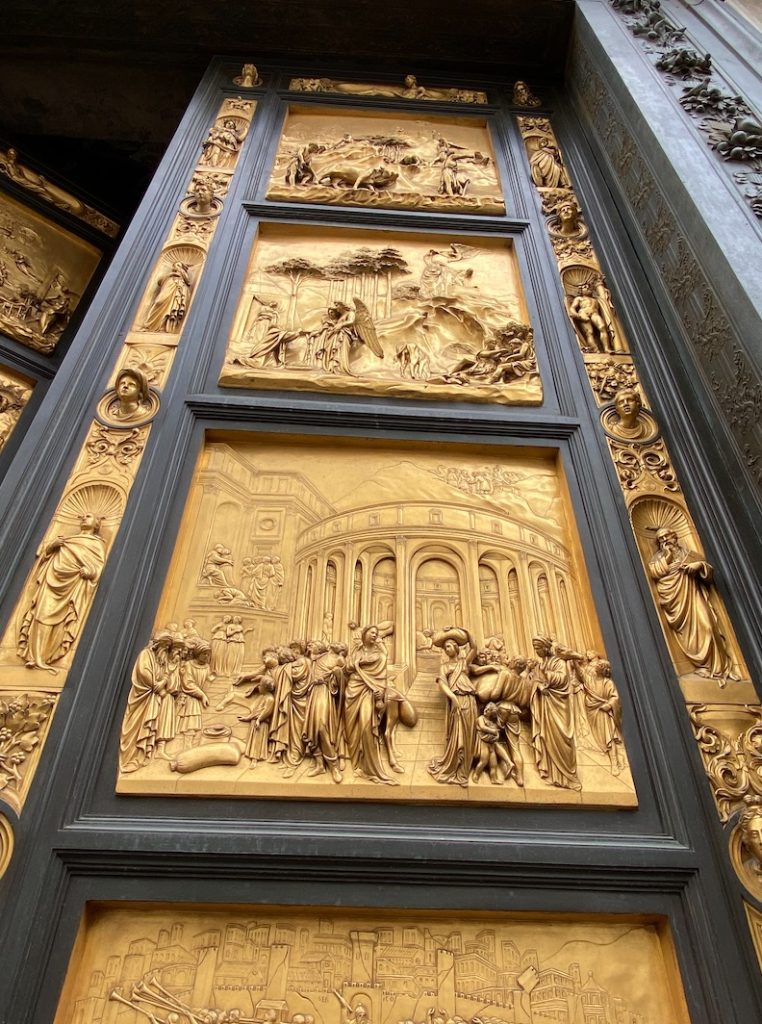
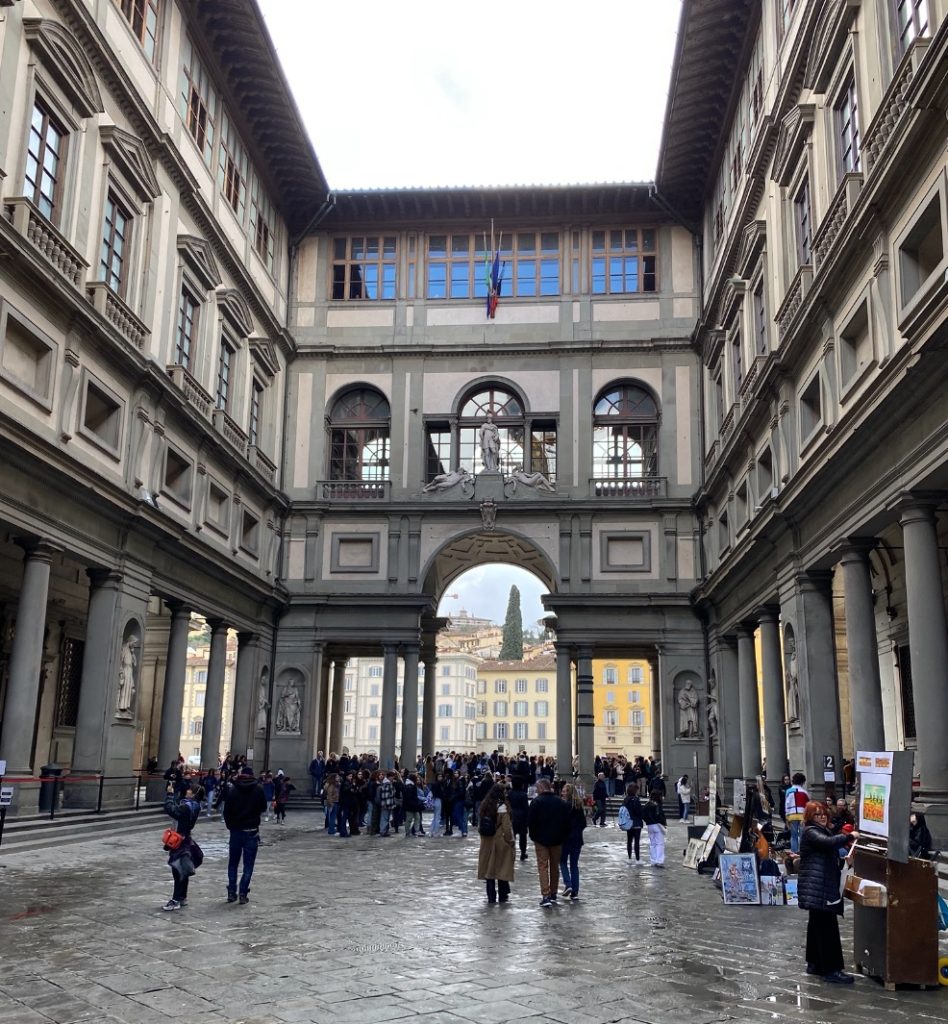
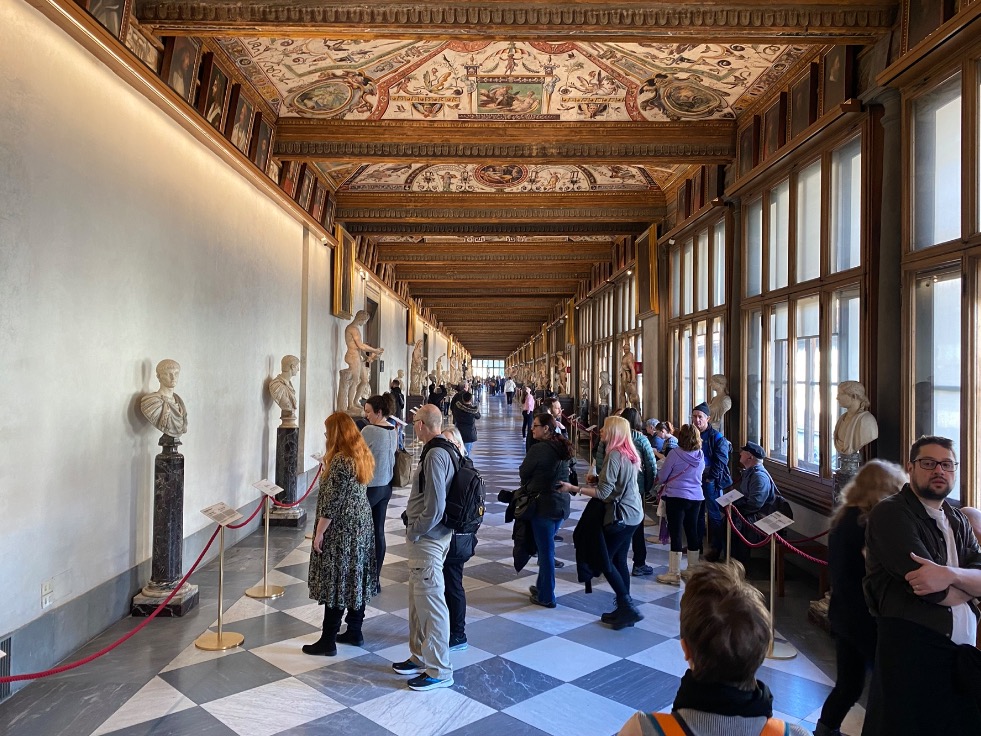
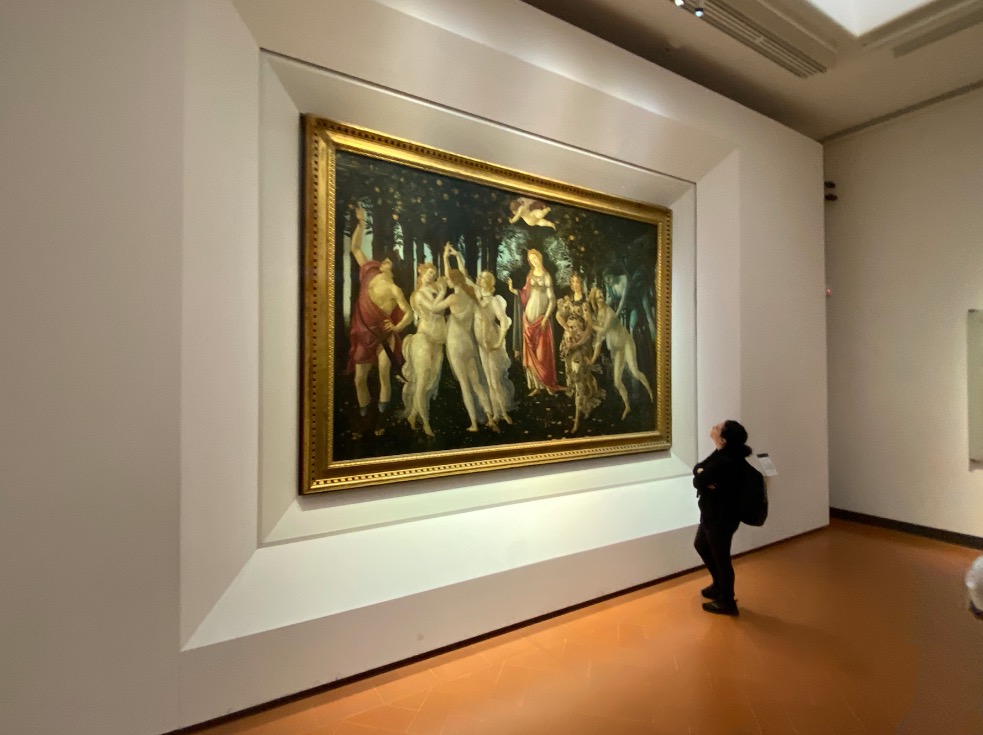
Uffizi Gallery – Florence
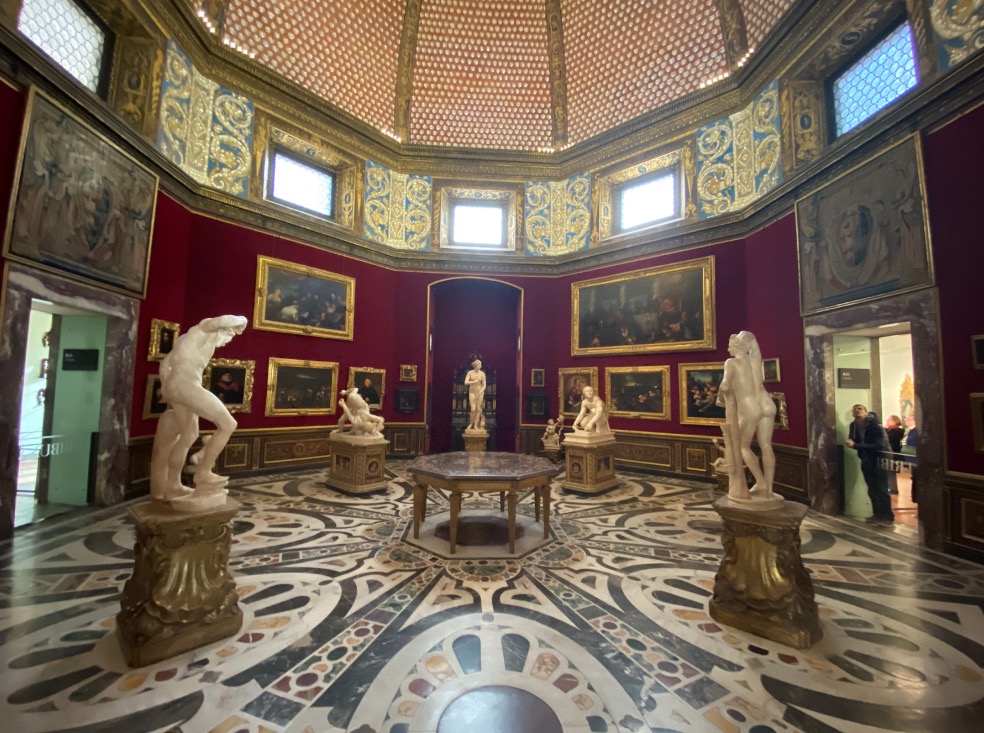
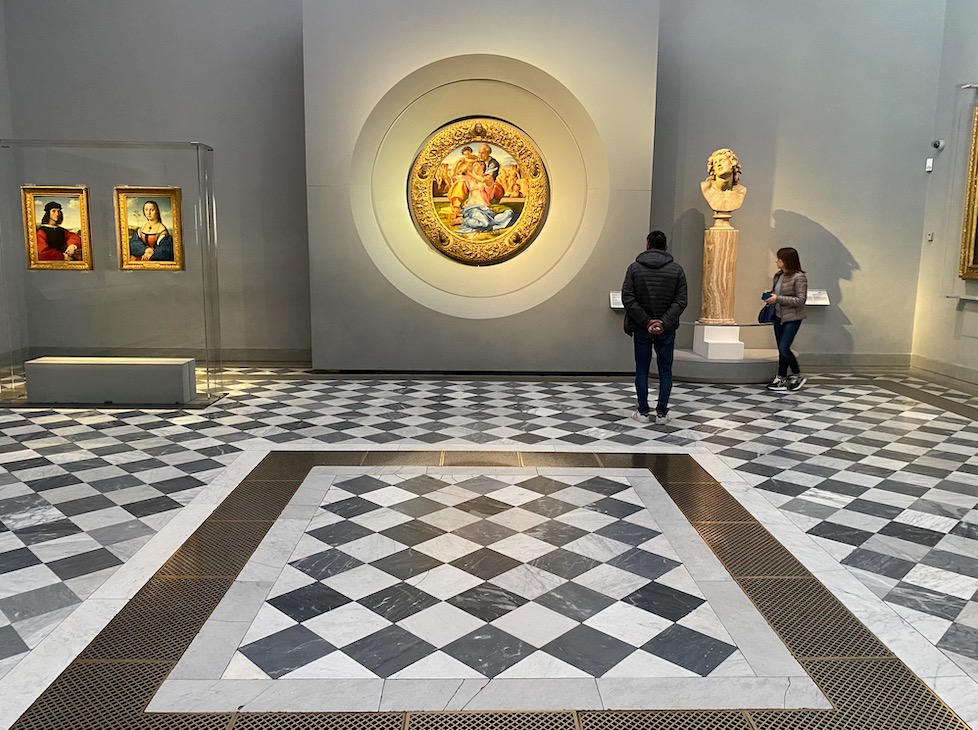
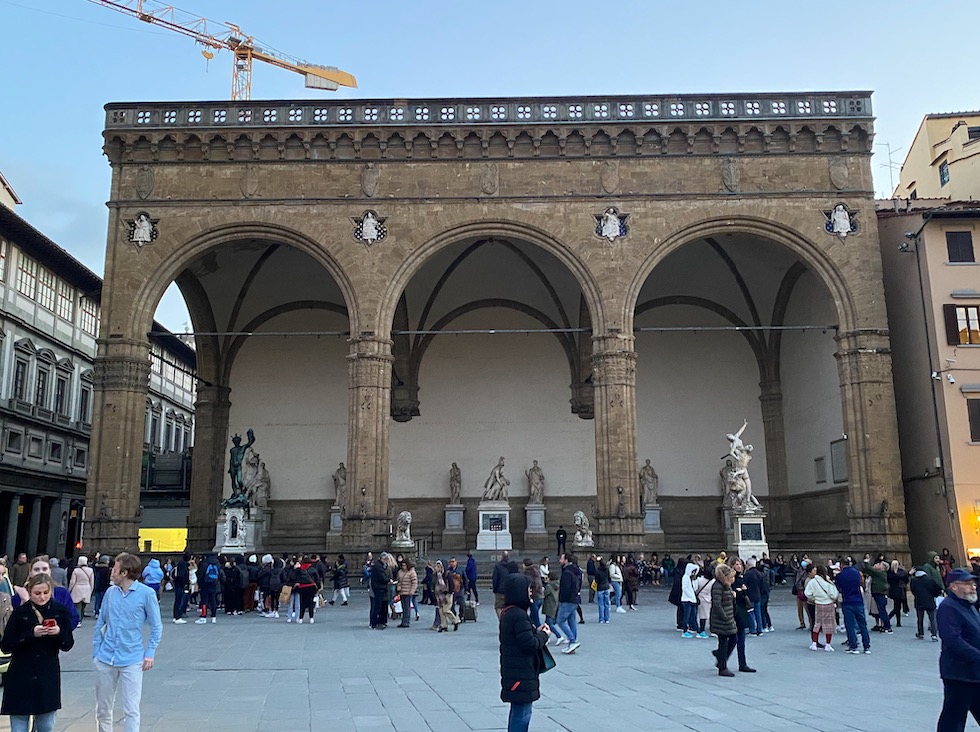
One of the most beautiful museums in the world, home to Botticelli’s Birth of Venus and Primavera, as well as the Holy Family, one of the finest paintings there; the round painting in the photograph at bottom left. The photograph at bottom right shows the terrace of the museum restaurant, above the loggia. It cannot be seen from the square below, yet from up there you have a magnificent view of Palazzo Vecchio and the piazza. After a long search through the museum, Sienna and Vincent took a short break here:
“The galleries below had already closed. The day had stretched into hours of searching. The few hours of sleep they had allowed themselves on the night train were beginning to take their toll. Their footsteps had grown heavy and dragging in the endless rooms of the Uffizi. They had moved from gallery to gallery, from Botticelli’s gentle faces to Bronzino’s cool court portraits, yet nowhere had even the faintest hint of Viviani’s message appeared.” (Chapter VII)
Basilica of Santa Croce, Florence
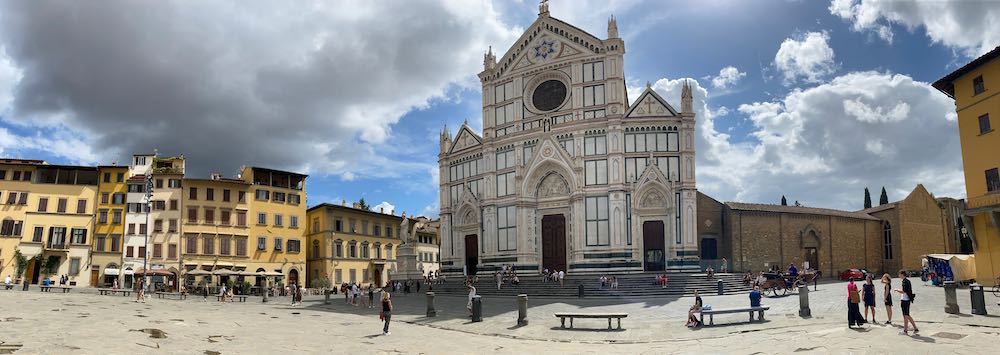
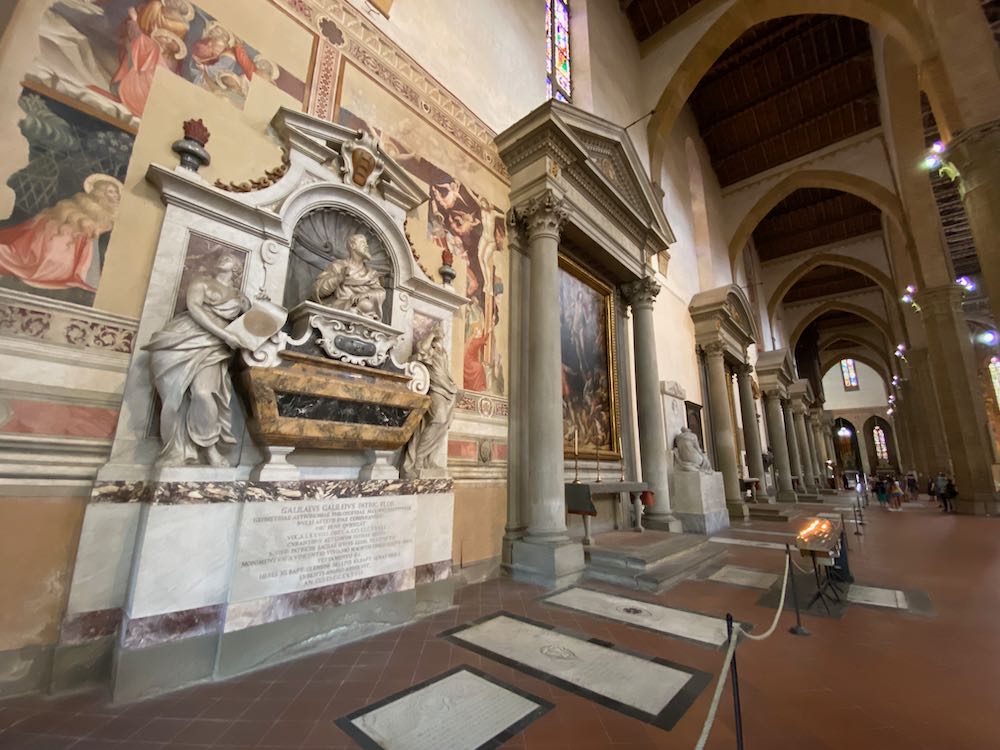
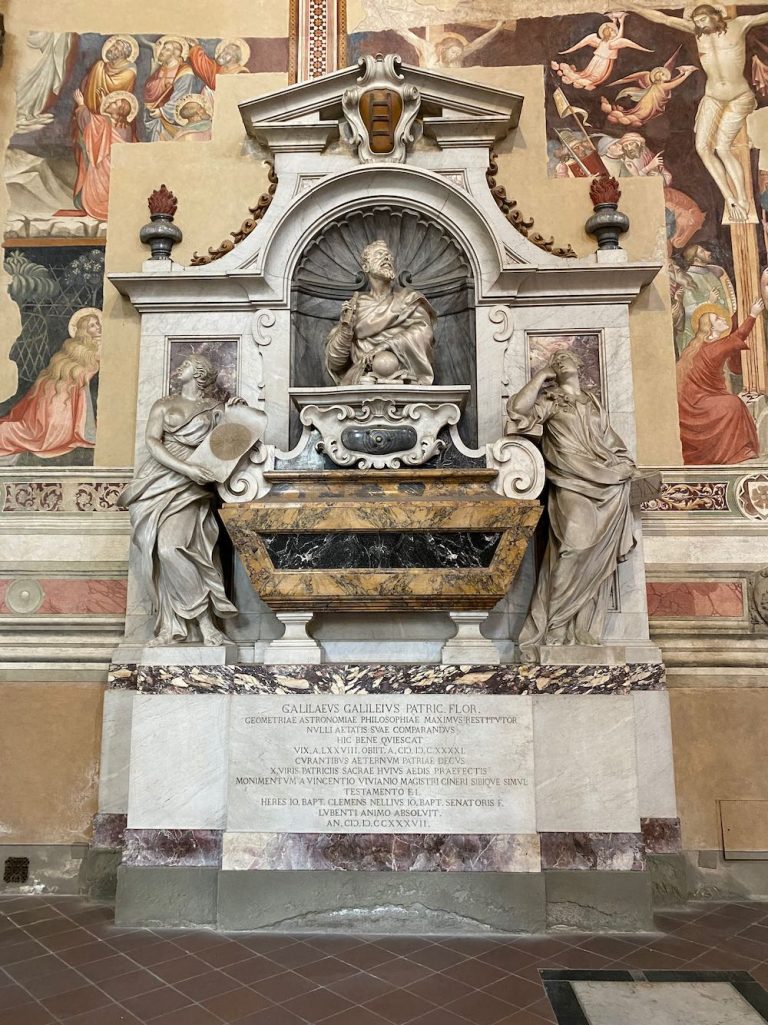
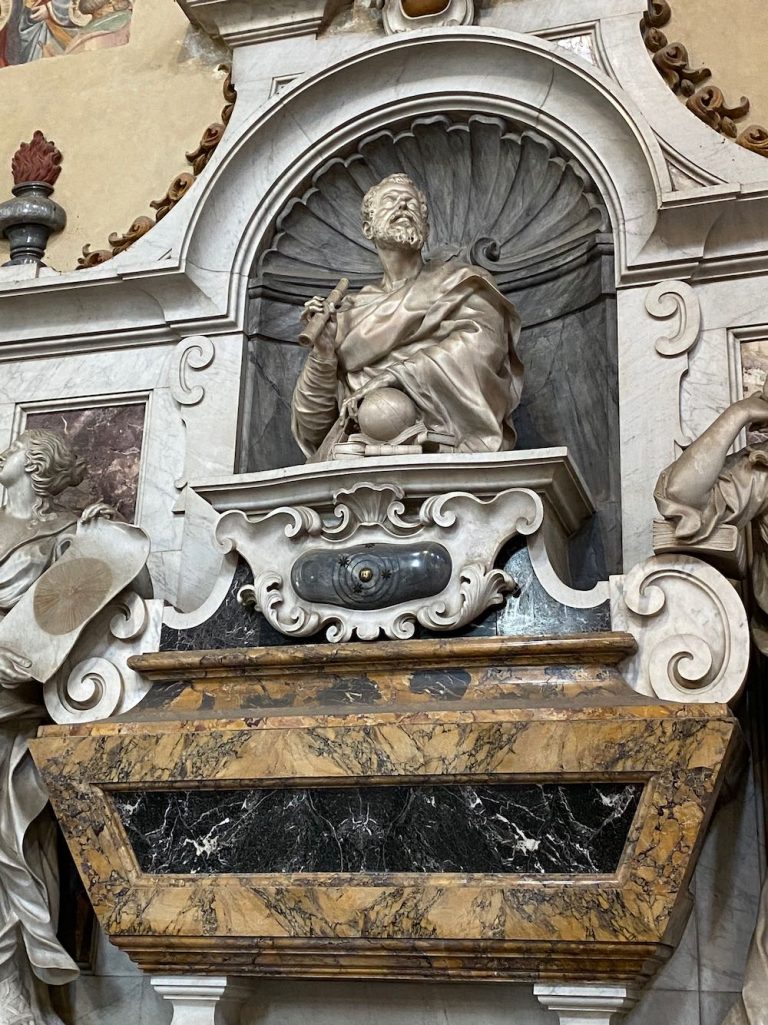
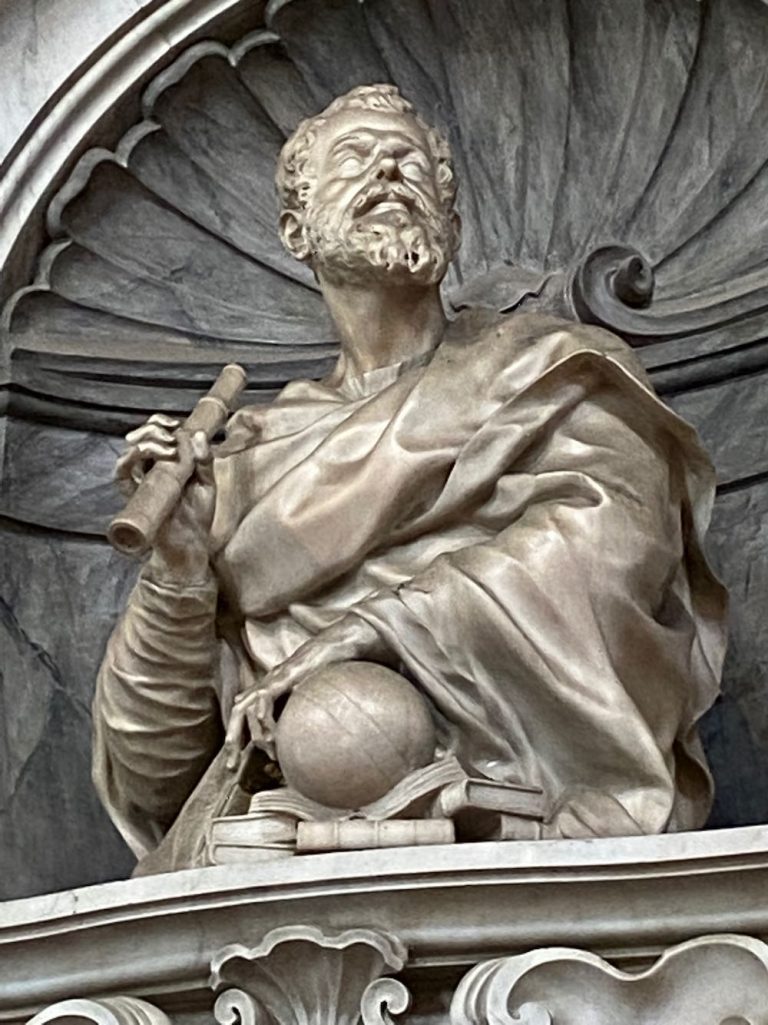
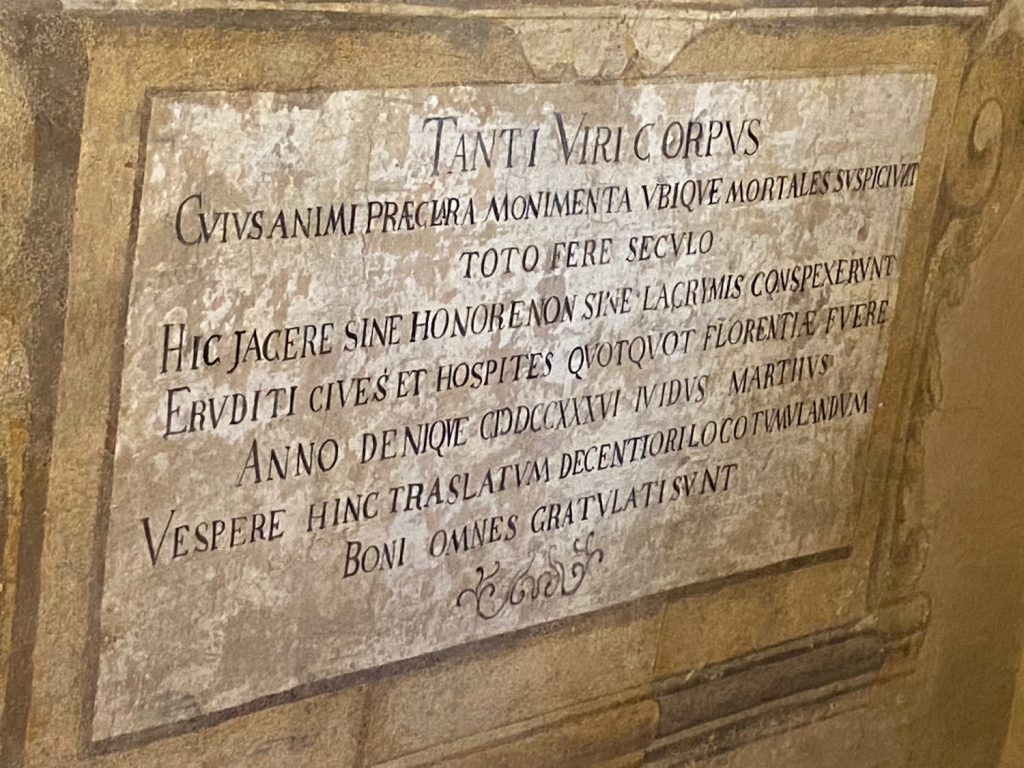
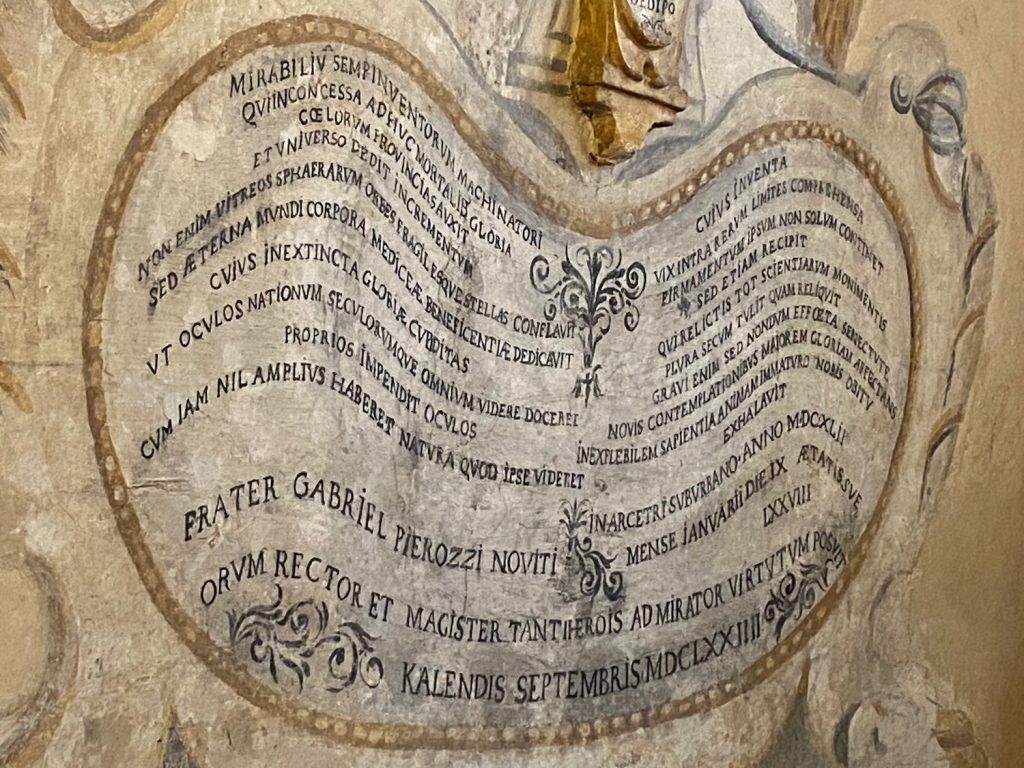
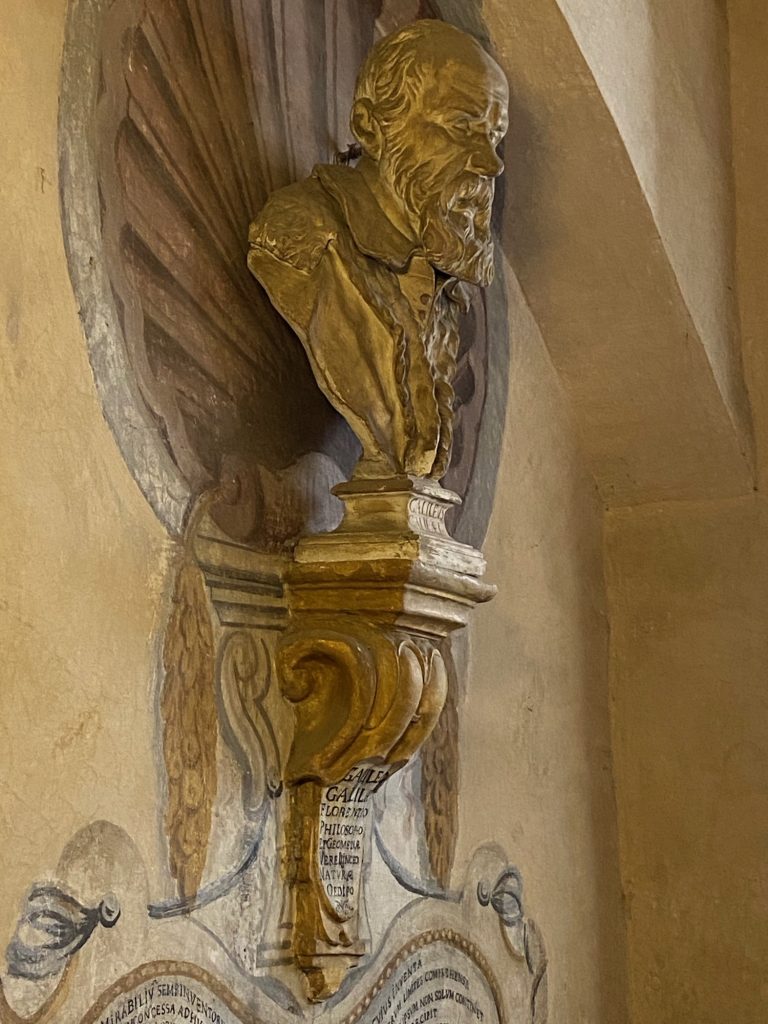
Galileo quarrelled with the Pope and, because of his radical new ideas, was effectively regarded as a heretic. His fame, already considerable at the time, spared him from the stake, but at first he was not given an honourable burial place. He was initially buried in a small chapel, and only in 1737 was he given a monumental tomb inside Santa Croce itself, opposite Michelangelo. His beloved daughter Maria Celeste is buried there too. At last, they were together again.
“Viviani meant this,” he said, certain of his conclusion. But Sienna shook her head. Not sharply, but slowly, as though the truth compelled her to be gentle. A faint smile touched her lips. She stepped forward, her fingers gliding along the smooth edge of the white and gold relief. The cold of the marble crept into her skin, as if the tomb itself refused to give warmth. “This was built in 1737,” she said softly. Her voice sounded strange in the silence, as though she were revealing a secret no one else was meant to hear. “More than ninety years after his death.” (Chapter IX)
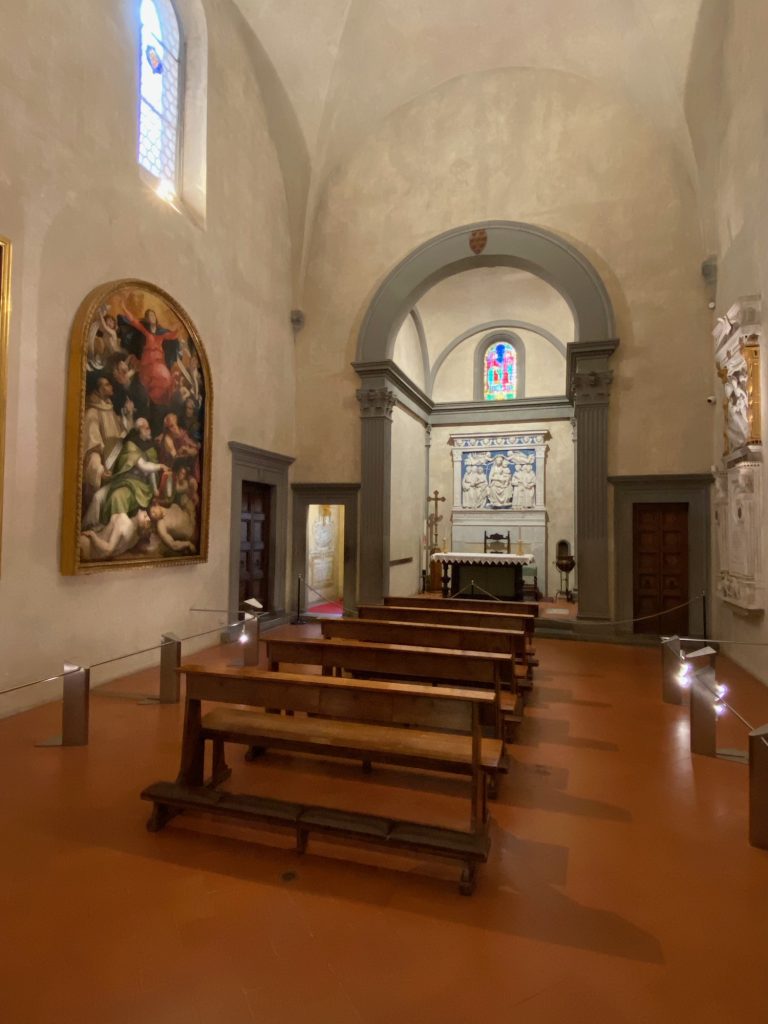
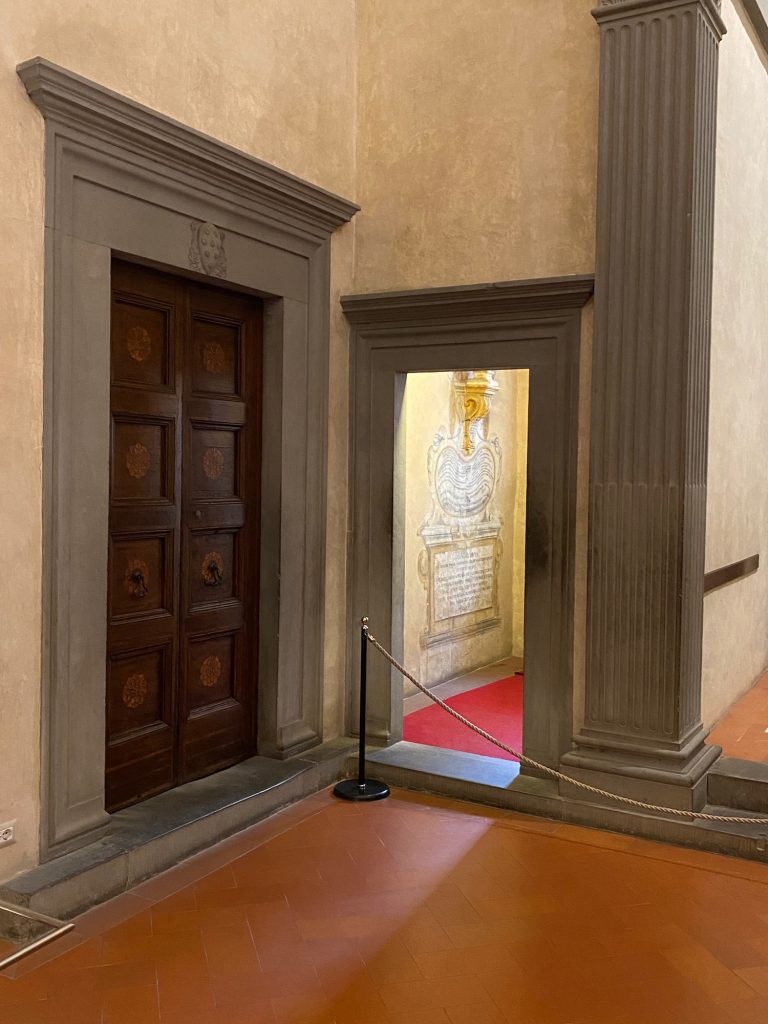
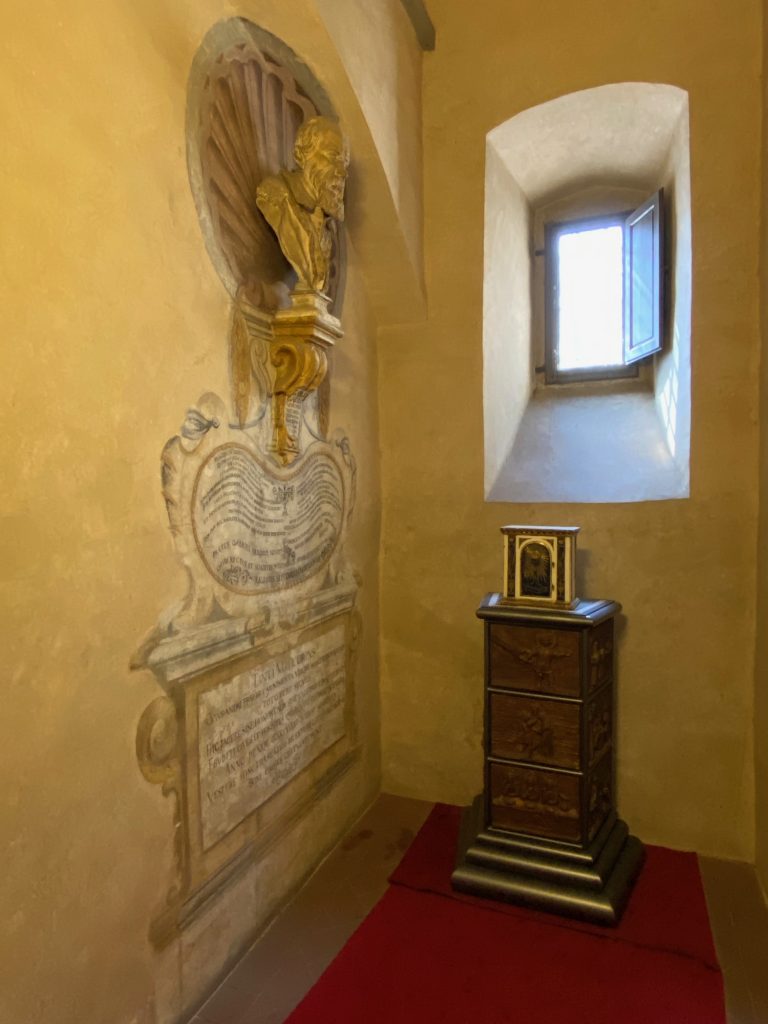
The small chapel in Santa Croce, Florence
The chapel is tucked away in a corner of the church, and if you do not know it is there, you could easily walk straight past it. After all, Galileo now lies prominently with his daughter in the central nave of the church. But this is where he was first buried. His coffin was walled into the spot where the bust now stands. When the author asked the attendants whether he might go there, the man replied, “Ah, you know the secrets of this church.”
“No visitors here. No whispering guides, no soft click of cameras. Only silence. Here, there was none of the splendour of the great nave, nor the bombast of marble tombs. Here, there was only modesty, almost humility. A small chapel, cut off from the great flow of visitors, where light entered only dimly through a narrow stained-glass window. That light fell on a small wooden bench, weathered and crooked, its grain worn dull by countless knees and hands that had sought support there.” (Chapter IX)
Biblioteca Nazionale Centrale di Firenze – Florence
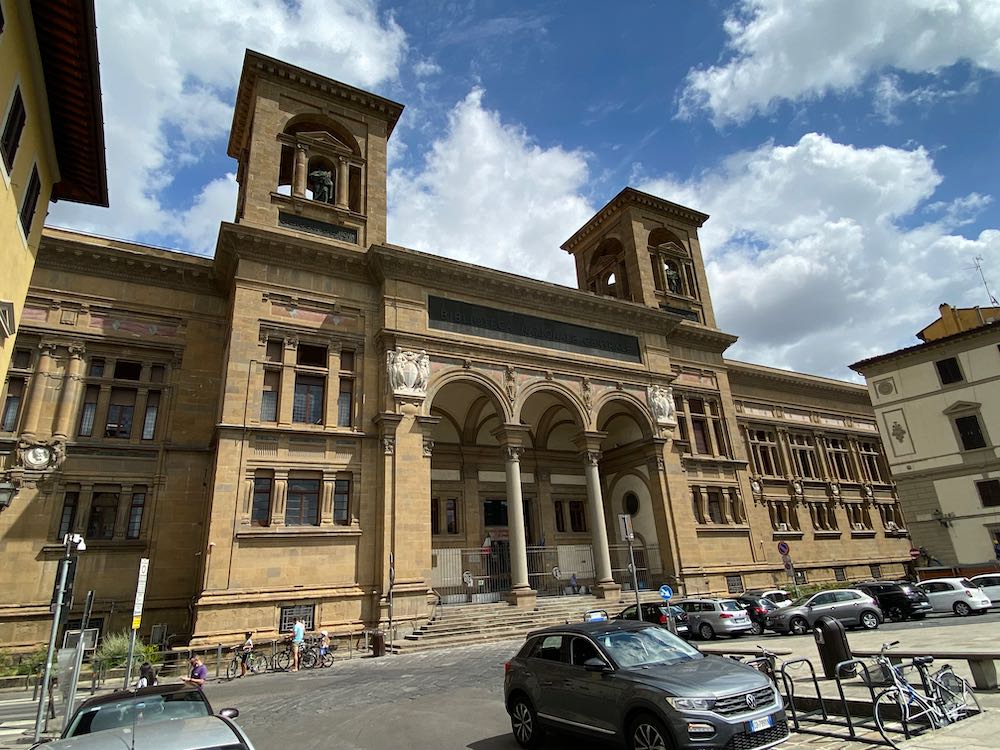
This is where his manuscripts are kept, along with a great deal of correspondence and the first editions of Galileo’s books. In the tower on the right, you can see a statue of him.
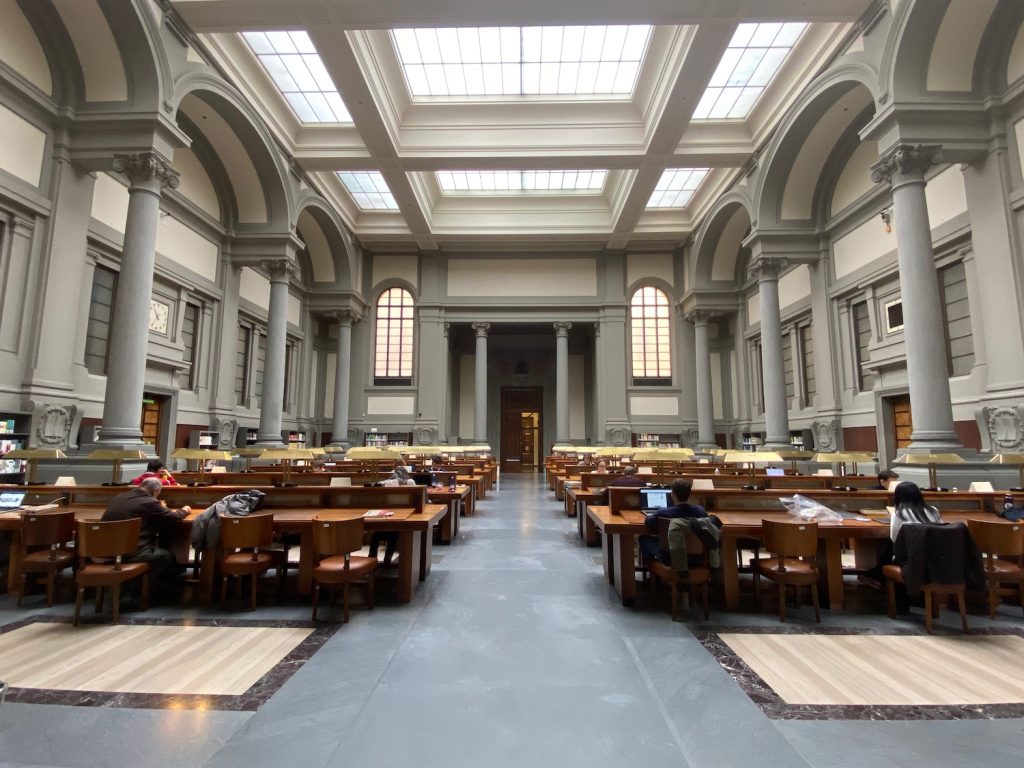
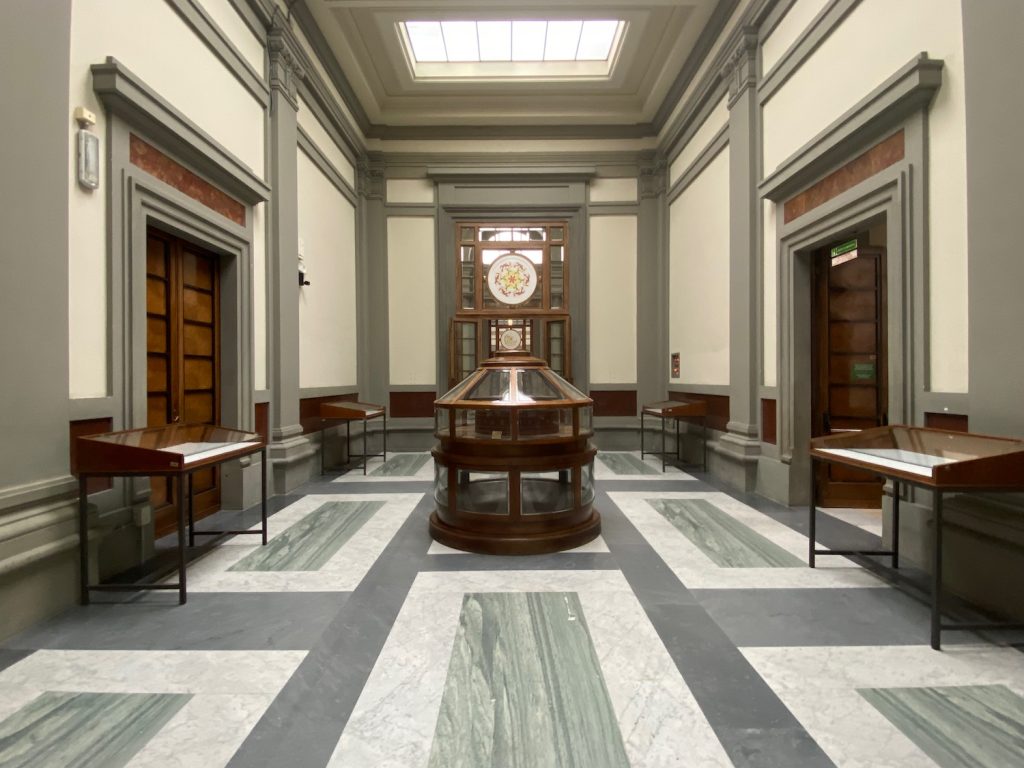
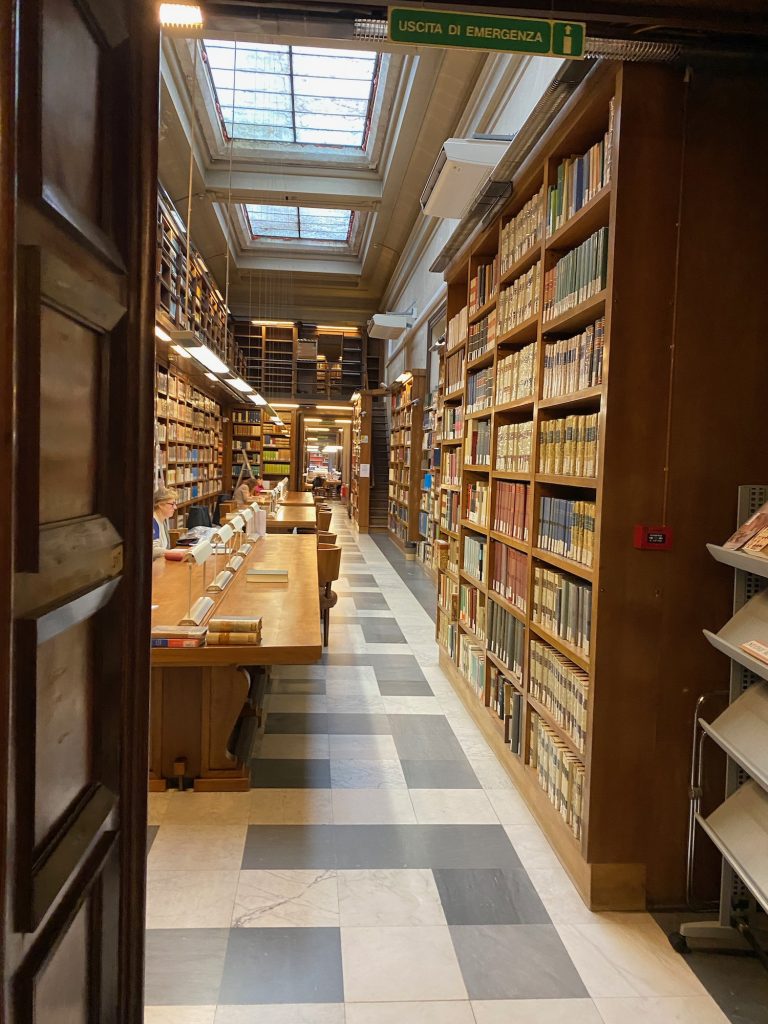
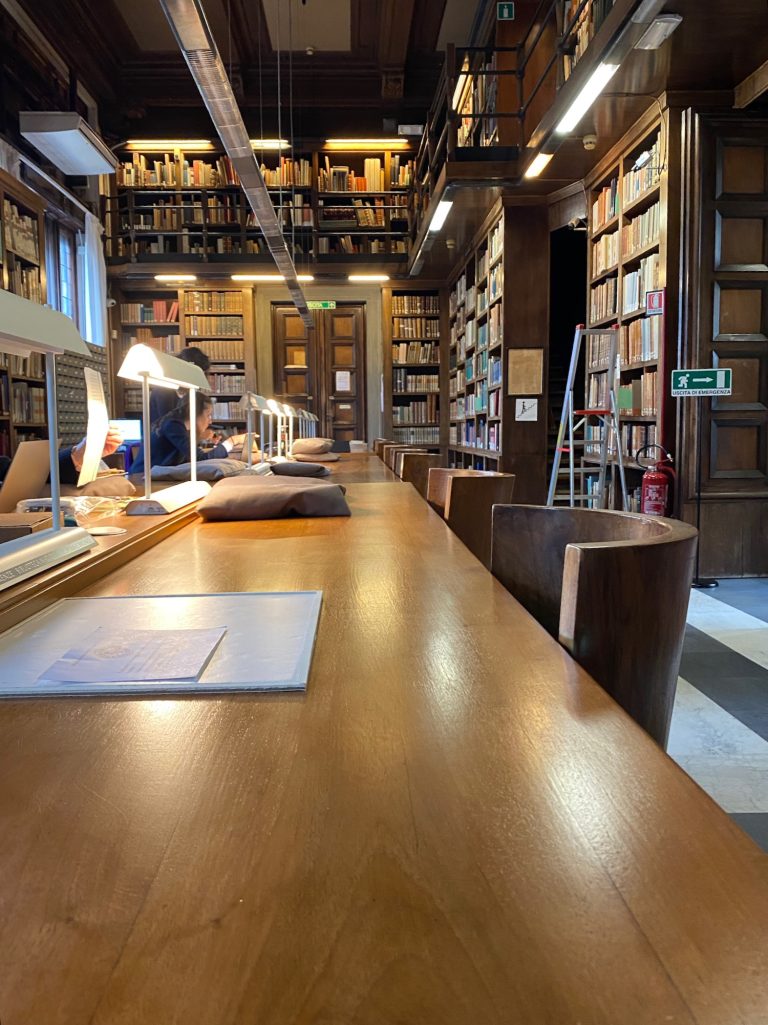
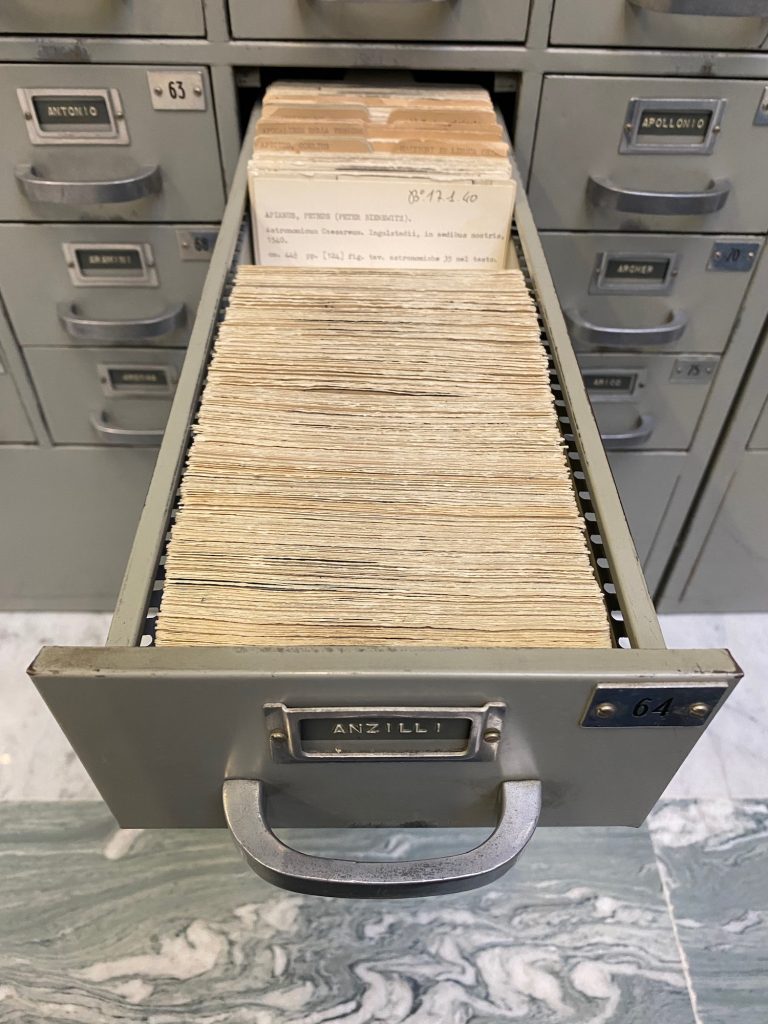
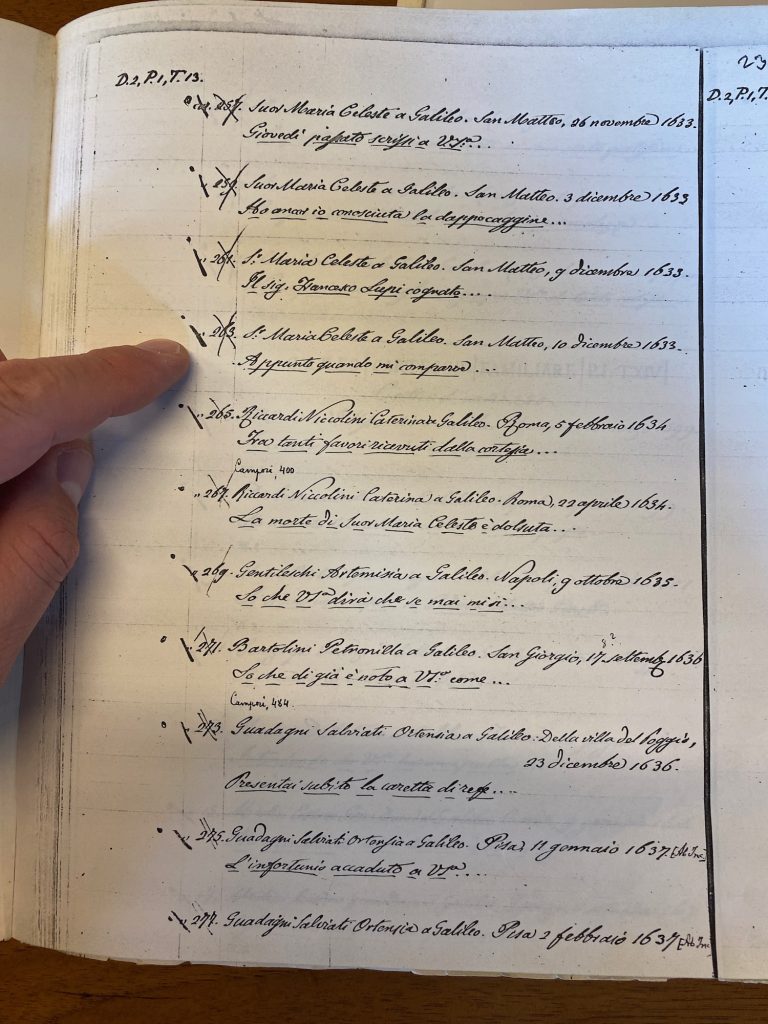
The author became a member of the library and, with help from the NIKI institute in Arcetri, was granted access to the historical materials. There, and in Leiden, he was able to consult an original copy of the Astronomicum Caesareummentioned in Chapter II. It all meant searching through very old indexes, submitting requests, waiting, and then examining the material in a special reading room.
All the correspondence is preserved in beautiful old volumes, entirely handwritten. And there is a great deal of it. Here, the author is pointing to one of the last letters Maria Celeste wrote to her father.
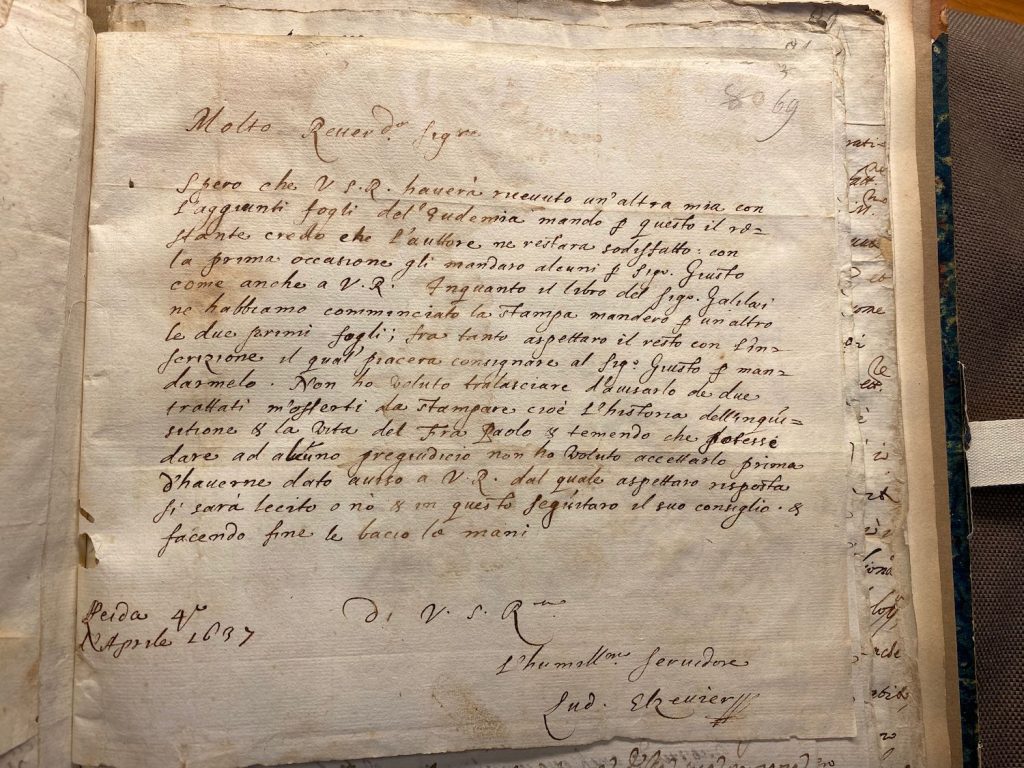
Below are two pieces of correspondence between Galileo’s intermediary, Elia Diodati in Paris, and Louis Elsevier, who would ultimately publish Galileo’s final book in Leiden in 1638, very much illegally.

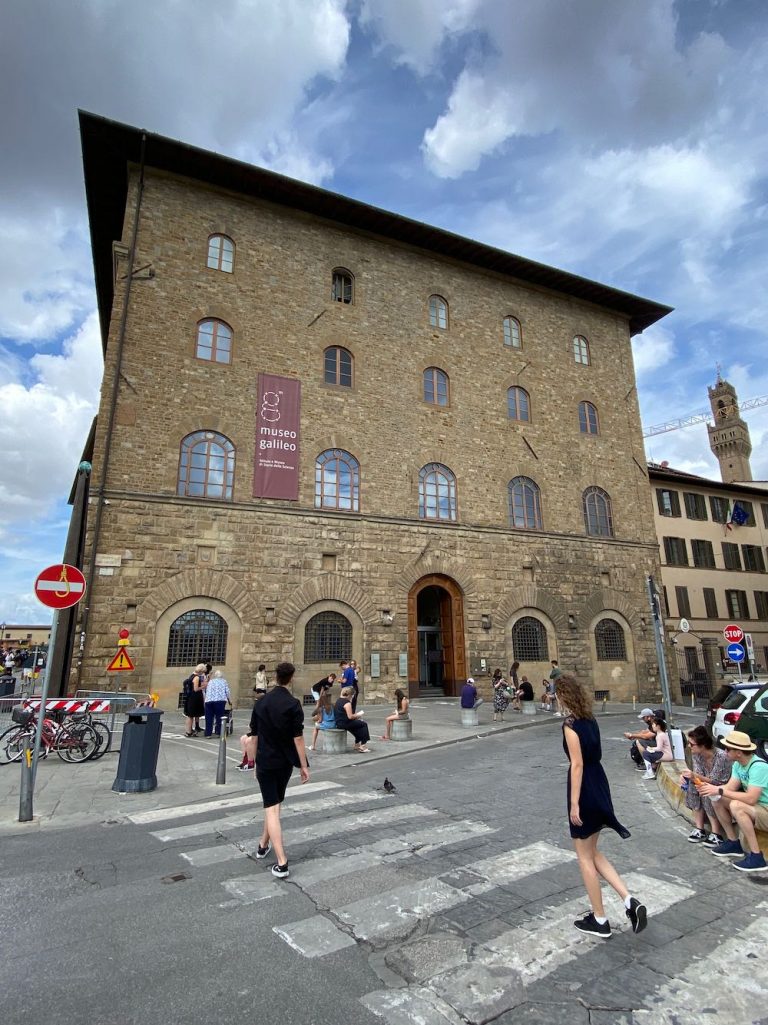
Galileo Museum, Florence
There are hardly any Galileo souvenirs to be found in Florence, but fortunately the astronomer does have a museum of his own. Here you will find his telescopes, sketches, instruments, and even one of his fingers and a tooth. These were “safeguarded” during his reburial in the central nave of Santa Croce in 1737. In Palazzo Bo in Padua, one of his vertebrae is also on display. There are, of course, more obvious testimonies to his extraordinary knowledge and skill as well. Below are three of his books and reproductions of his earliest telescopes, safely kept behind glass.
“With his gloved hands, he carefully lifted the glass cover. ‘Straight up, straight up.’ She was wearing her white gloves too and guided the cover to a spot beside the pedestal. ‘We are completely insane,’ Finn said. ‘Just for a moment,’ Sienna replied. ‘No guts, no glory. Two minutes, then we put it back straight away. All or nothing.’”(Chapter VI)
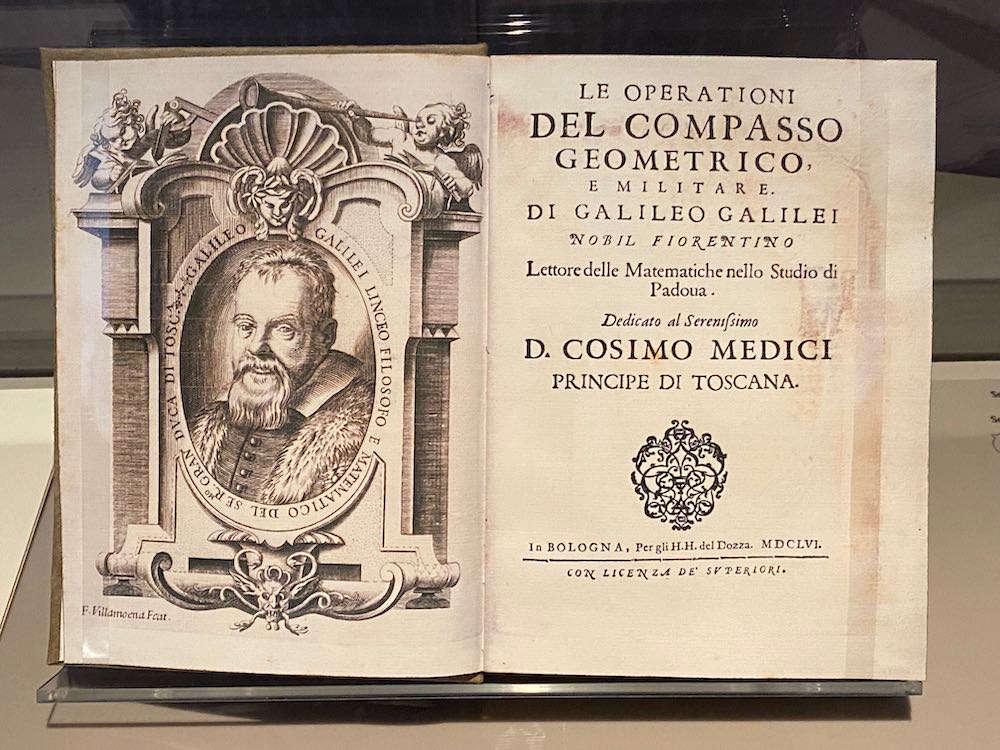
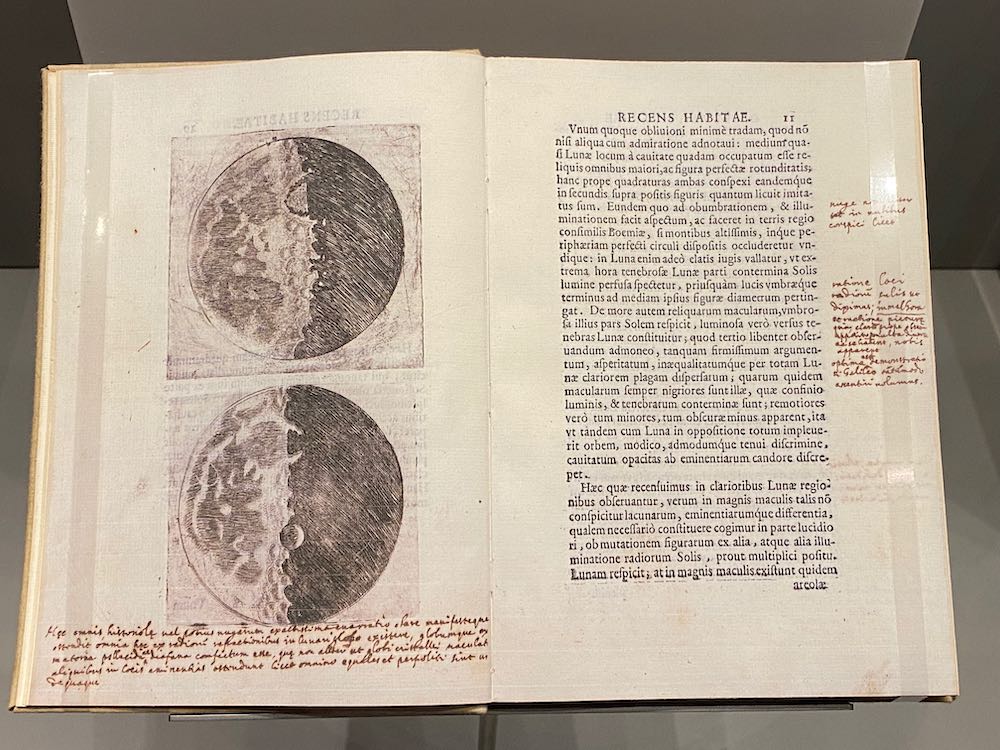
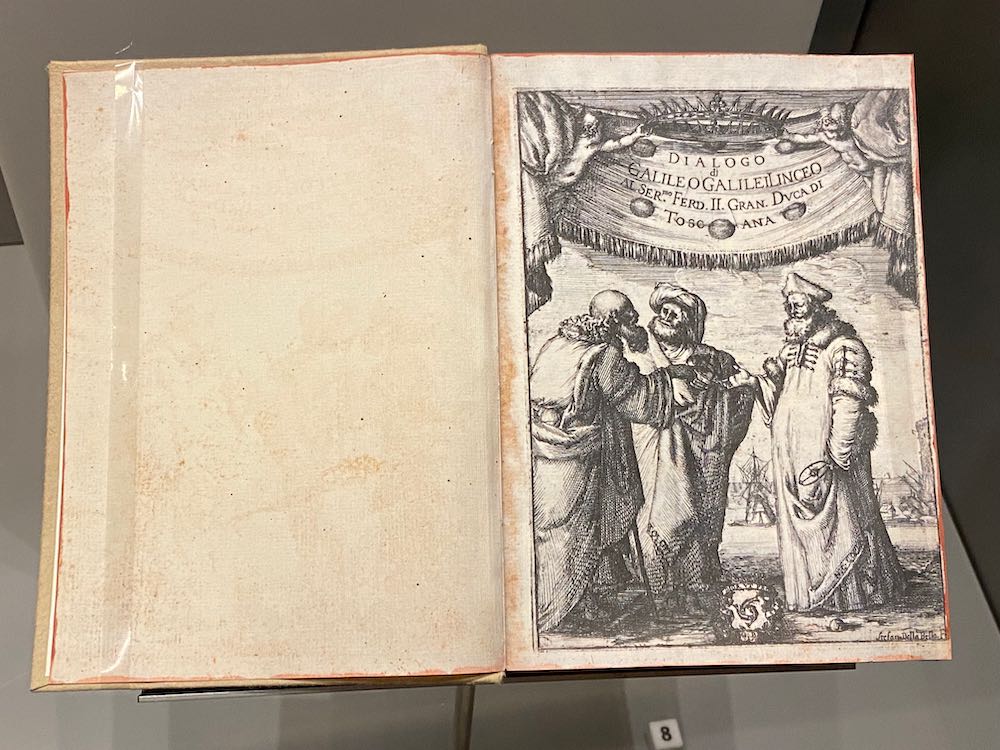
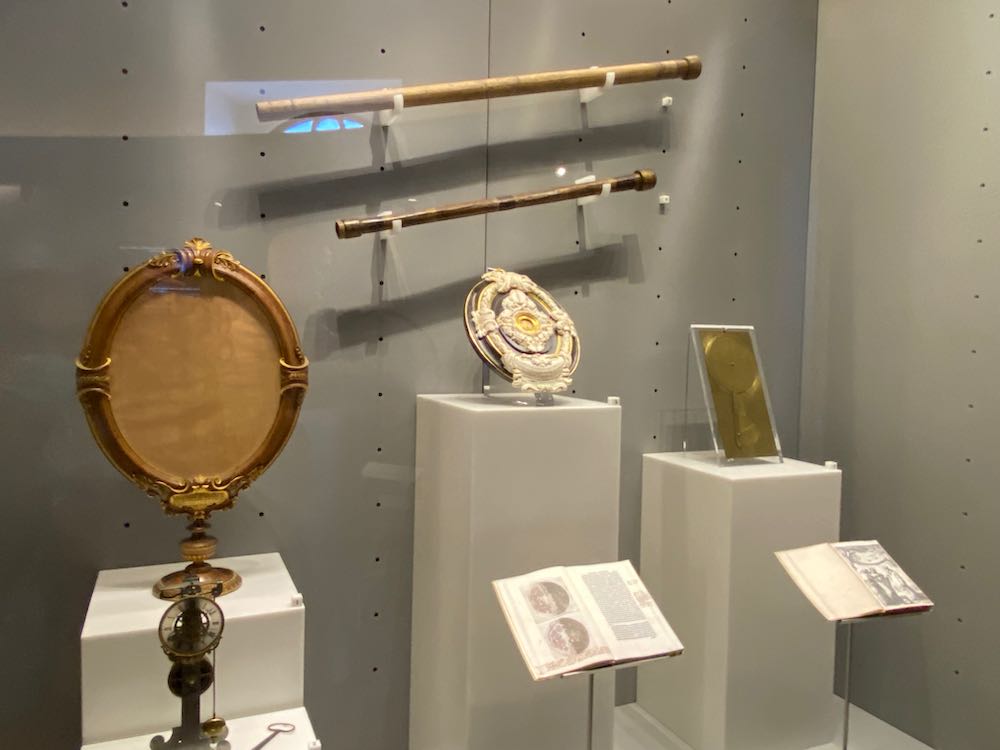
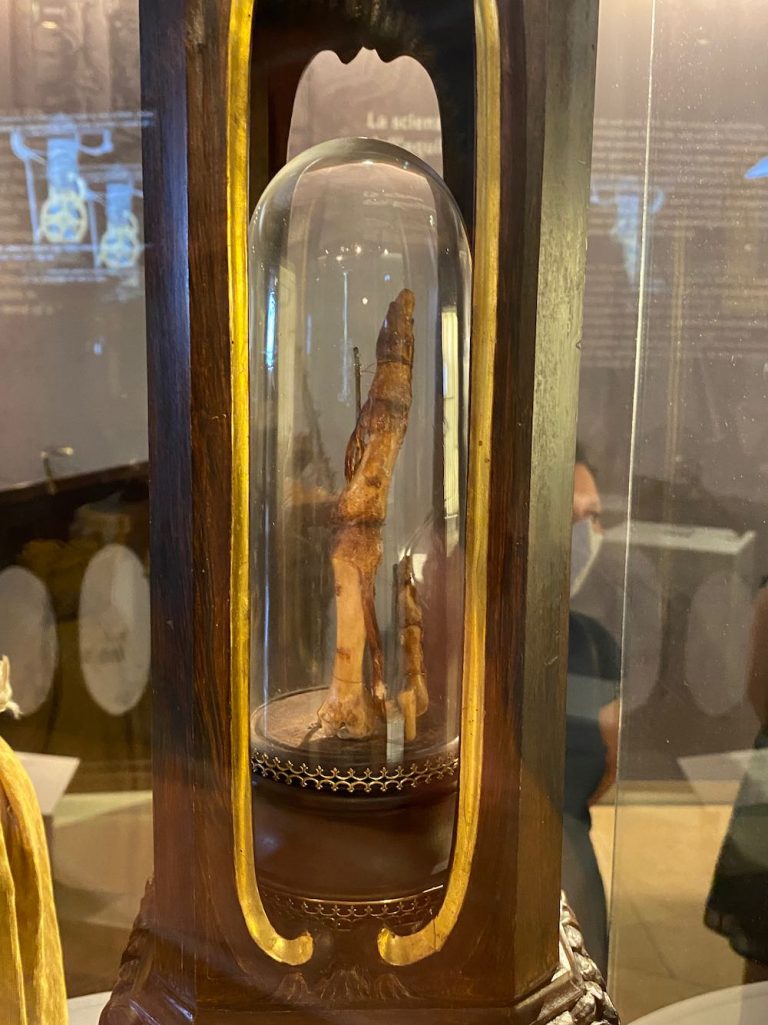
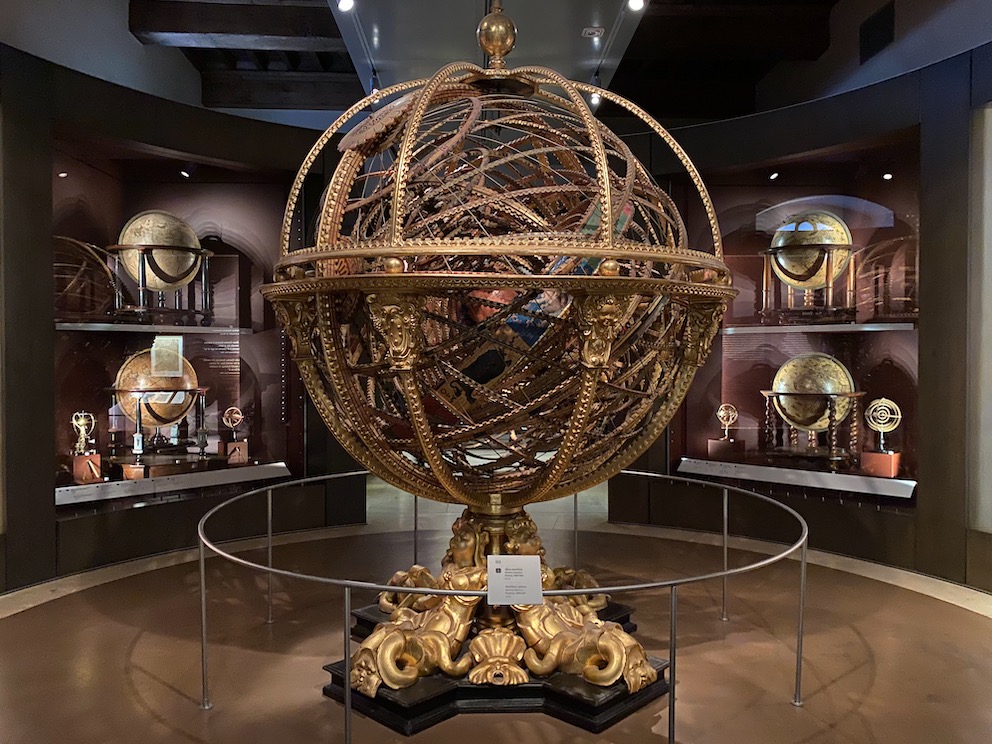
Santucci’s armillary sphere
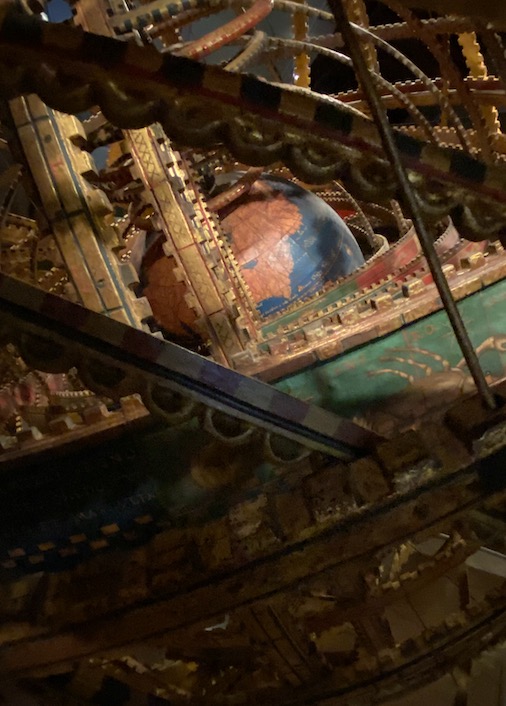
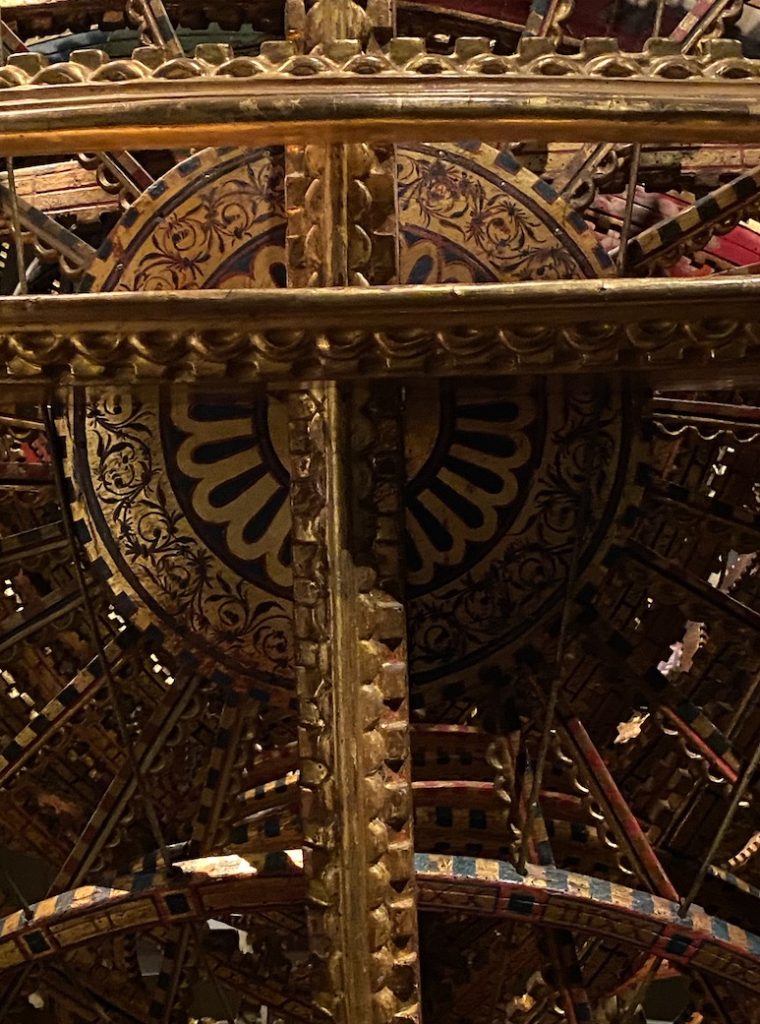
The cover of the book features a photograph of this armillary sphere, made by Antonio Santucci, a contemporary of Galileo. As you can see, it is so old that the Earth still stands at the centre, with all the planets revolving around it on those beautiful coloured rings. We know better now. Because this was precisely the struggle Galileo took on, I chose it for the cover image. Because people refused to listen, the Earth remained the centre of the universe longer than it needed to. This great armillary sphere, no less than 2.5 metres high, holds a prominent place in the Galileo Museum.
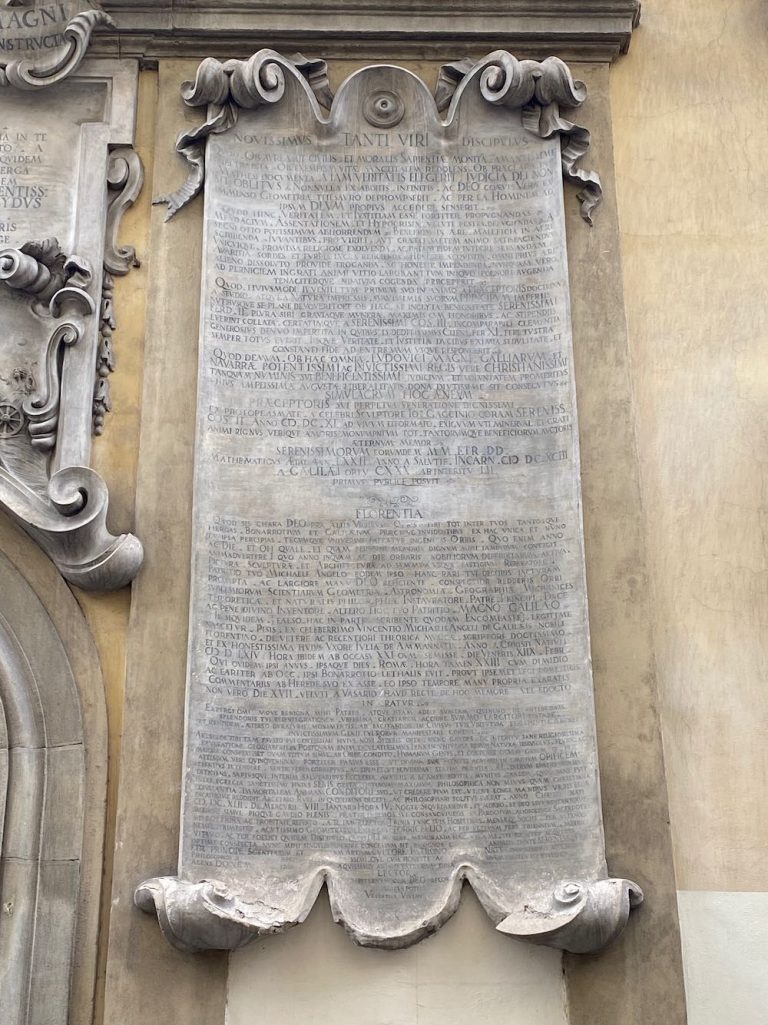
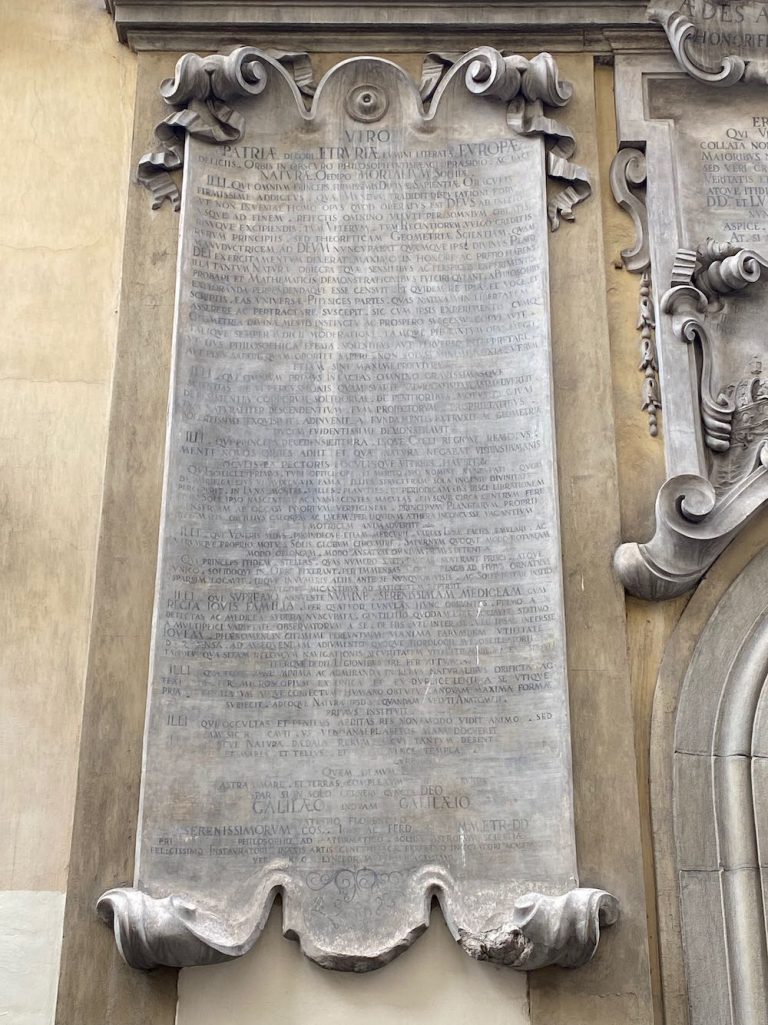
Viviani’s house, Florence
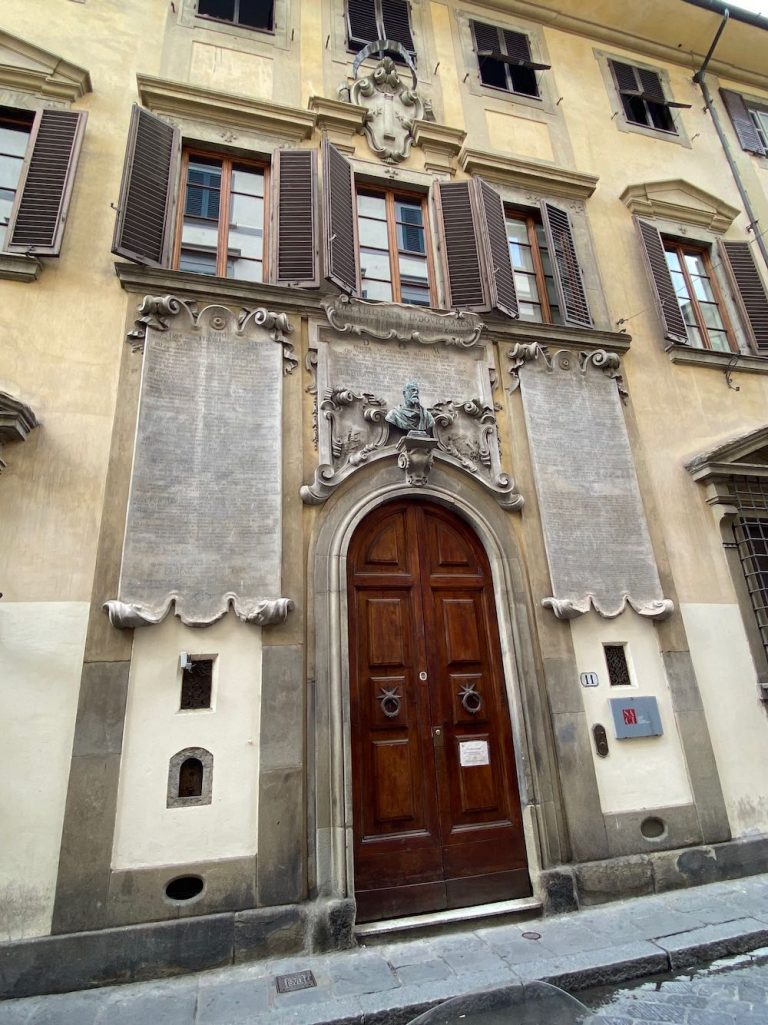
Viviani was a devoted pupil and biographer of Galileo. He cared for him during his final years in Arcetri, when Galileo was bedridden and blind. He had plaques placed on his house in honour of his teacher. You may even spot some clues there for Sienna and Vincent’s search…
“Viviani lived here until his death,” Sienna whispered. Her voice carried a sense of reverence, almost solemnity. “And after Galileo died, it was he who protected his memory. He had these plaques installed, not for himself, but out of devotion to his master.” (Chapter VIII)

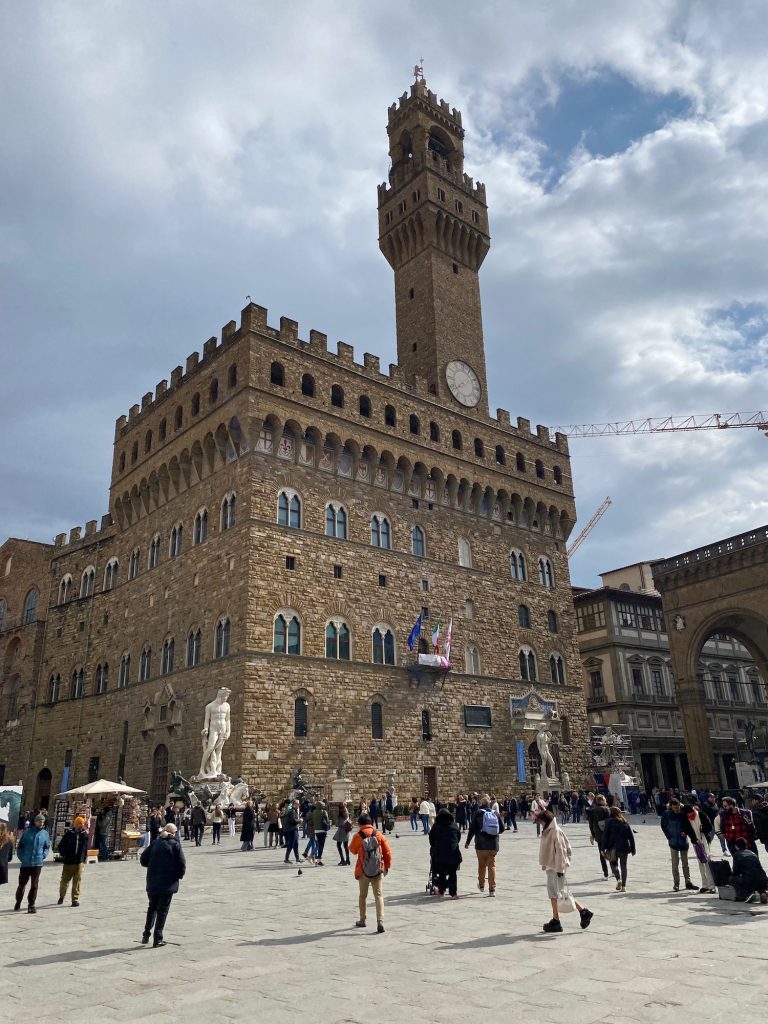
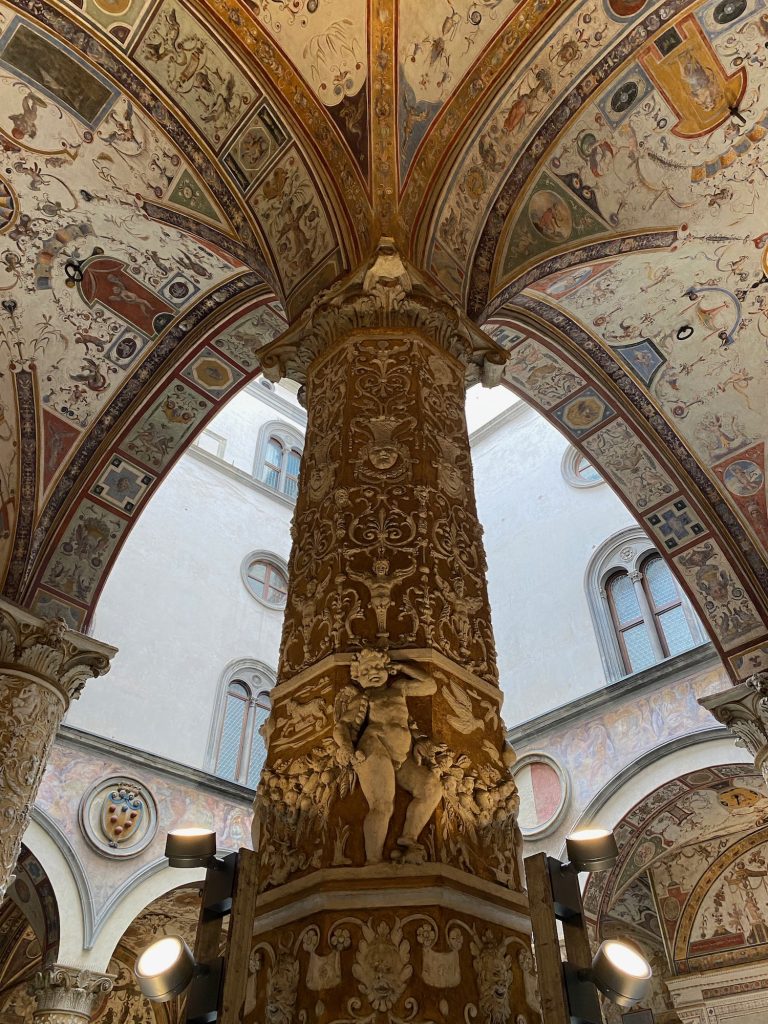
Palazzo Vecchio, Florence
Galileo taught Cosimo II, most likely in Pisa. But with the Medici as his greatest patrons and supporters, he also worked and moved within their palaces, including Palazzo Vecchio and Palazzo Pitti. There are no real references to him to be found inside the palace itself, but it still deserves a brief impression here.
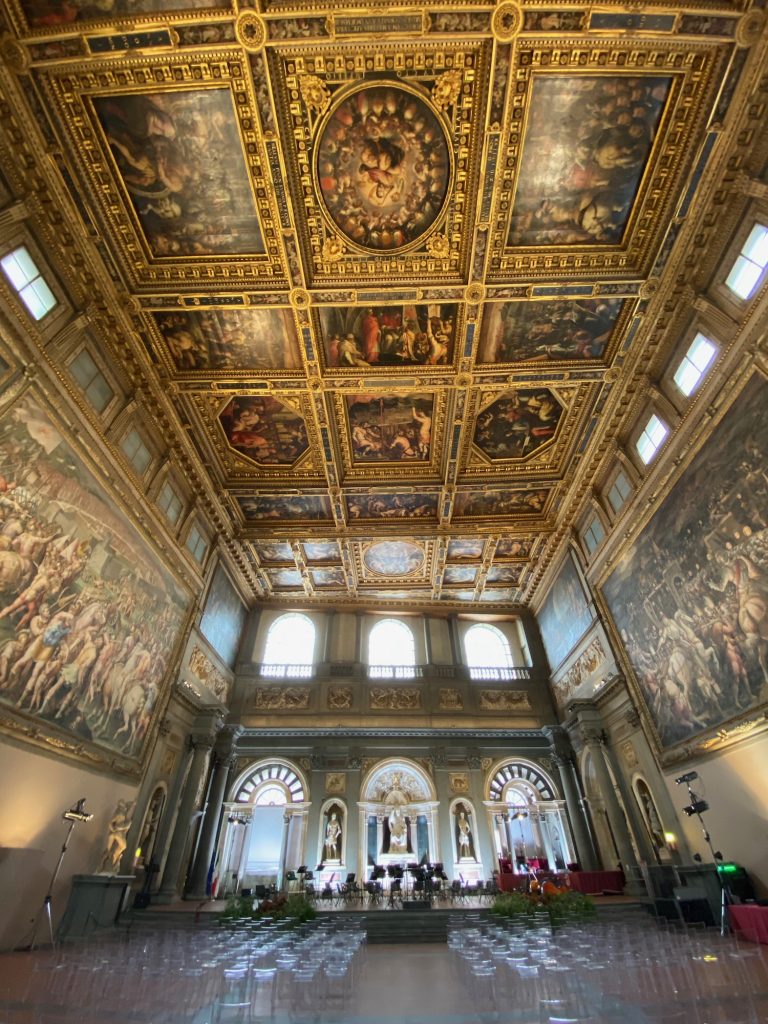
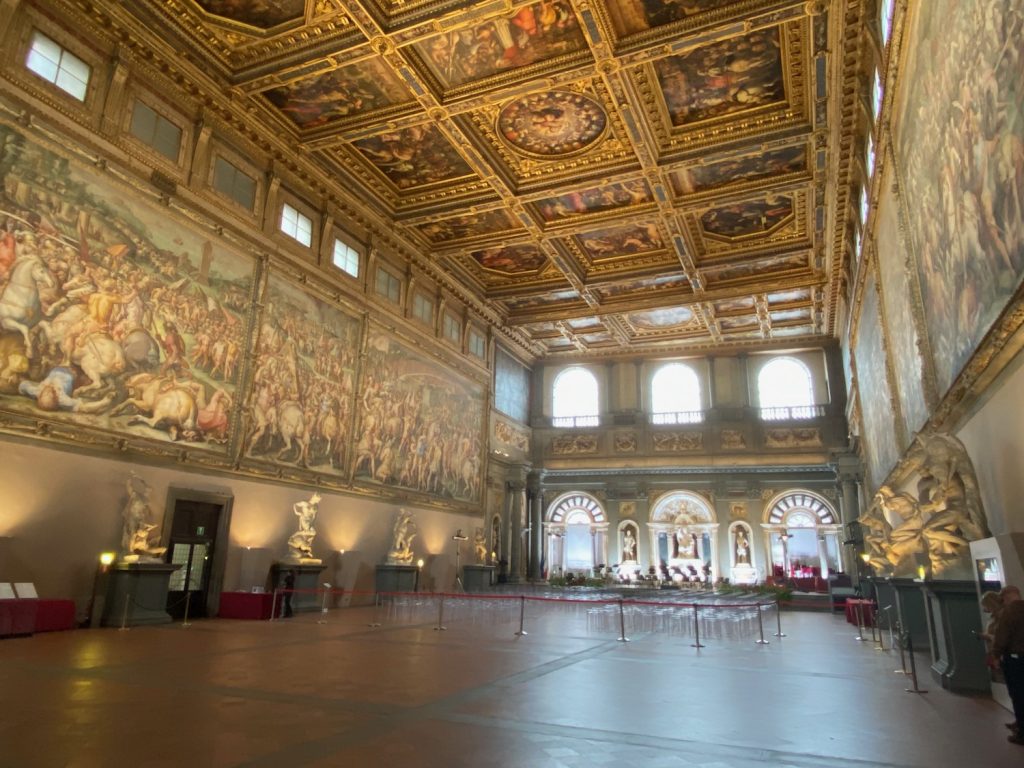
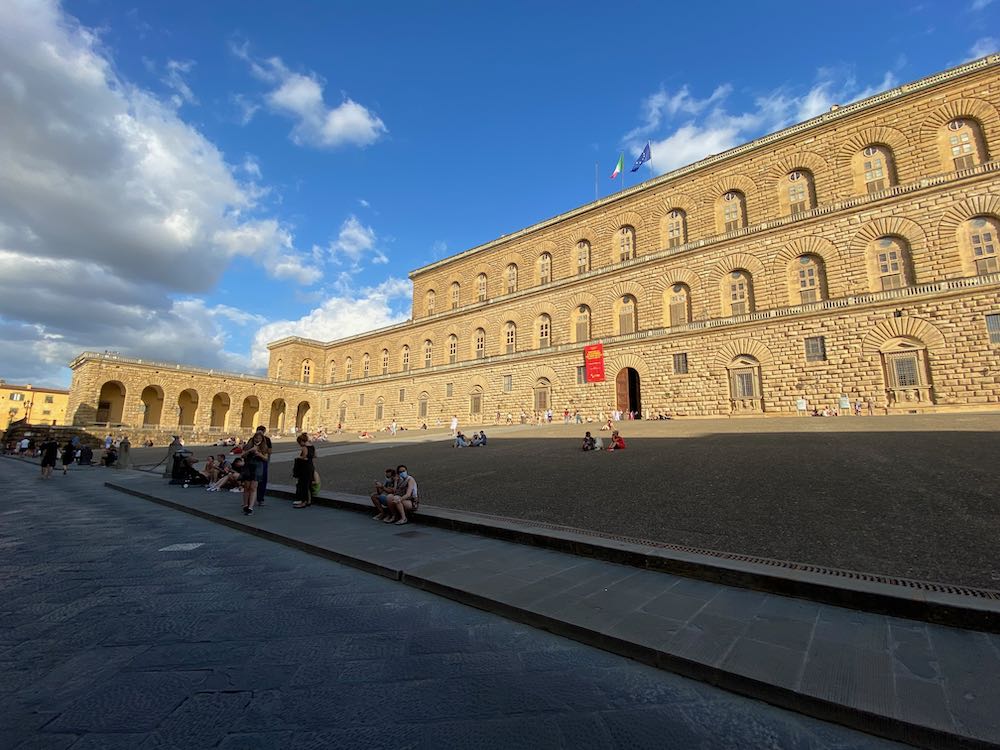
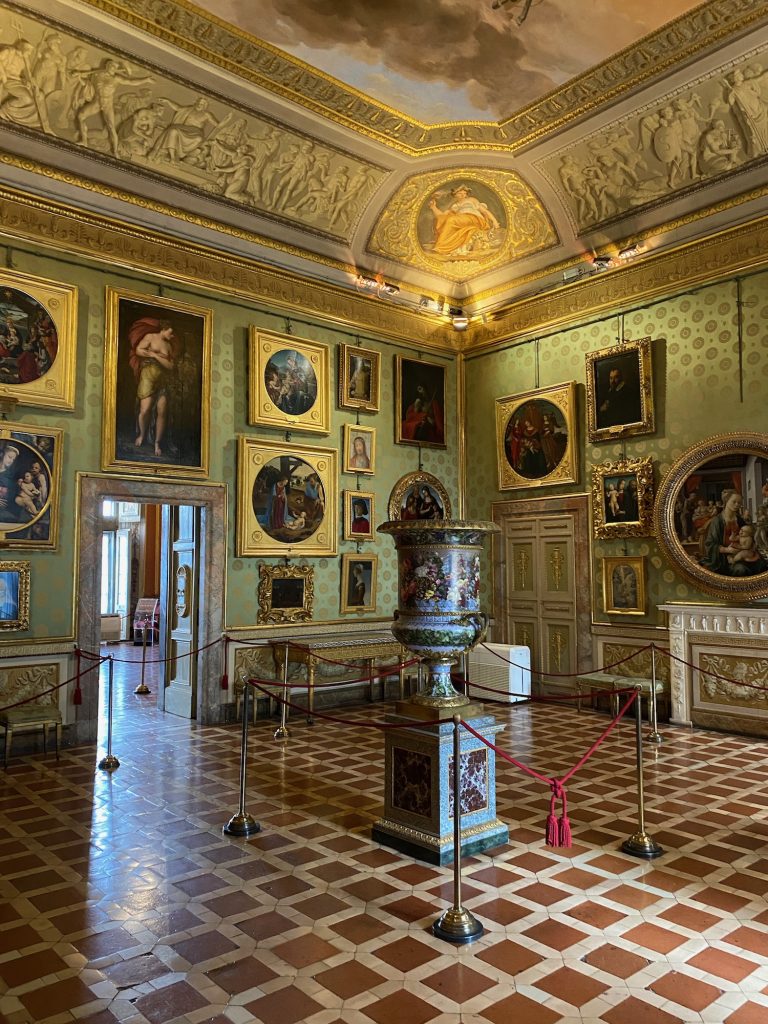
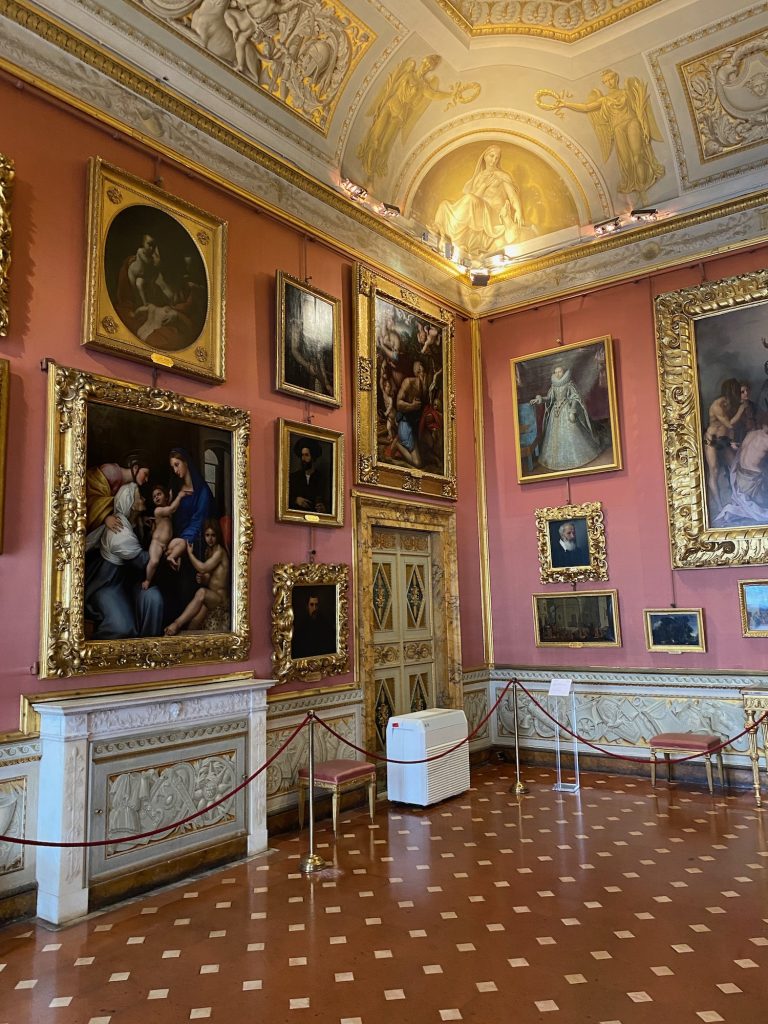
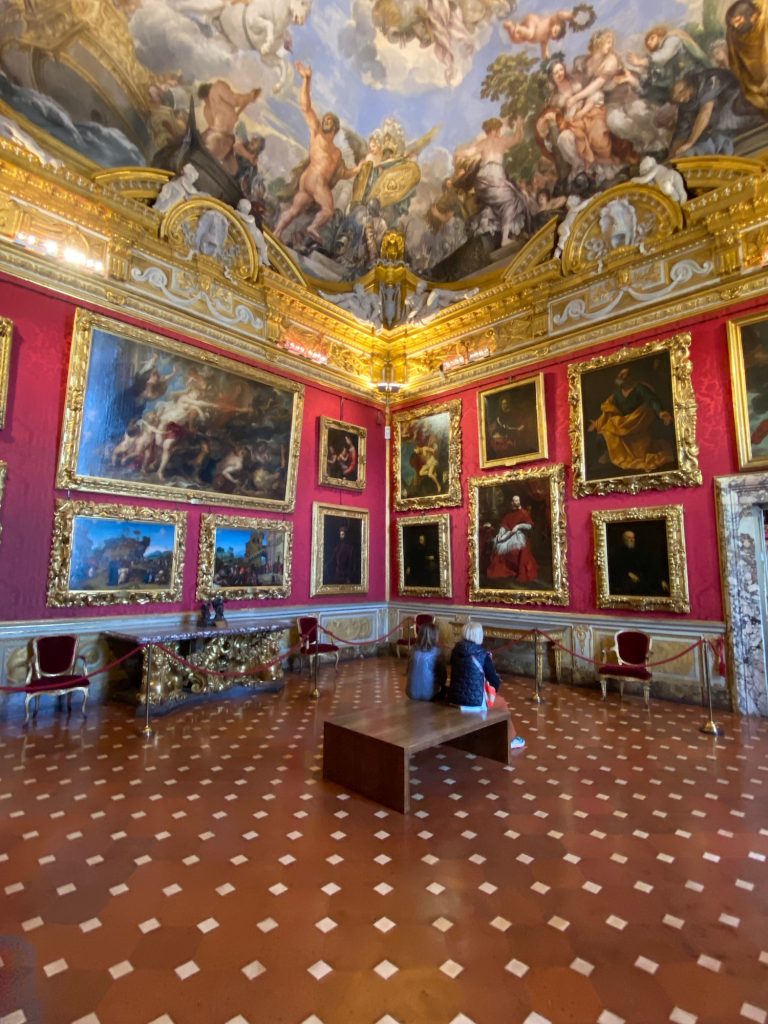
Palazzo Pitti, Florence
The other Medici palace, linked to Palazzo Vecchio by a corridor several hundred metres long that ran, among other places, across the Ponte Vecchio and through the Uffizi, allowing the family to avoid the plague, which returned regularly at the time. Galileo also worked in this palace. His house stood less than two hundred metres away.
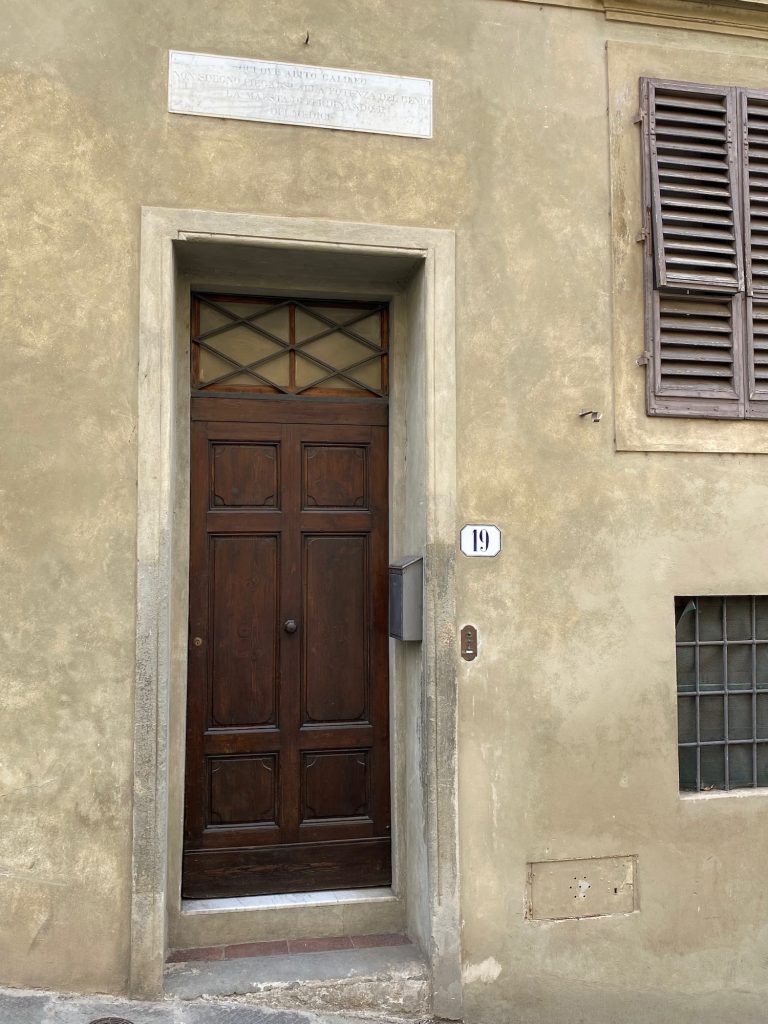
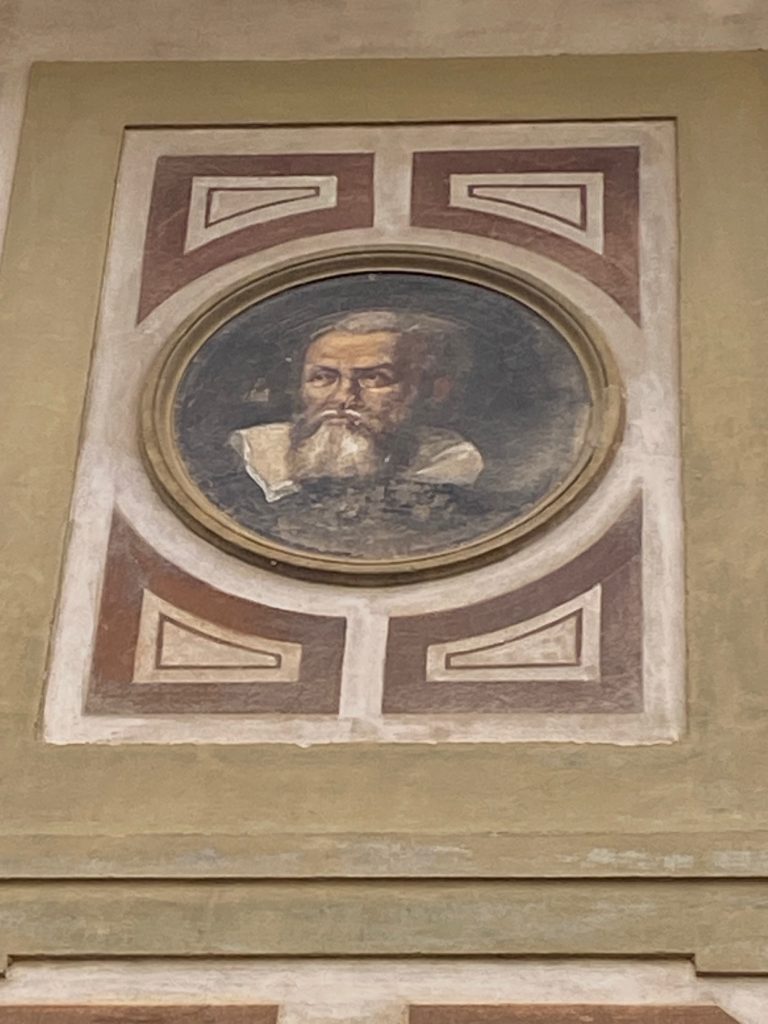
House near Palazzo Pitti, Florence
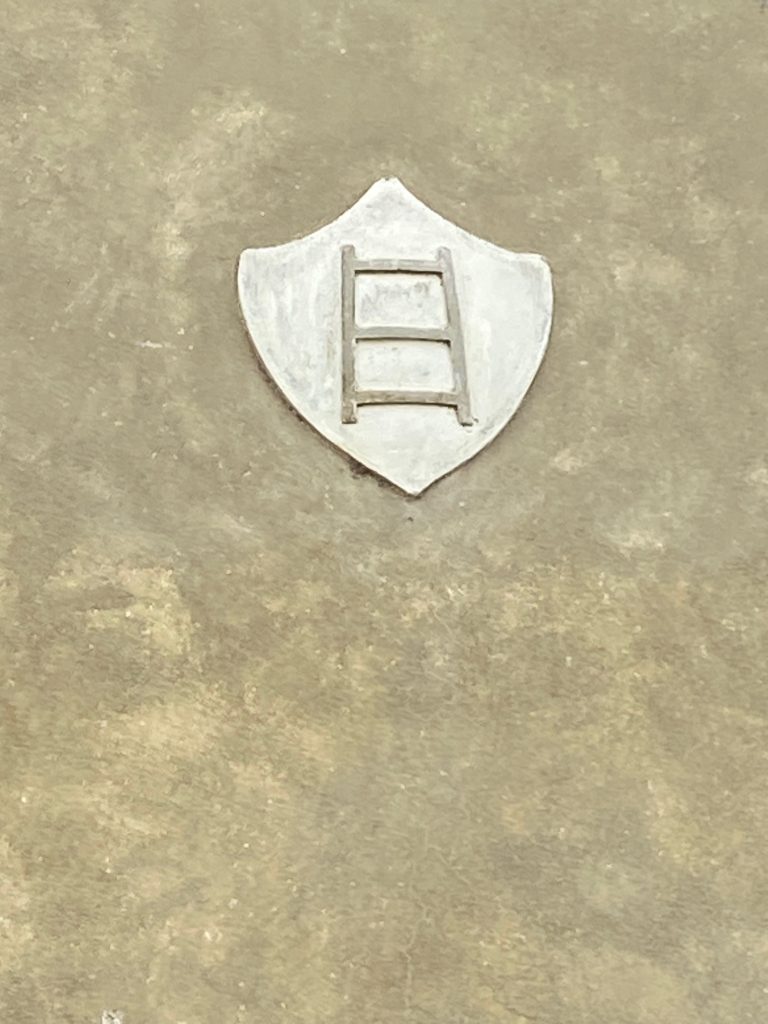
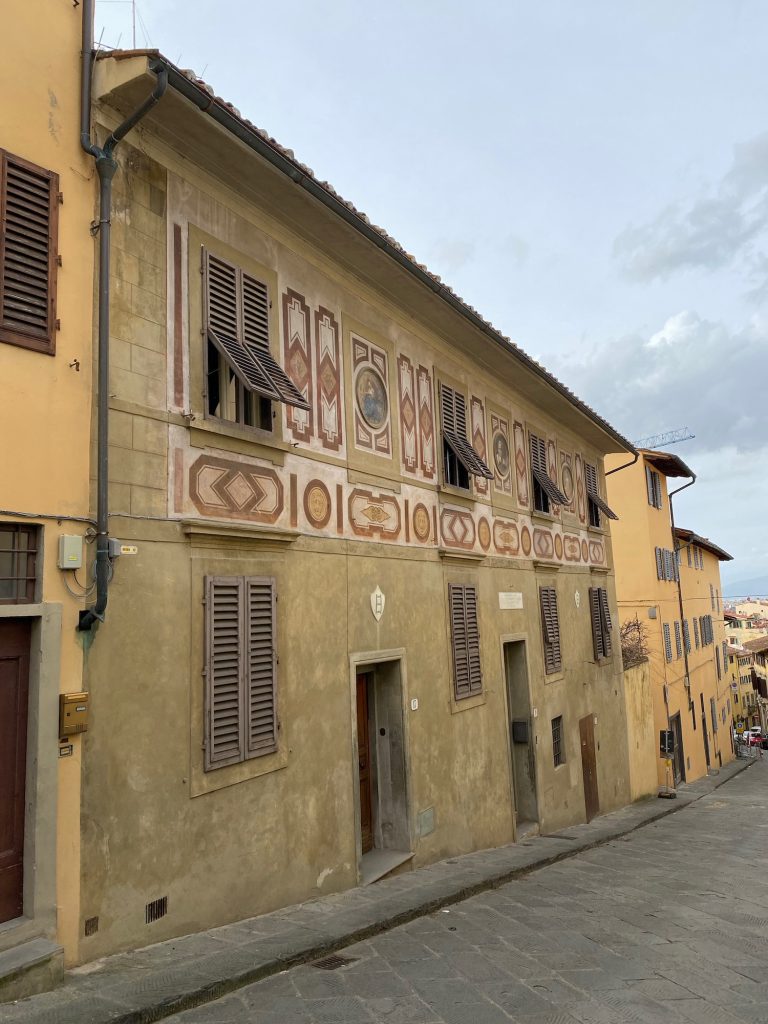
Together with his son, Galileo bought this house near Palazzo Pitti. He is said, however, to have spent much of his time staying with friends in the city centre. That ladder is the Galilei family crest. In the Renaissance, the ladder was often a symbol of the ascent of the mind towards knowledge and truth. That fits Galileo’s later work as a scientist and philosopher remarkably well, even though the crest and the symbol were already in use before his time.
Arcetri – Italy
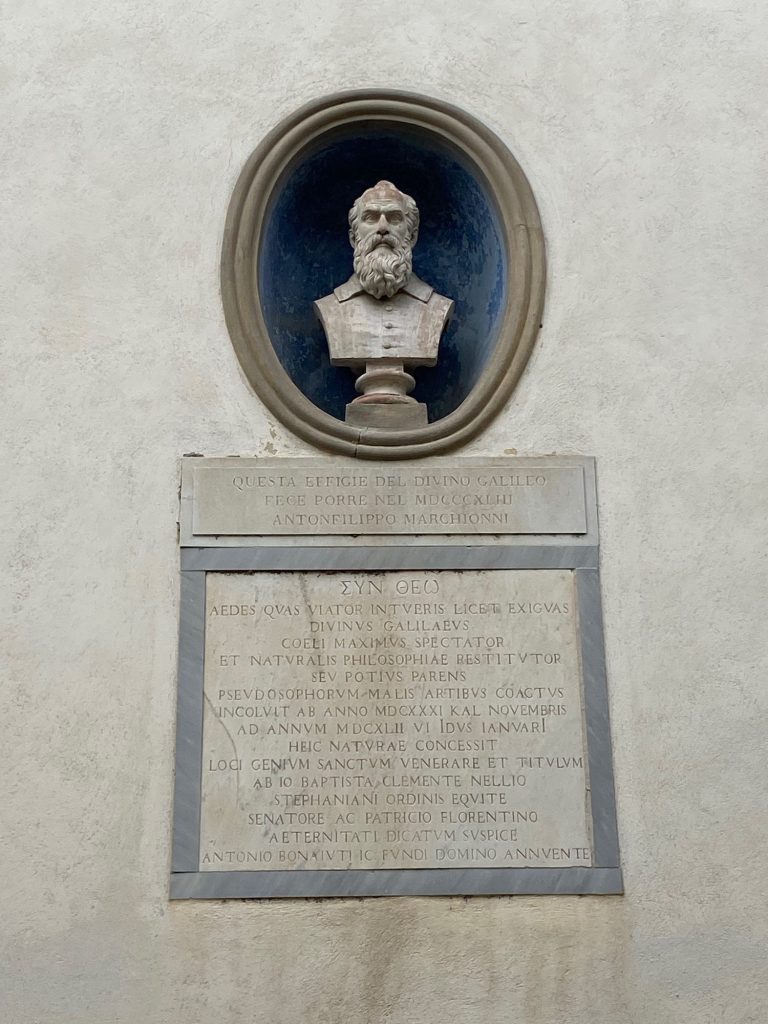
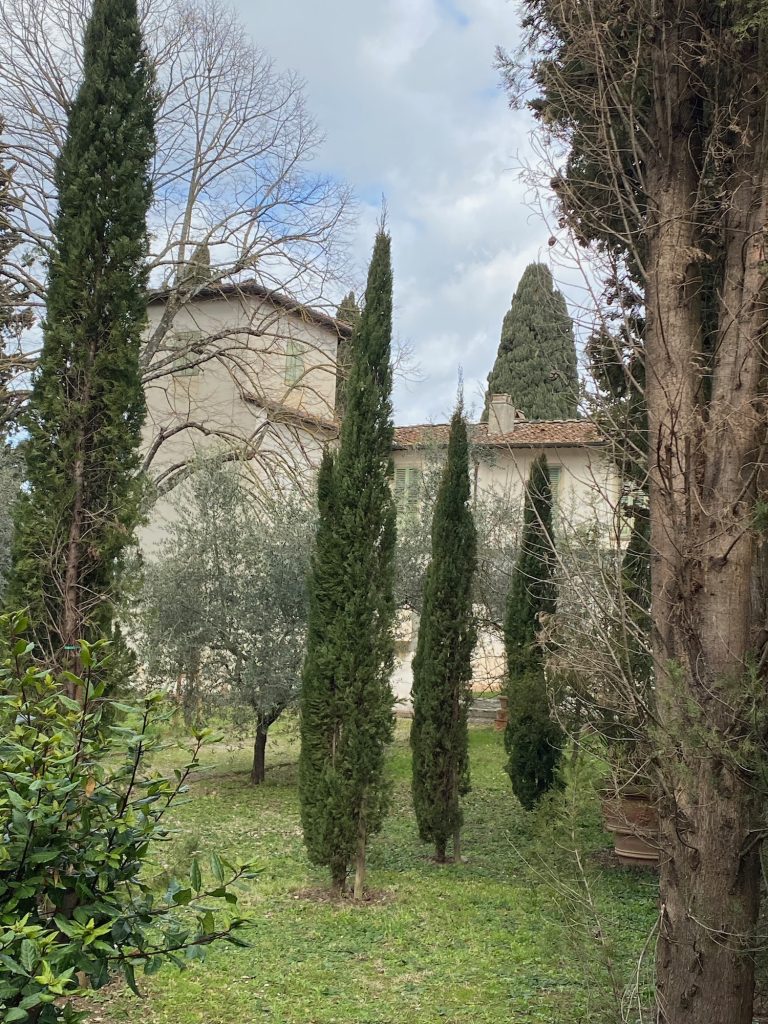
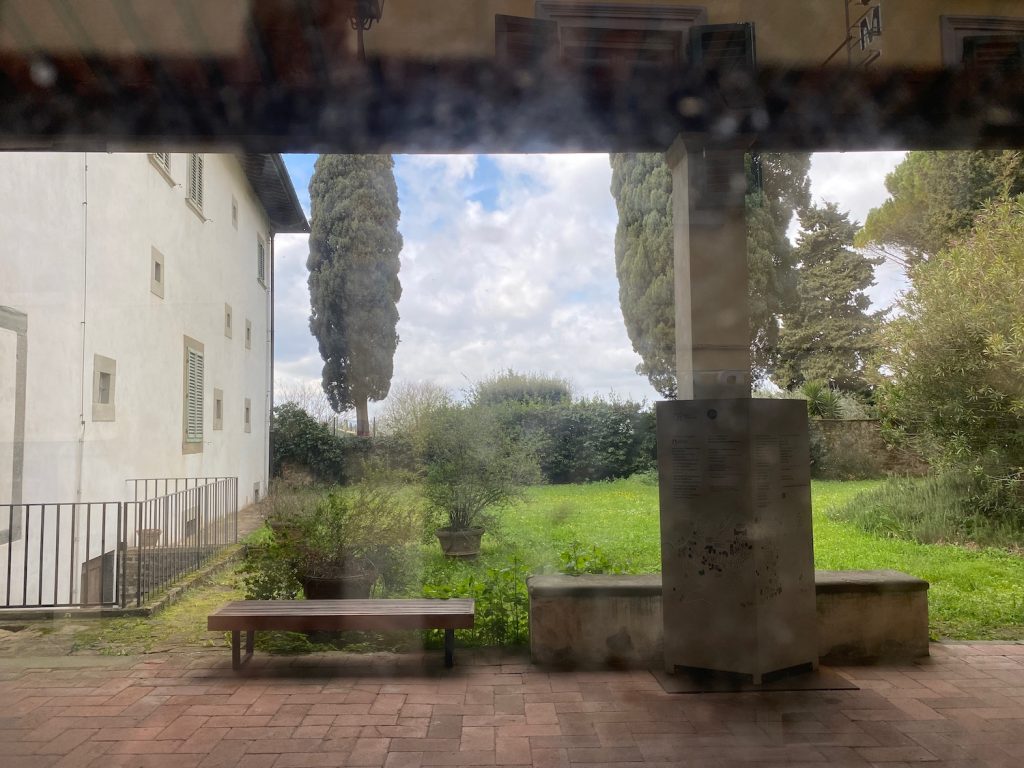
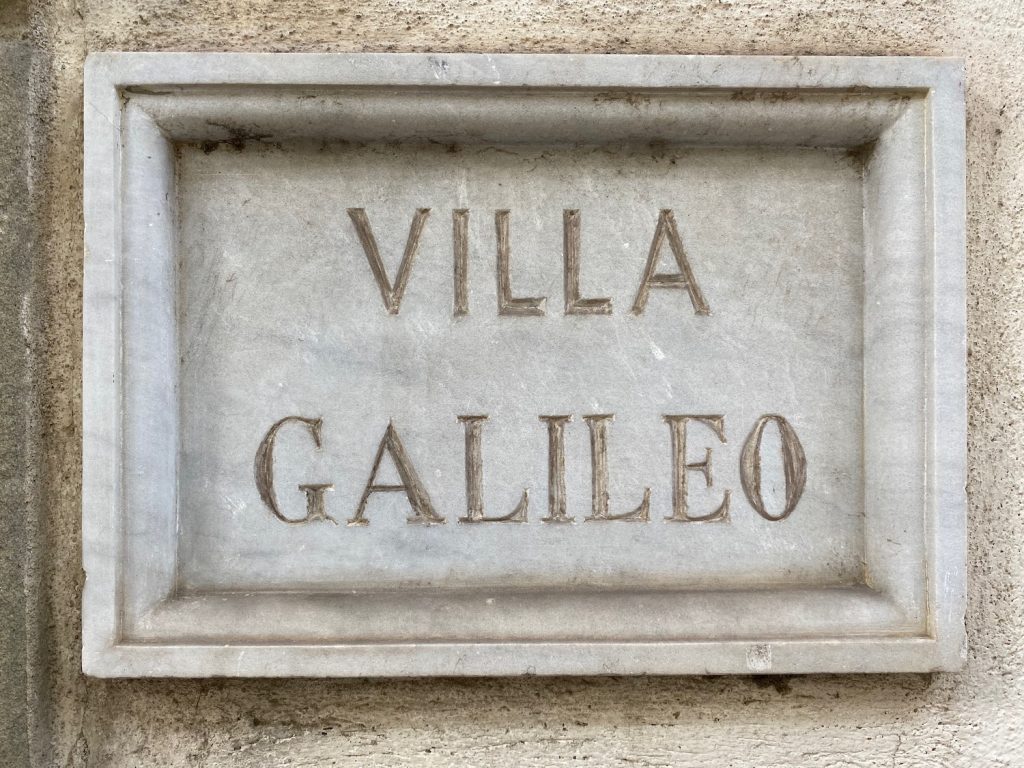
Galileo’s house, Arcetri
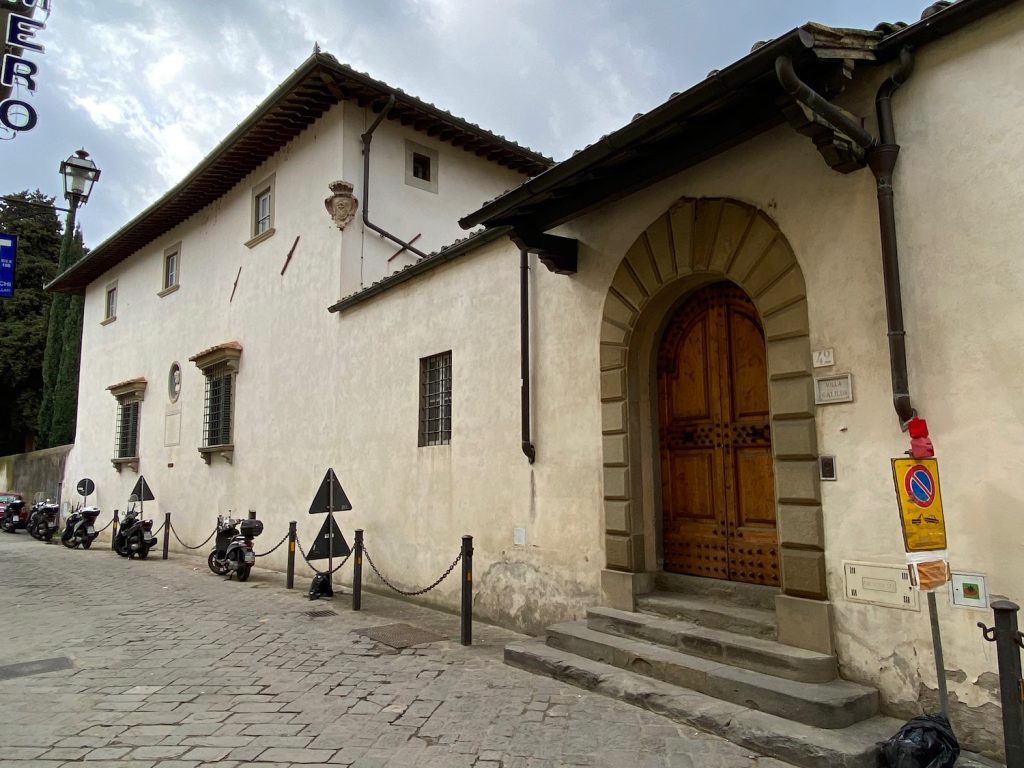
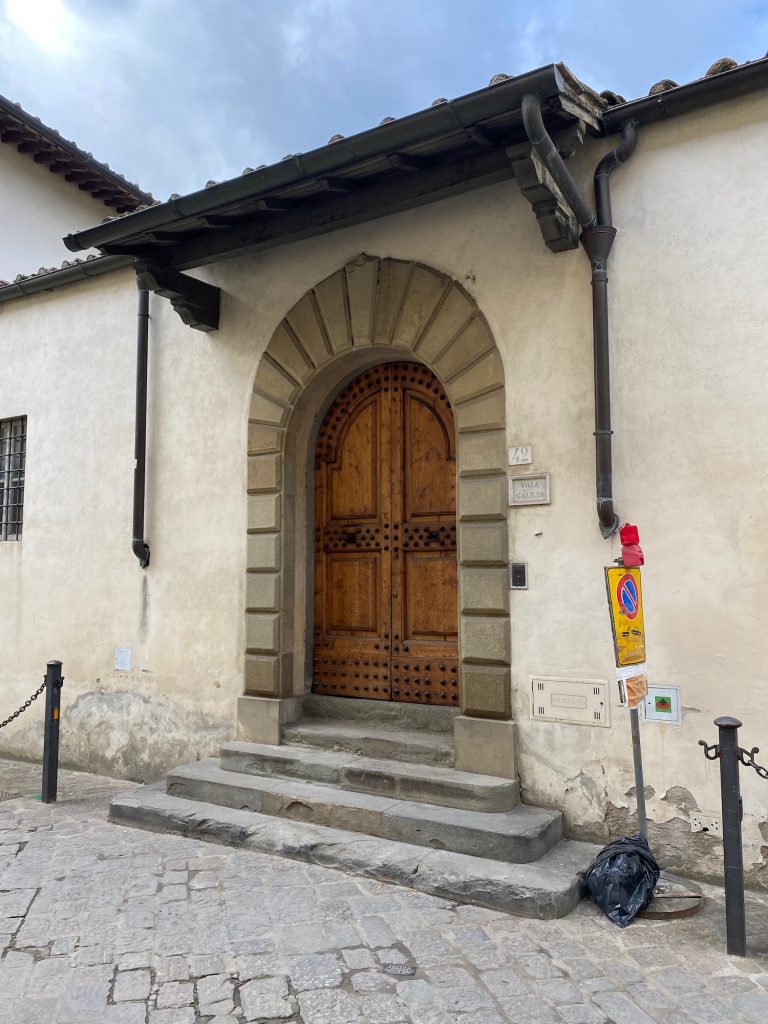
This is the house where Galileo was kept under house arrest until his death. The author visited it twice, but each time was unable to go inside. It has now been closed for some time for renovations. Those tend to proceed at an Italian pace, so it may be a while yet. It is even possible to request a private tour through the university.
“The gate barely creaked as the caretaker unlocked it. He was a lean man, his face still marked by patches of summer tan, his hair swept back with water or sweat. ‘Buonasera,’ he said, briefly and with a questioning look.” (Chapter X)

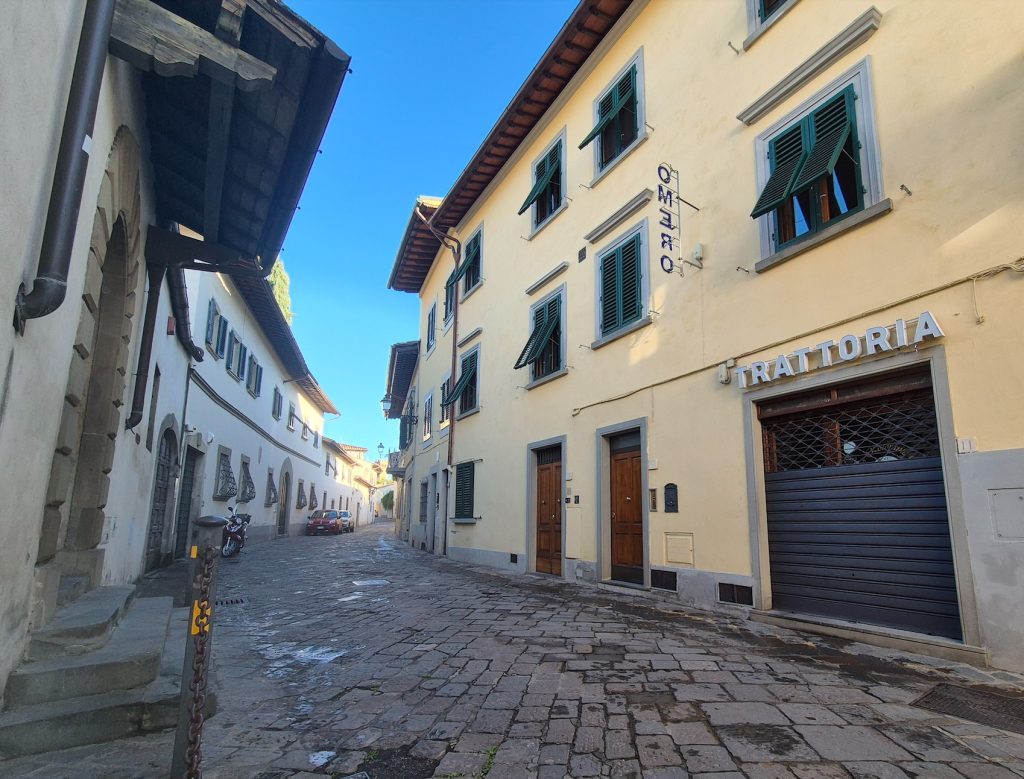
Trattoria Omero, Arcetri
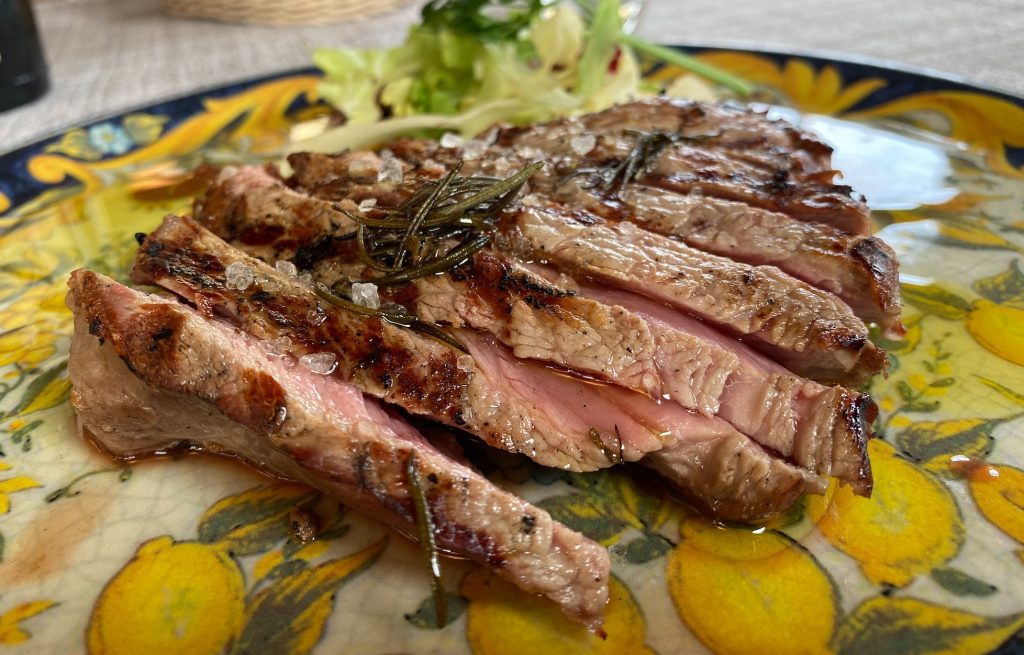
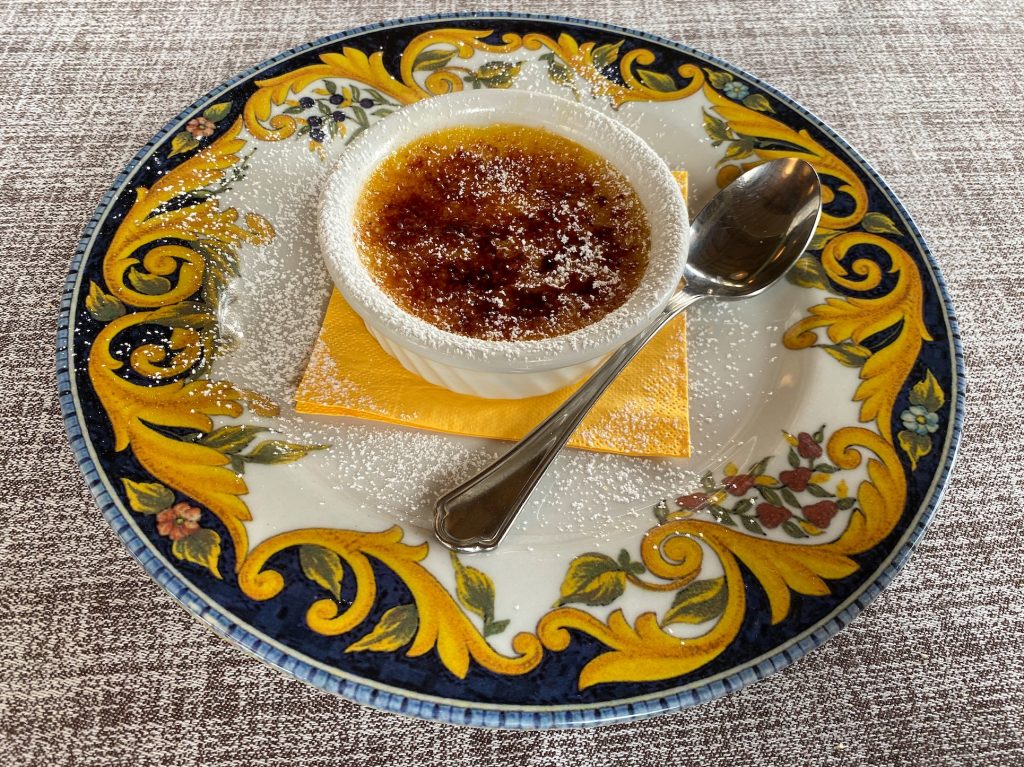
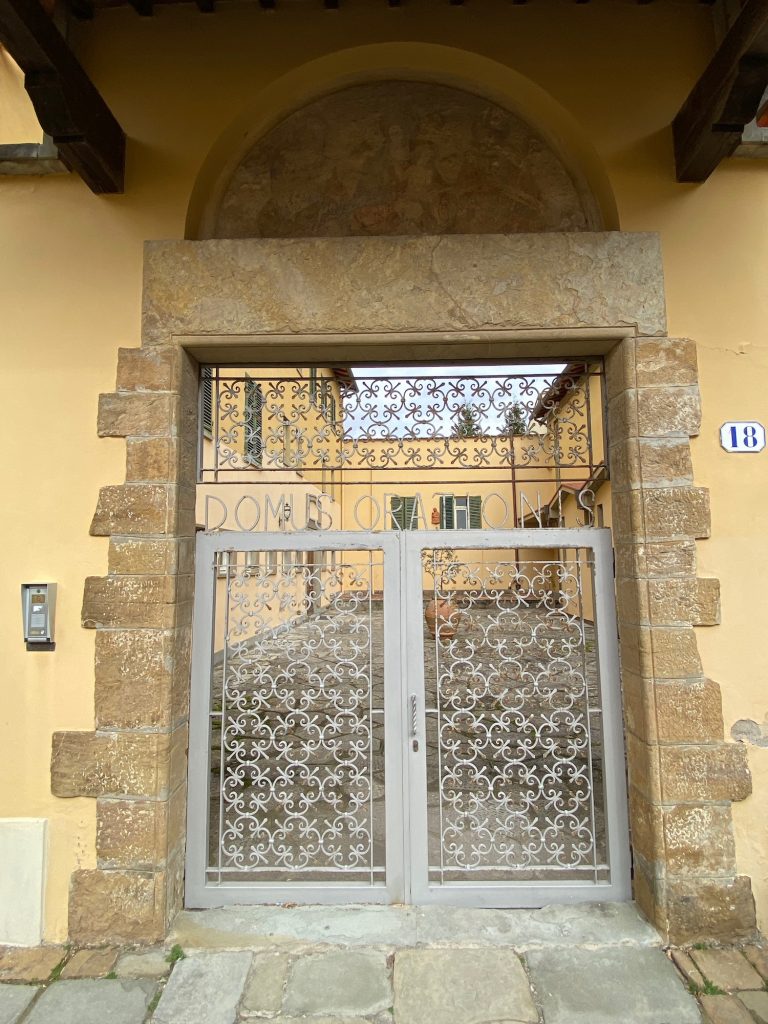
The final chapters of the book are set in Arcetri, including scenes at Trattoria Omero, which stands directly opposite Galileo’s house. On the left, you can see the gate to Galileo’s house, so very close by.
“They stepped into the restaurant, and as they looked for a table, Sienna realised that this moment was not the end of their search, but a turning point. The time of being followed was over. The time of carrying had begun. They sat down and were immediately given water. ‘Why don’t you have a look at the menu and choose something healthy, for your mother,’ Sienna said with a wink.” (Chapter X)
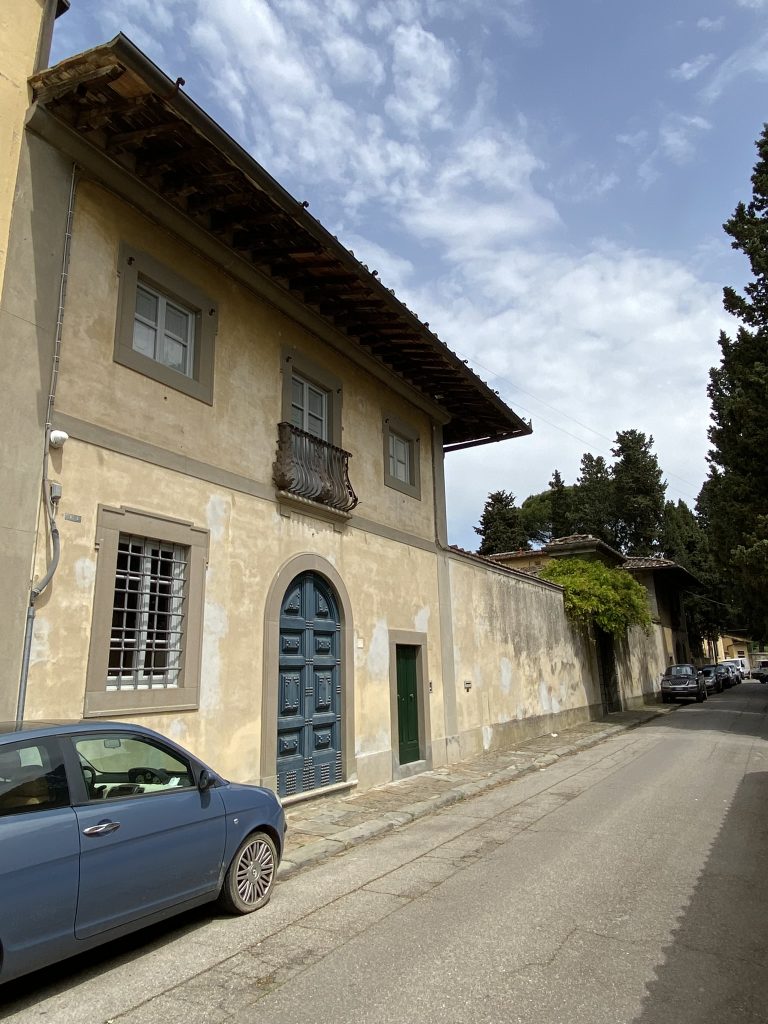
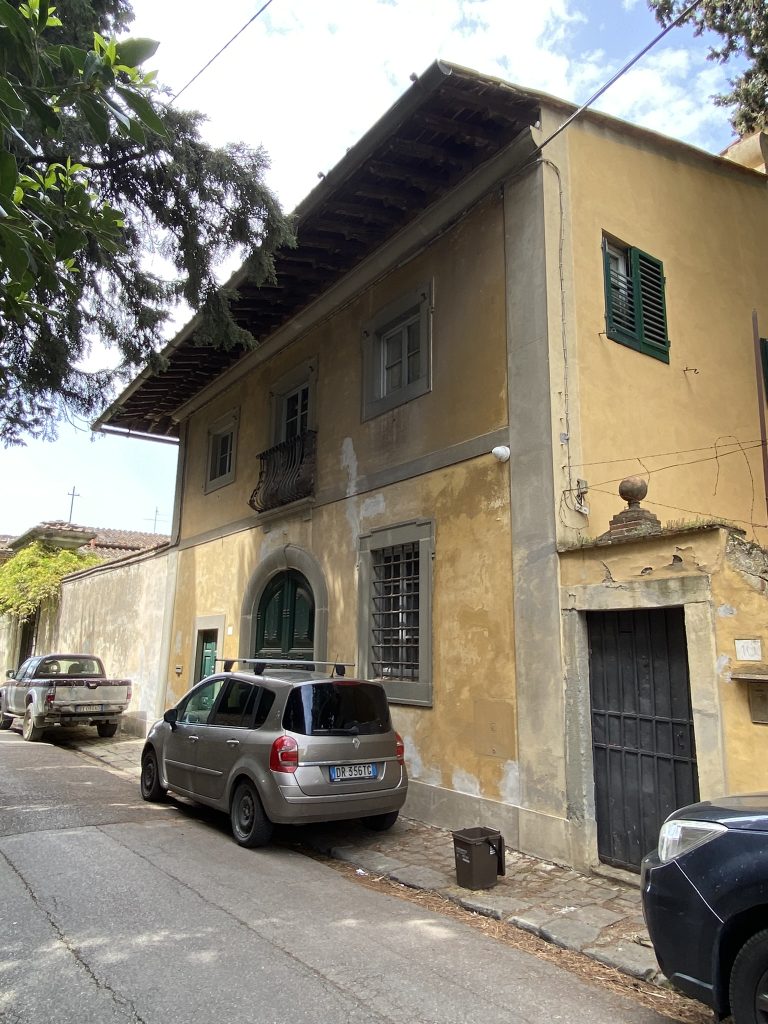
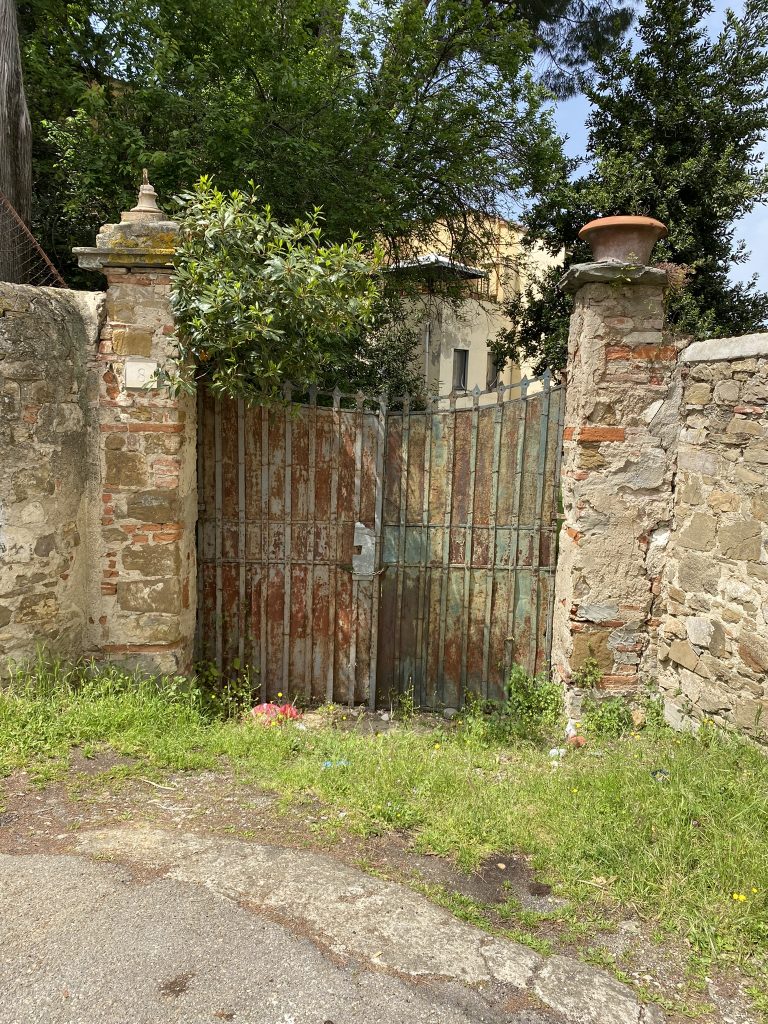
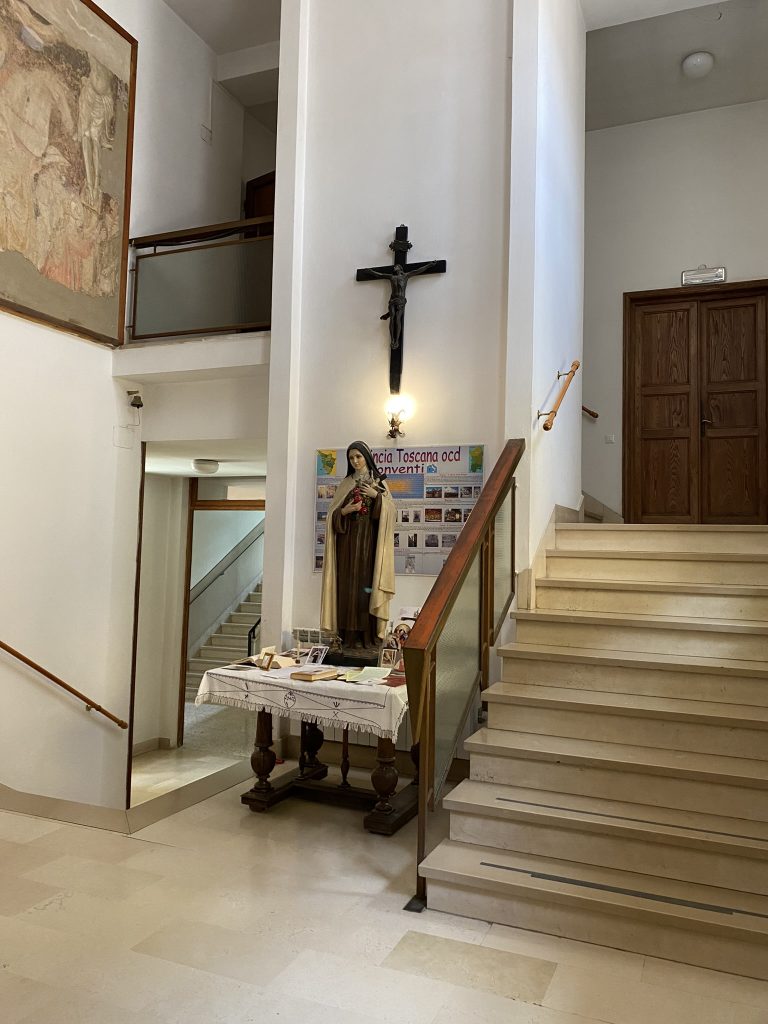
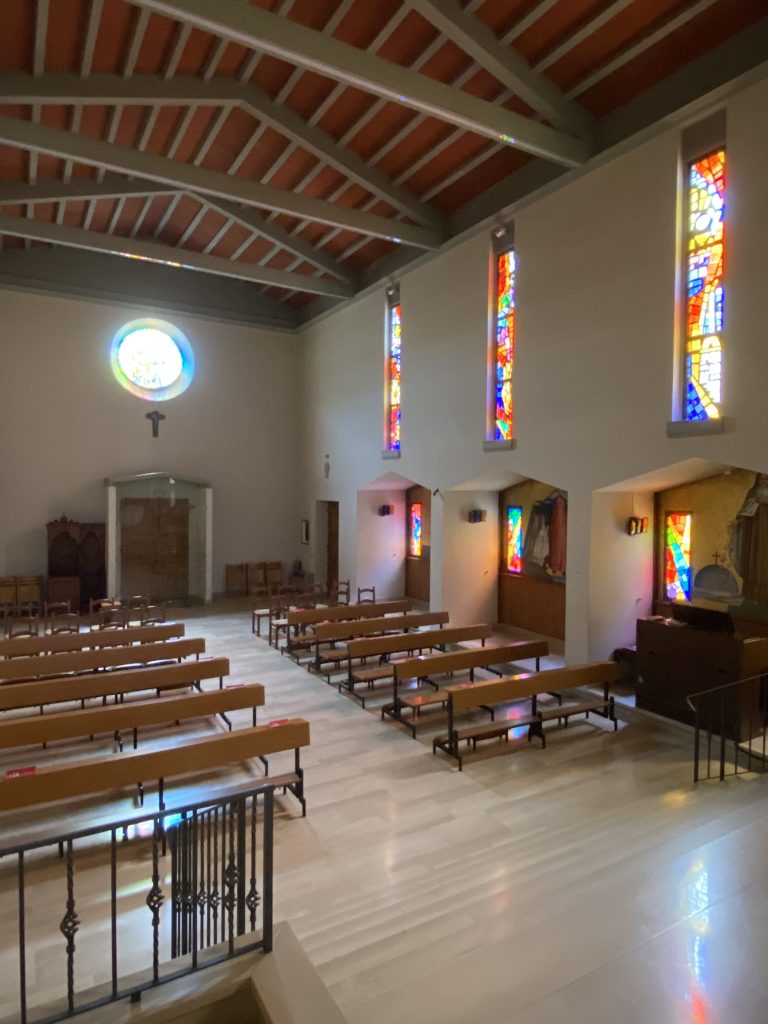
Convent of San Matteo, Arcetri
Because both daughters were born outside his relationship with Maria Gamba, they were considered socially unacceptable, a source of shame, and so they ended up in the convent. Galileo supported them, and the convent, as much as he could. He corresponded extensively with his eldest daughter, Maria Celeste: 124 of her letters to her father have survived. Here, Galileo’s legacy can still be seen clearly on the convent buildings. Although it was not really appropriate, Bas knocked on the door and was kindly let in. A little later, he was even given a short tour by a monk who actually spoke English. He also explained to the author that this part was rebuilt in 1960. The section next to it is still original.
“You have come.” No questions. No explanation. Only that. Sienna felt her throat go dry. She wanted to say something, but the words caught in her throat. There was nothing to explain. He knew. Vincent looked in surprise from the man to Sienna, and back again. “How… what do you mean?” he began, but the monk gently raised his hand, a gesture that called them to silence without force. “Not everything asks for a key,” the monk said. “Some doors open… through time.” (Chapter XIII)
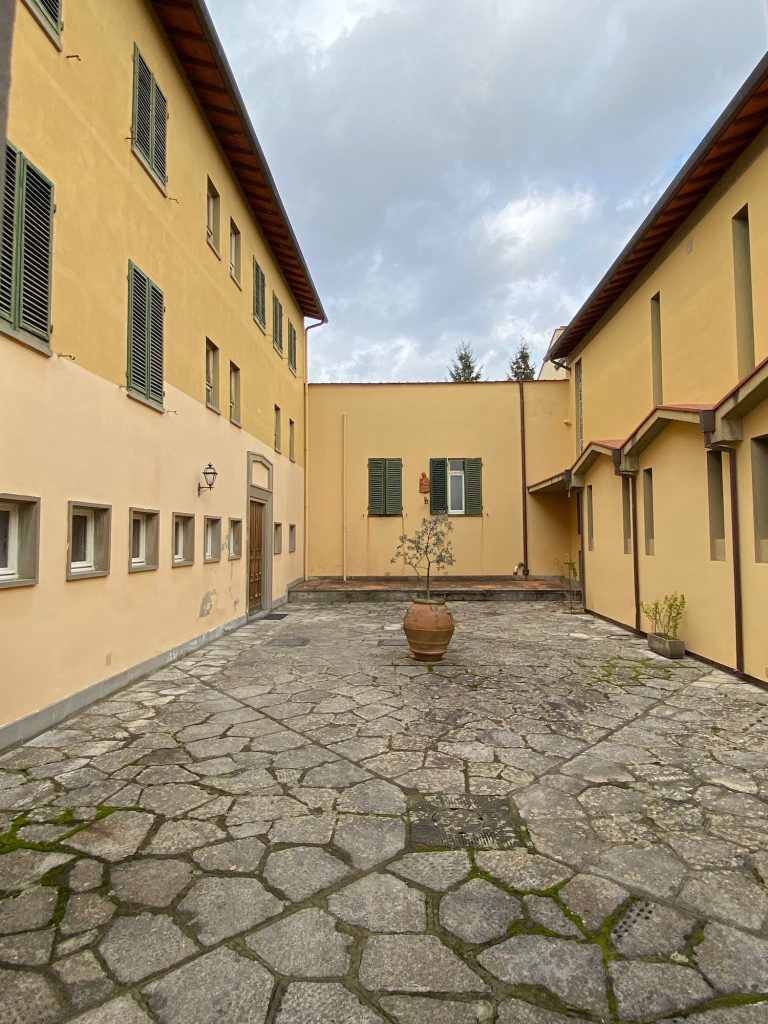
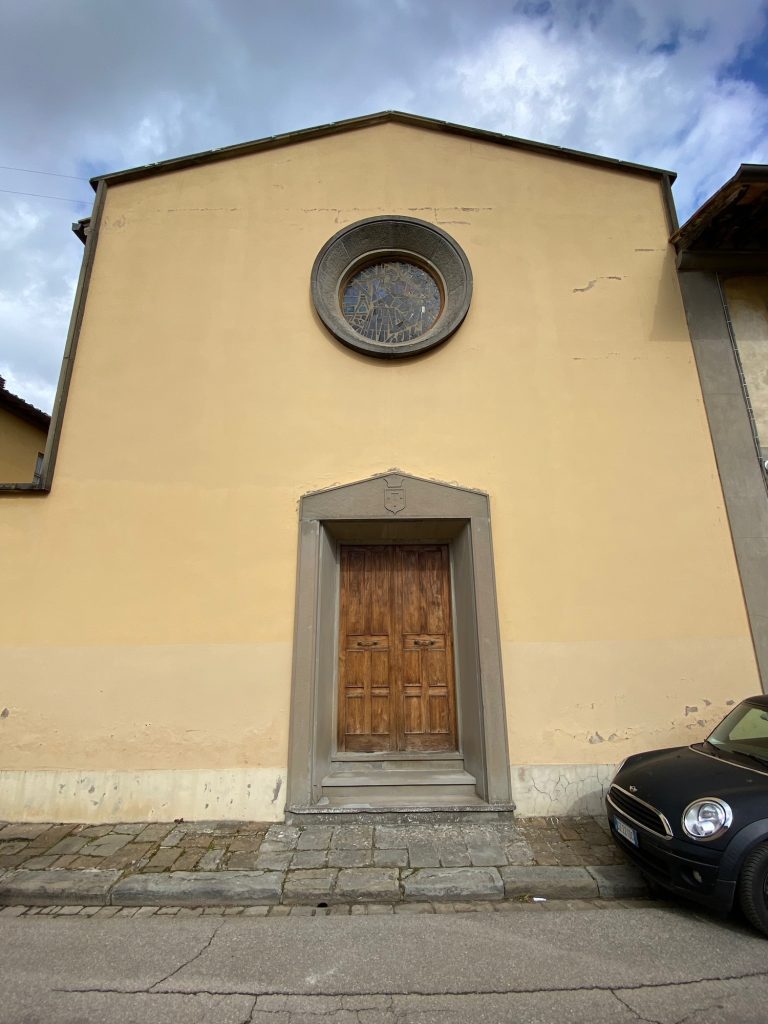
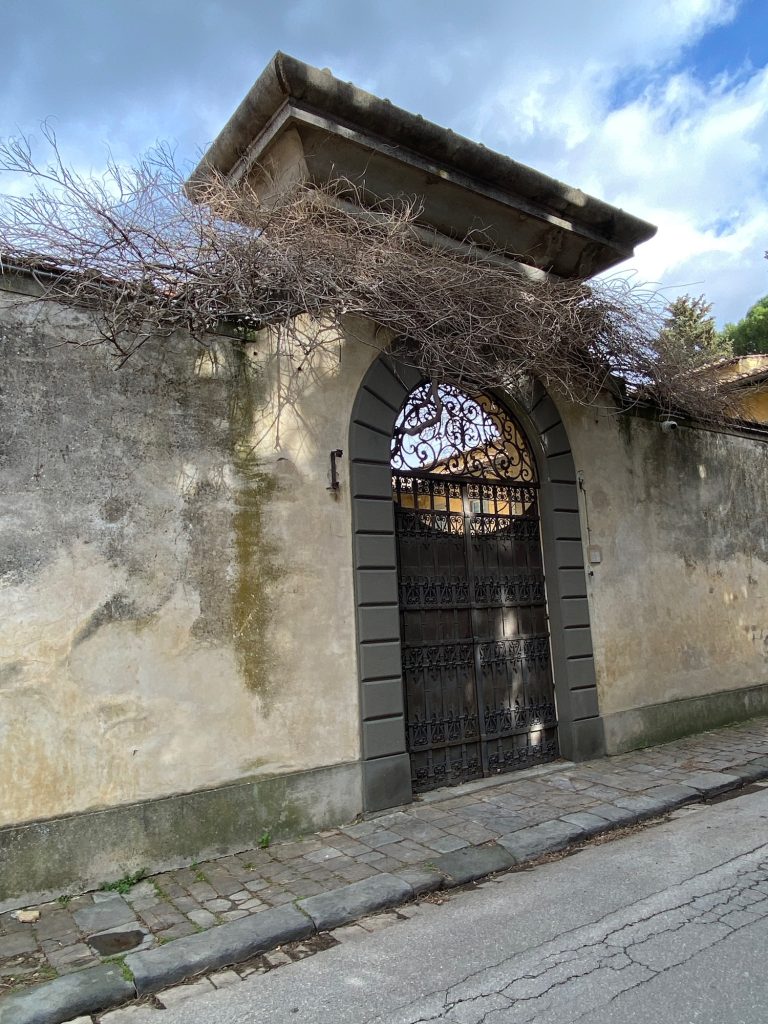
The photographs below may look as though they were taken on opposite sides of the street, but both actually show the same original section of the convent. The crumbling gateway is part of it too. All this stood just 300 metres from their father, close enough for him to visit them regularly, speaking through a special hatch and bringing food, because the nuns lived in great poverty. This is described beautifully in Dava Sobel’s book Galileo’s Daughter.
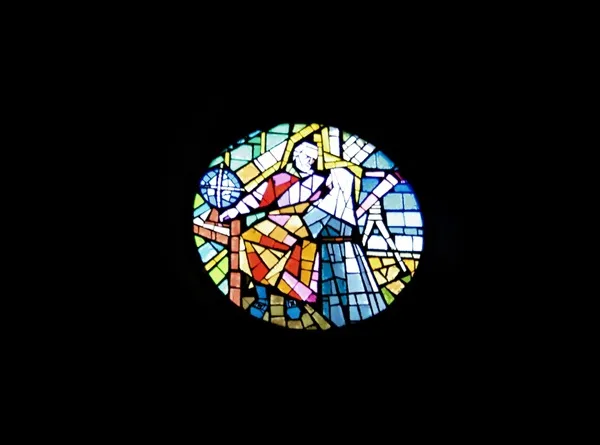
See how the stained-glass window beautifully reflects the bond between the nun and her famous father. The author did not take the time to photograph it properly himself, so this image comes from this extensive website about Galileo’s life.
Siena – Italy
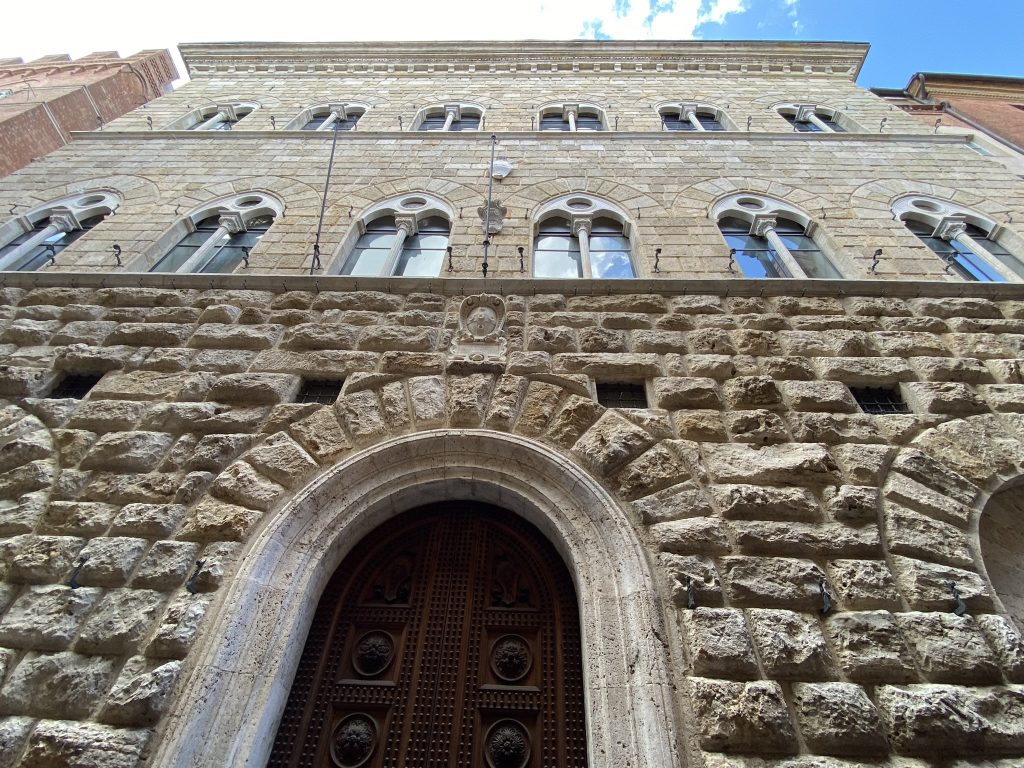
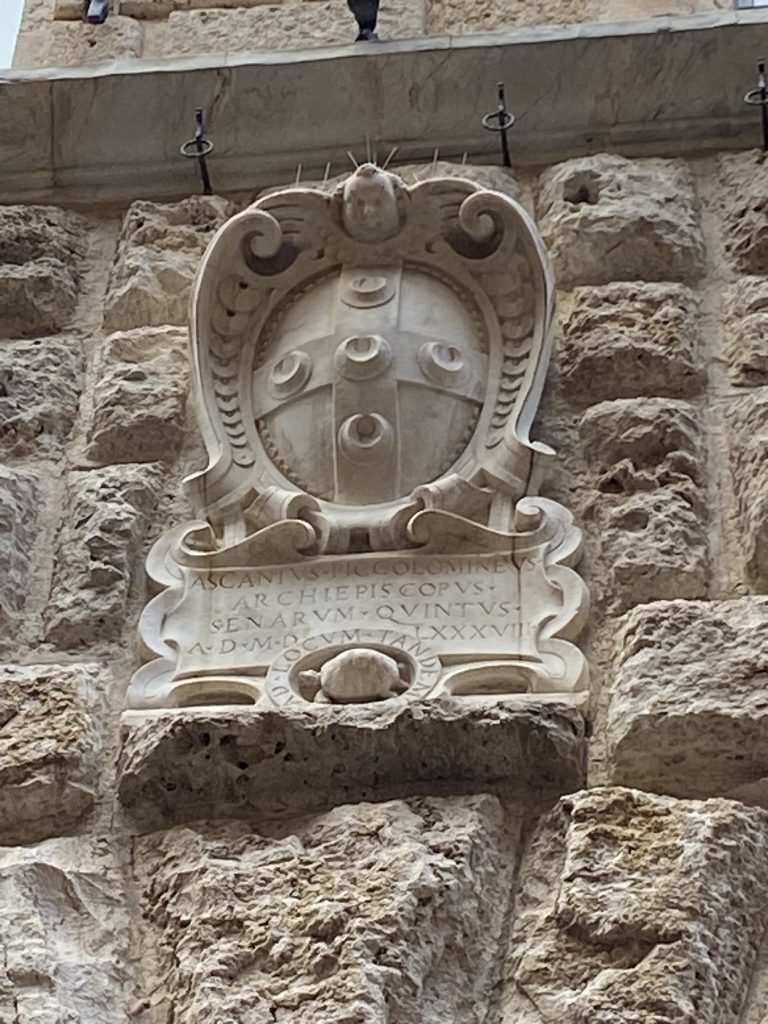
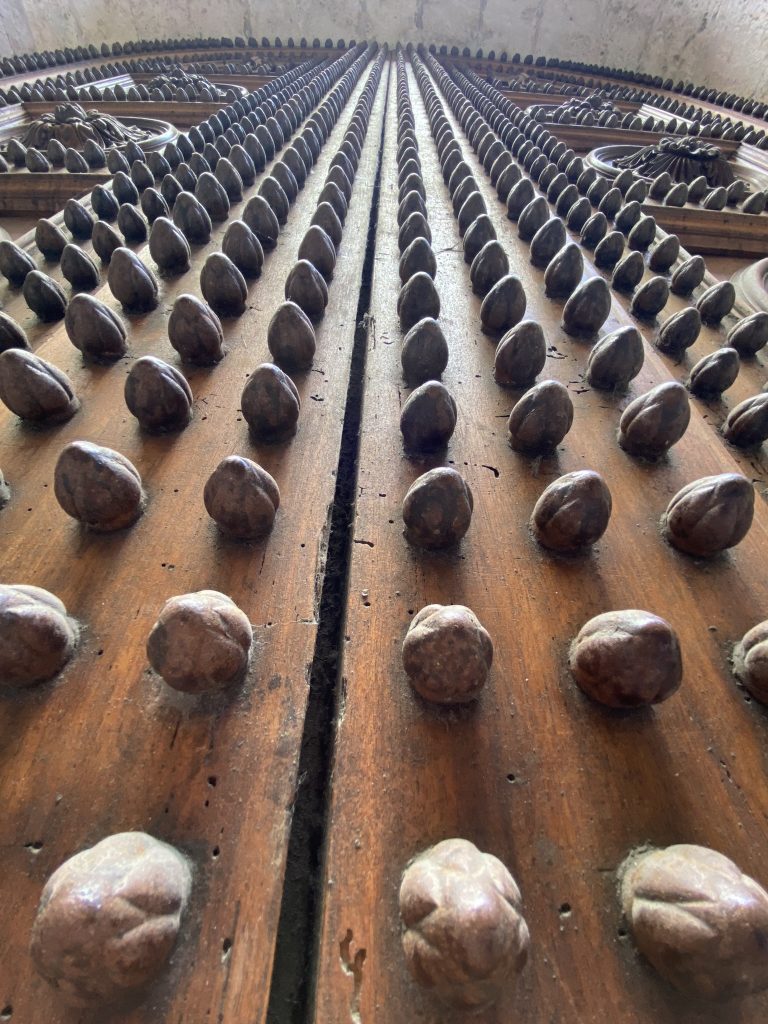
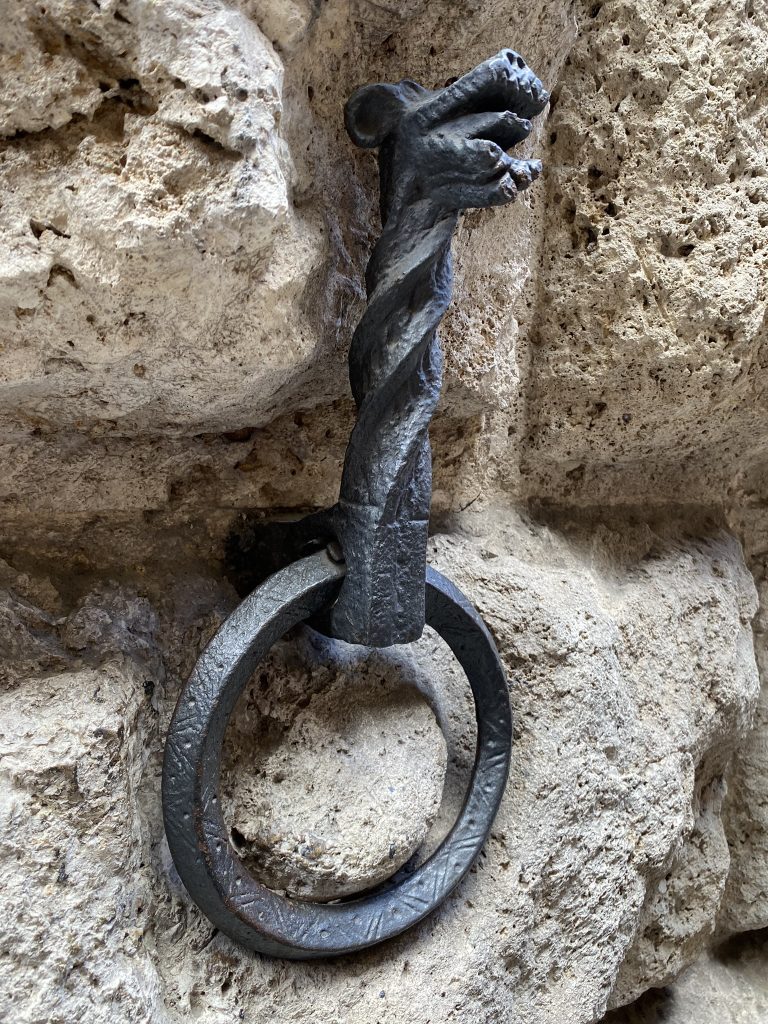
Palazzo delle Papesse, Siena
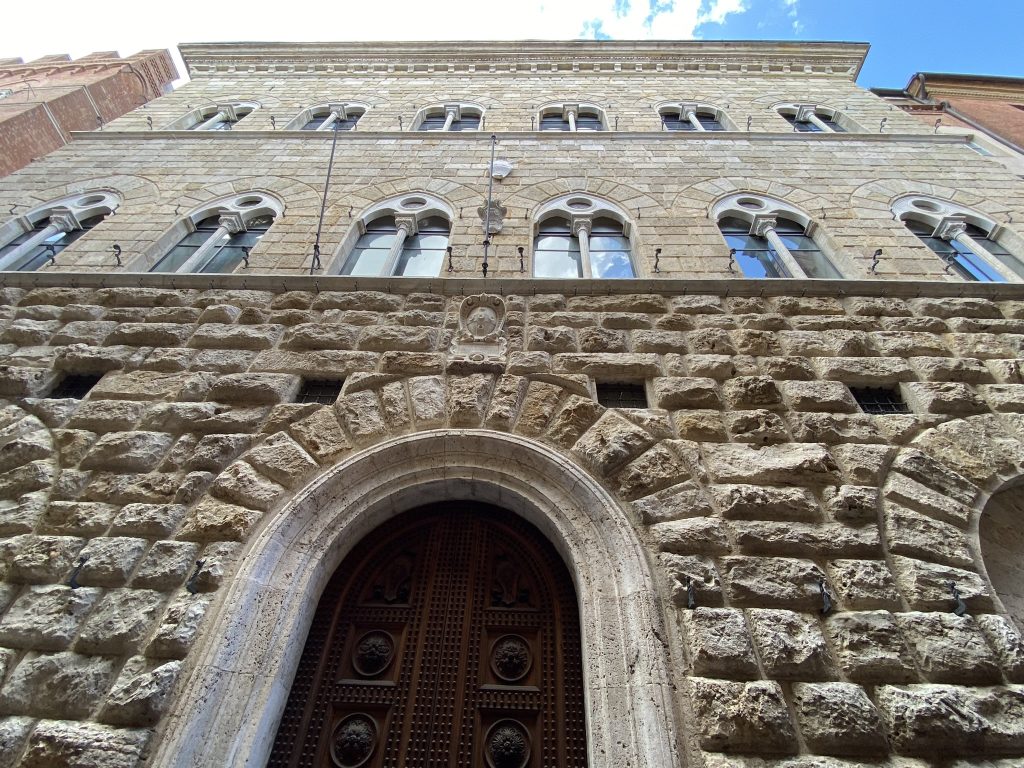
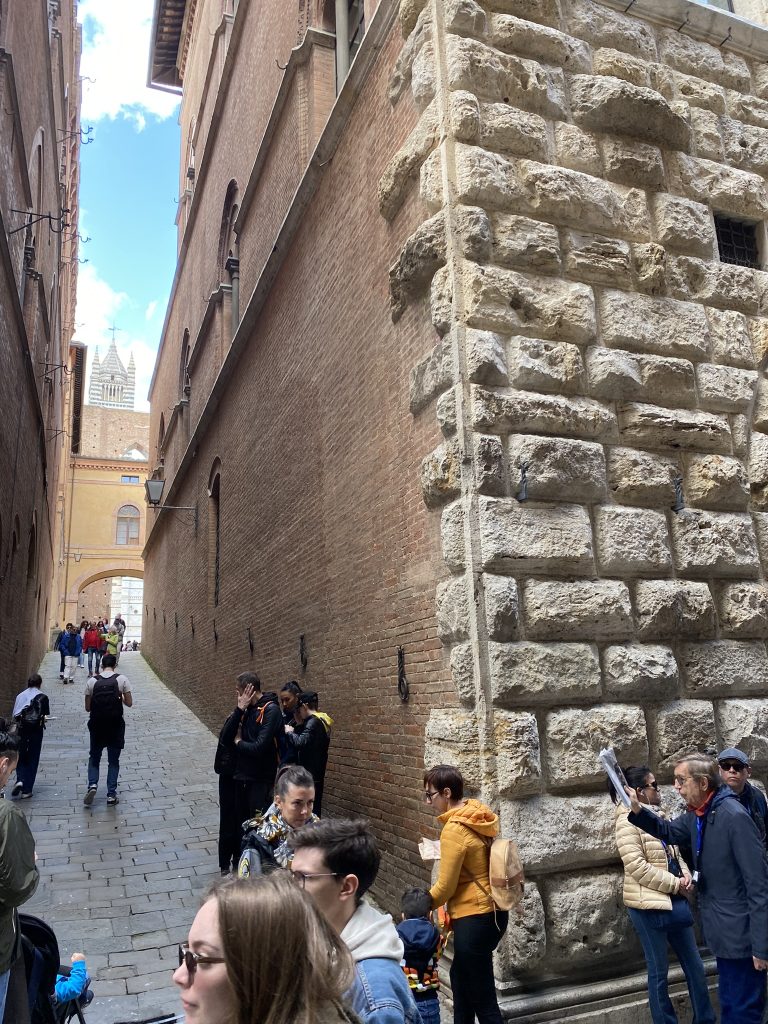
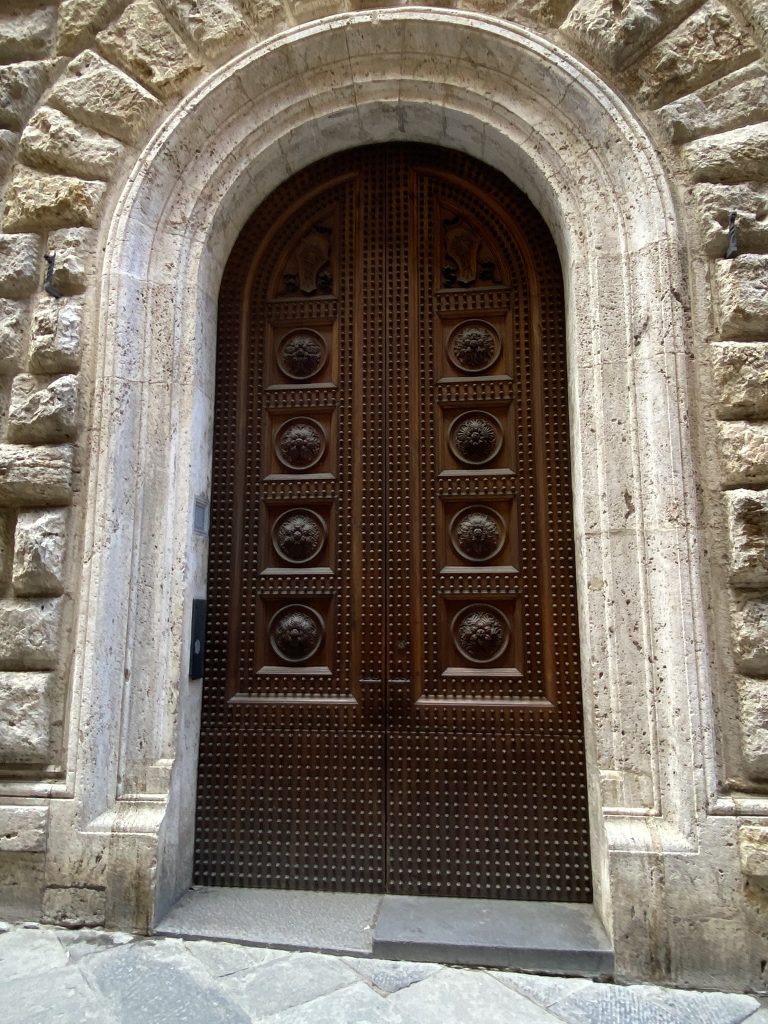
Cardinal Piccolomini was an admirer of Galileo, and thanks to his influence within the Inquisition, together with Galileo’s fame, for by then he was already sixty-nine, he managed to secure not a prison cell, but accommodation in his palace. It was a fine and welcome stop on the way back to Florence, where the plague was raging. Galileo stayed here for at least half a year during and after the trial. At first, another friend, the Grand Duke of Tuscany, paid the expenses, but when he stopped doing so under pressure from the Church, Piccolomini gladly took on the cost of his friend’s stay himself. Remarkable, really, for a man of the very same Church that was persecuting him.
In the second photograph, you can see how close Siena Cathedral is, just a stone’s throw away. In that church, you can also visit the Piccolomini Library. Piccolomini later became Pope, and he is buried there. It took the Church hundreds of years to revise its own “wisdom,” acknowledge that Galileo had been right, and remove his books from the Index of Forbidden Books.
Prague, Czech Republic
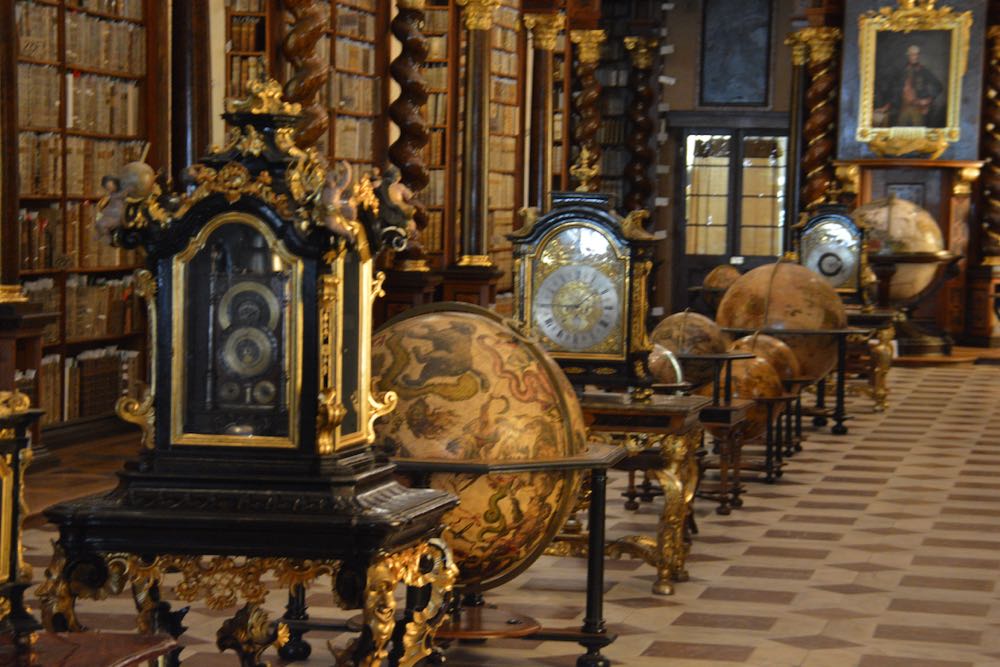
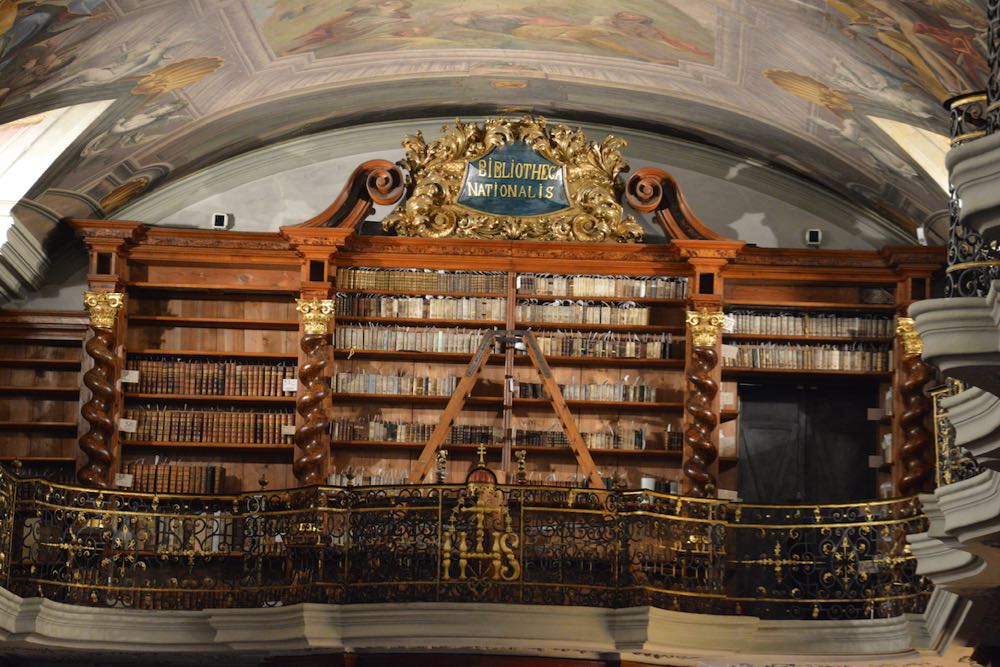
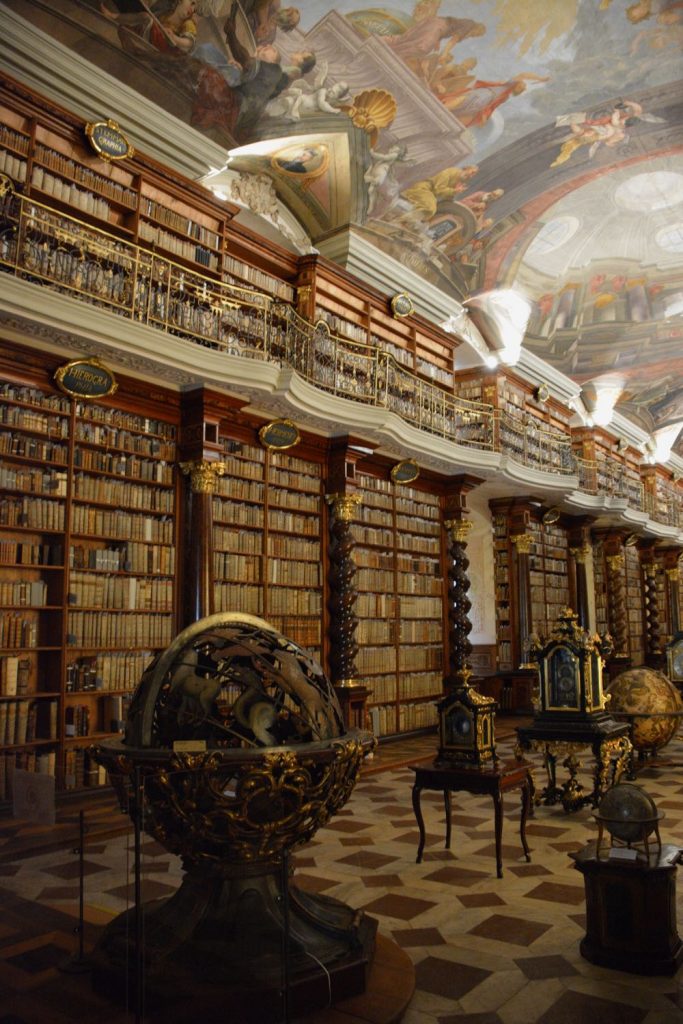
Clementinum Library, Prague
Not only the Clementinum is magnificent in Prague; the Strahov Monastery also has a beautiful library. Johannes Kepler was no doubt there as well, but he worked at the Clementinum, at first together with the great Danish astronomer Tycho Brahe. After that, he worked on his own for the emperor for several more years. Shortly after his anagram correspondence with Galileo, he returned to Linz in Germany. What a magnificent place to work Johannes Kepler had there in Prague.
“They passed the entrance to the magnificent library for which the Clementinum is so well known. He knew the pictures, but now, for the first time, he could see it with his own eyes. As they walked, Vincent looked at Sienna questioningly. She gave a small shake of her head, her expression saying, ‘Not now, Vincent. We are here for a higher purpose, and you know that perfectly well.’” (Chapter III)
Kepler and the orbit of Mars
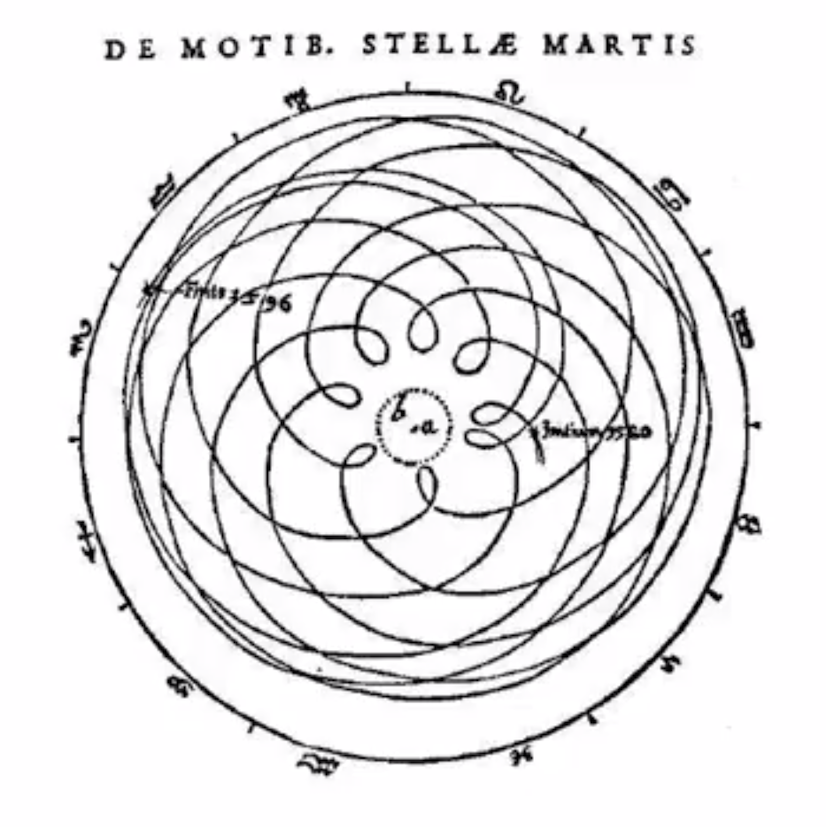
Kepler was a great astronomer as well. He described many of his discoveries in books such as Astronomia Nova. For almost a hundred years, a German university has been working to collect all his writings. Kepler observed that Mars was not always at the same distance, and more than four hundred years ago he was already able to illustrate the planet’s orbit with remarkable accuracy. (Illustration reproduced from Astronomia Nova by Johannes Kepler)
Clementinum Tower, Prague
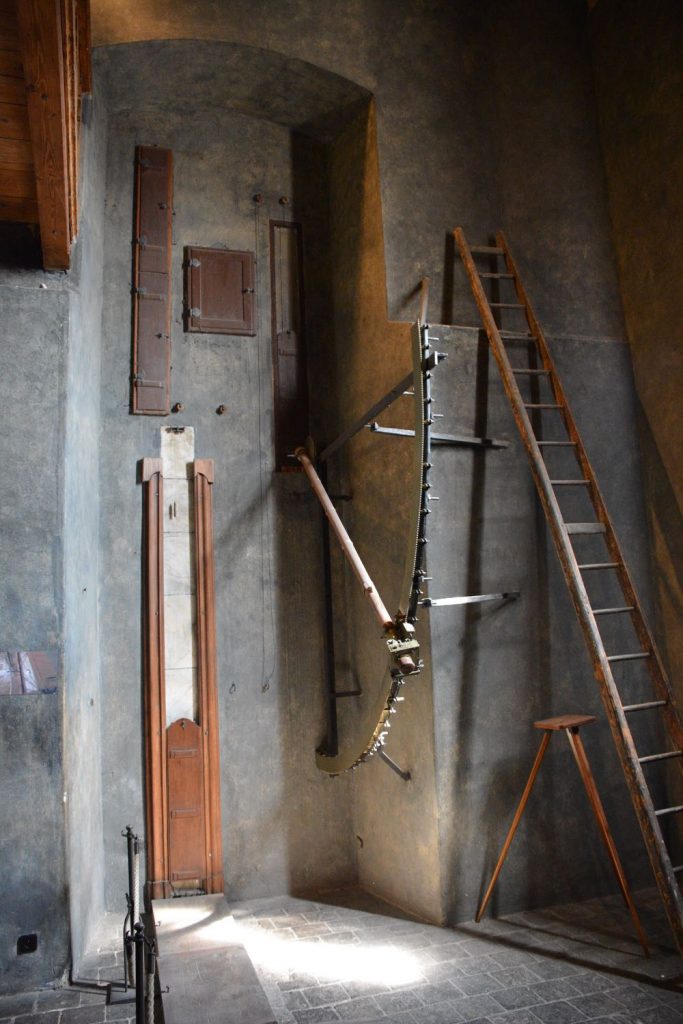
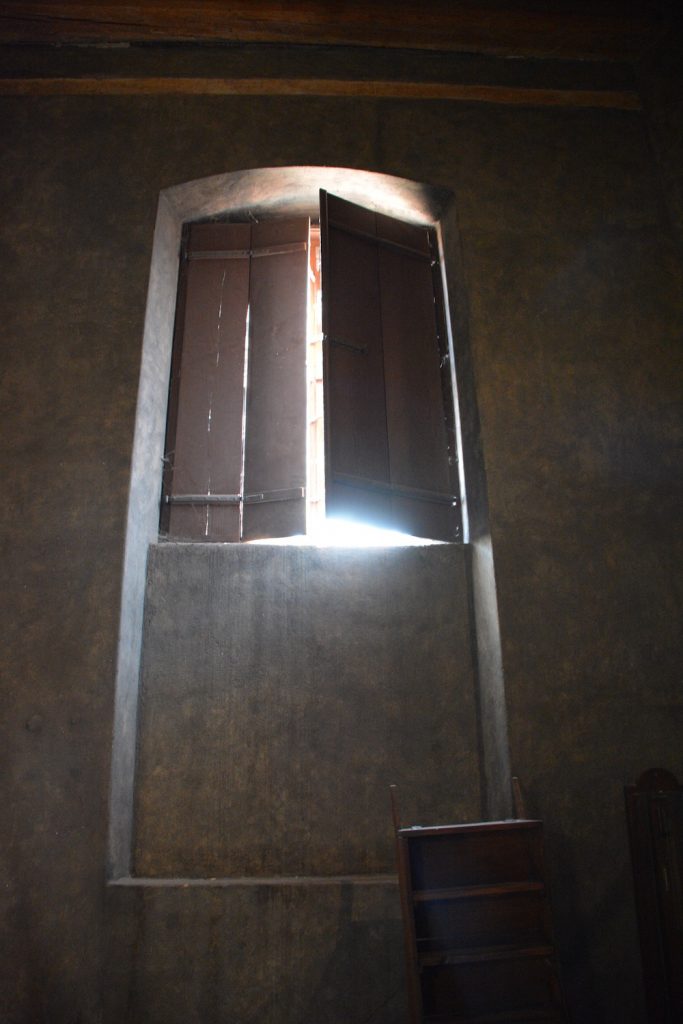
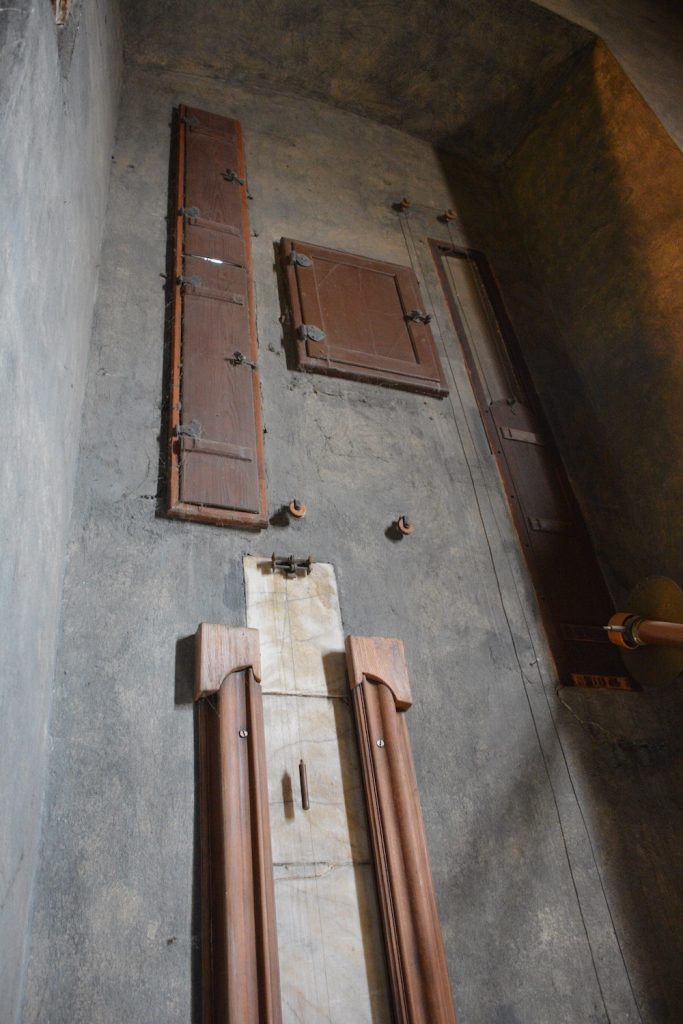
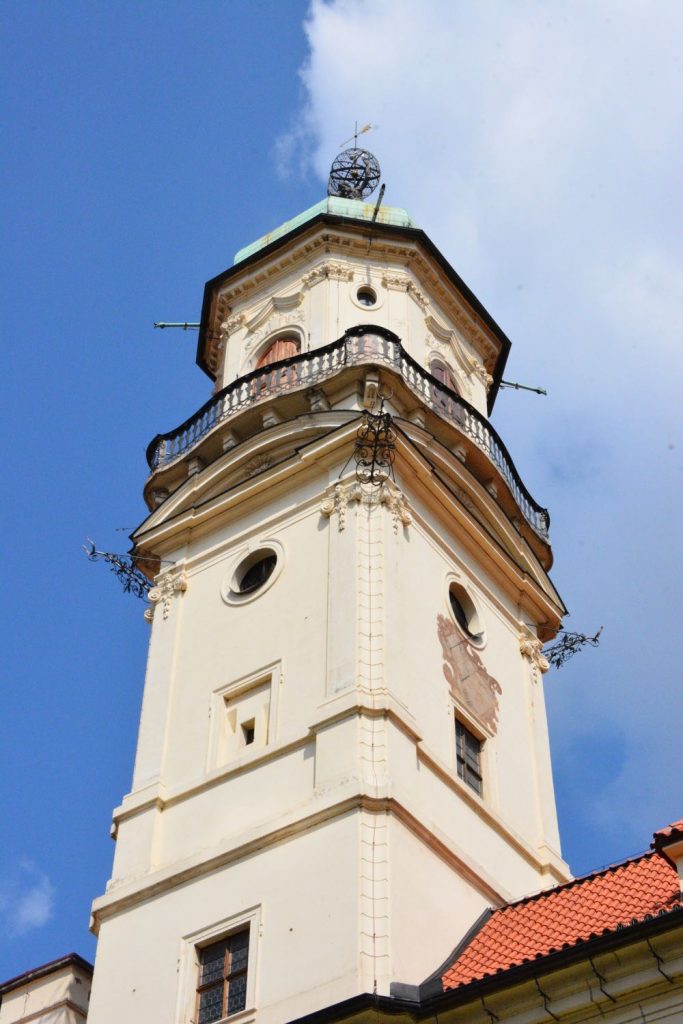
The Clementinum is a vast complex in the heart of Prague’s city centre. From there, you can walk across the beautiful medieval Charles Bridge towards the castle and Strahov Monastery. The tower where Brahe and Kepler worked can also be visited, and it offers a vivid impression of how those men must once have worked there.
“For hours Kepler sat like that, bent over the table, the candle half burned down, the air heavy with ink. The sentences grew smaller, the letters more careless. His head swam. He was thinking in circles, and within those circles the light began to leak away. He stopped. Set down his pen. Rested his hand on the paper. His fingers were trembling. He read it once more. And once again. The words remained silent. He felt the defeat as something physical, a weight on his chest. Not the frustration of a failed calculation, but something deeper: the recognition that there are limits to understanding.” (Chapter IV)
The Hague – Holland / Netherlands
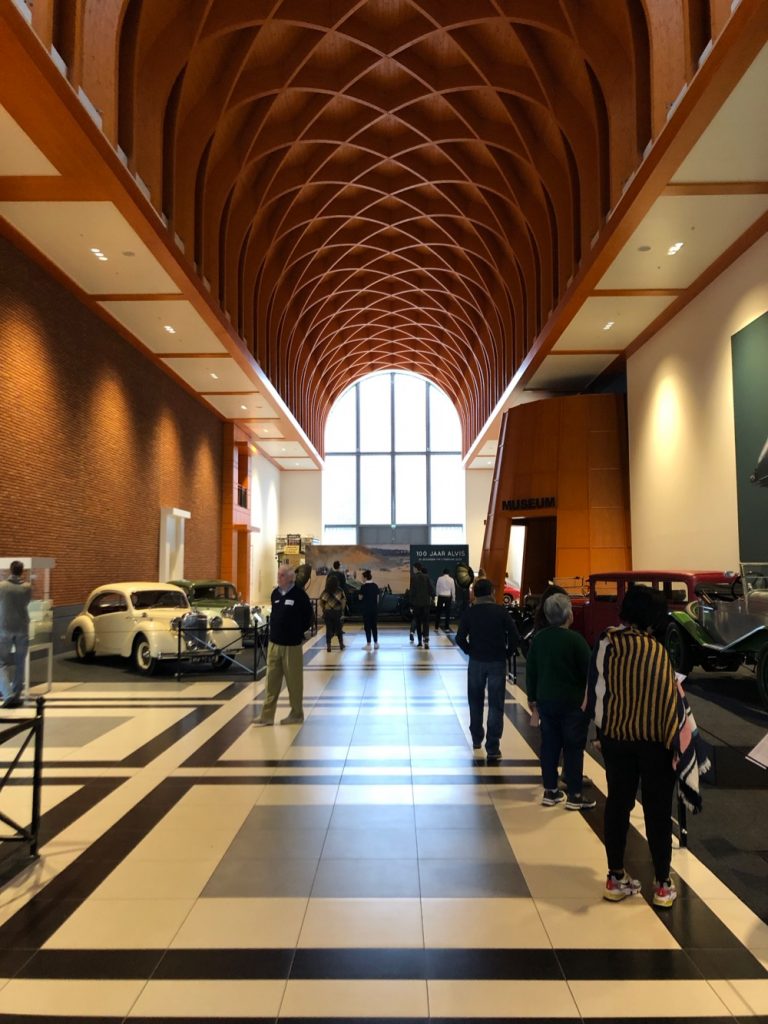
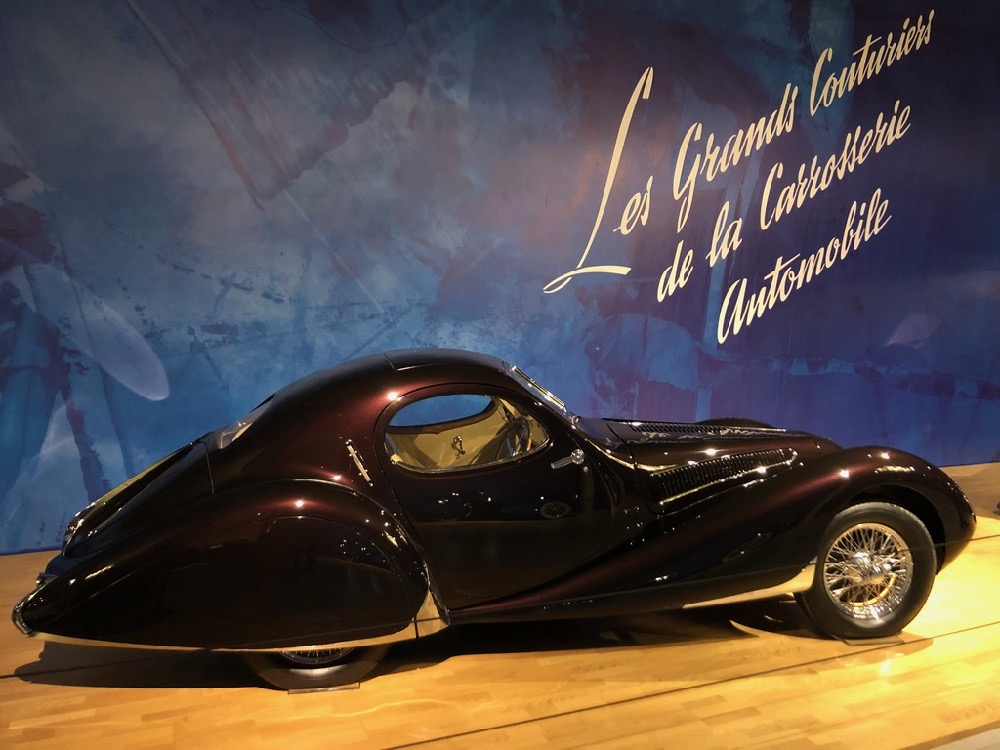
Louwman Museum, The Hague
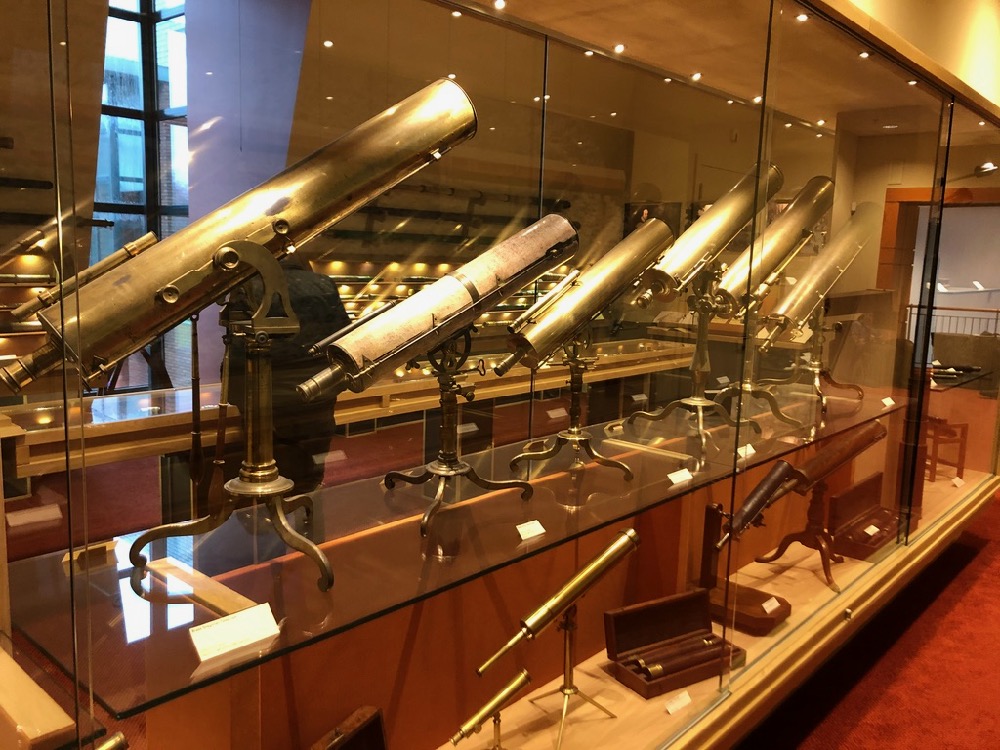
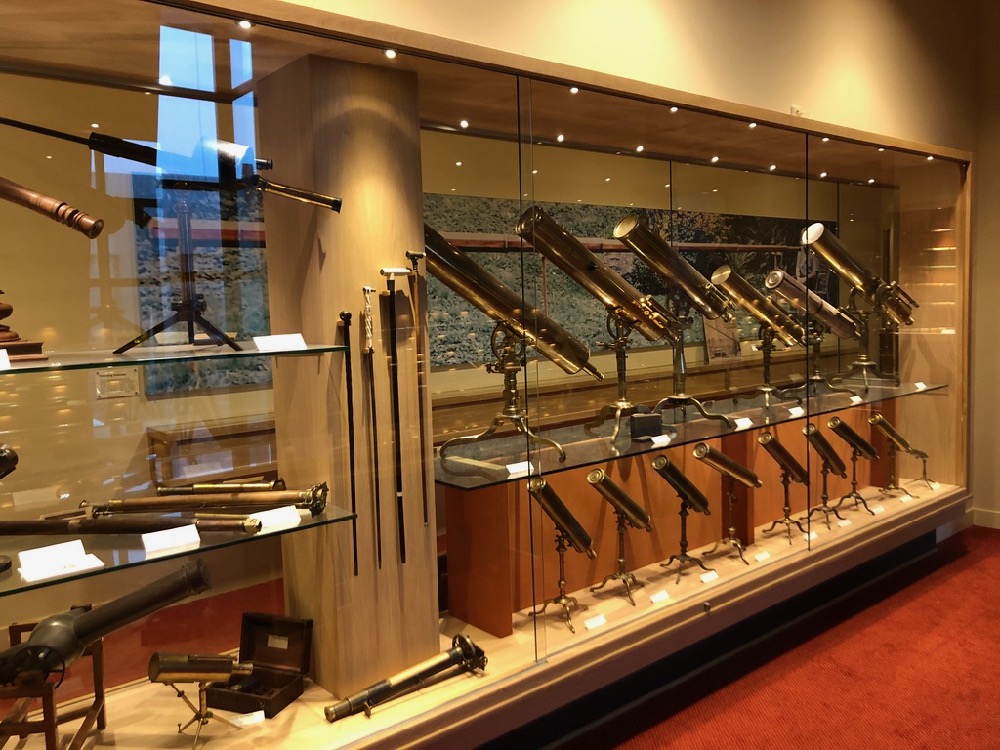
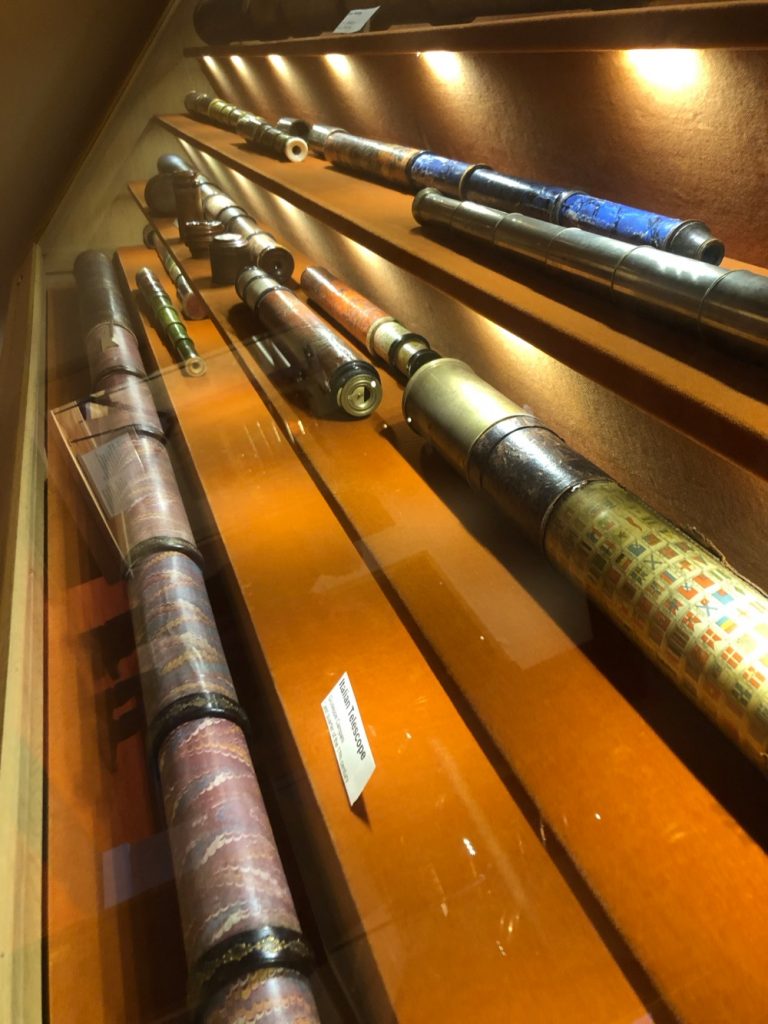
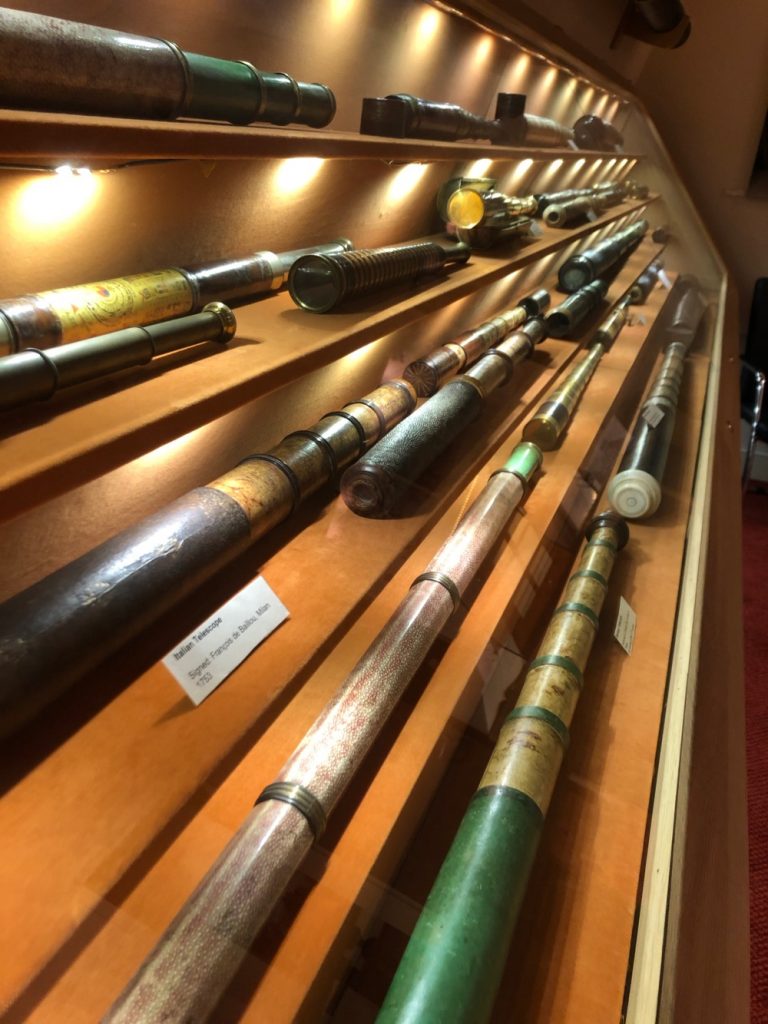
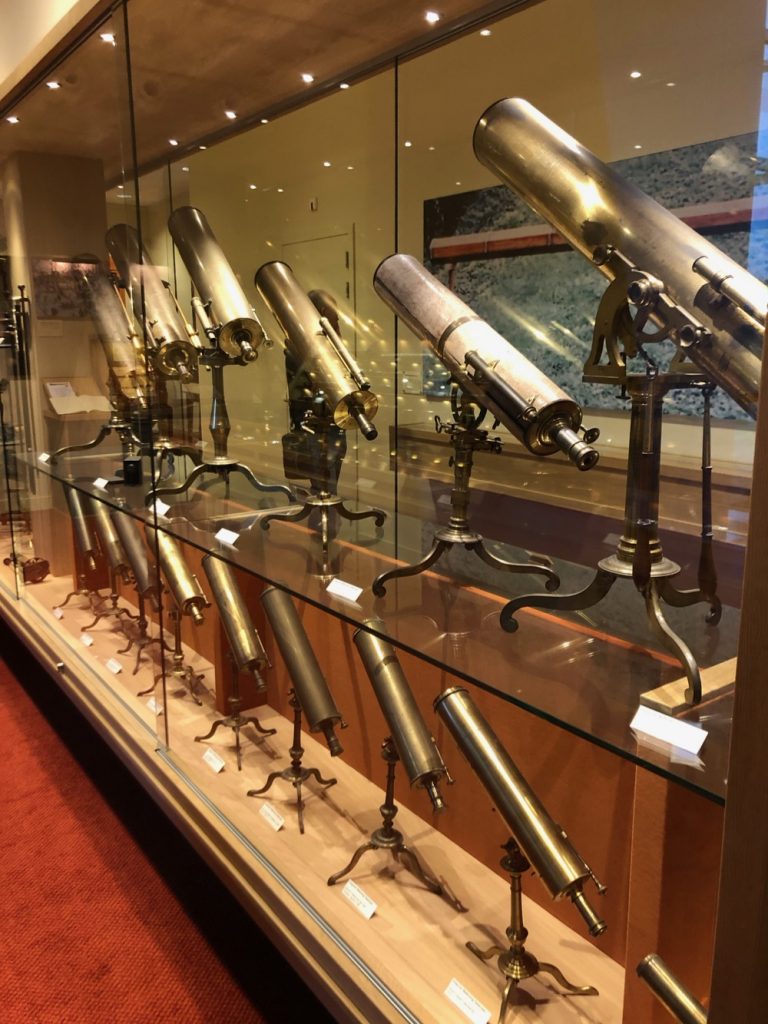
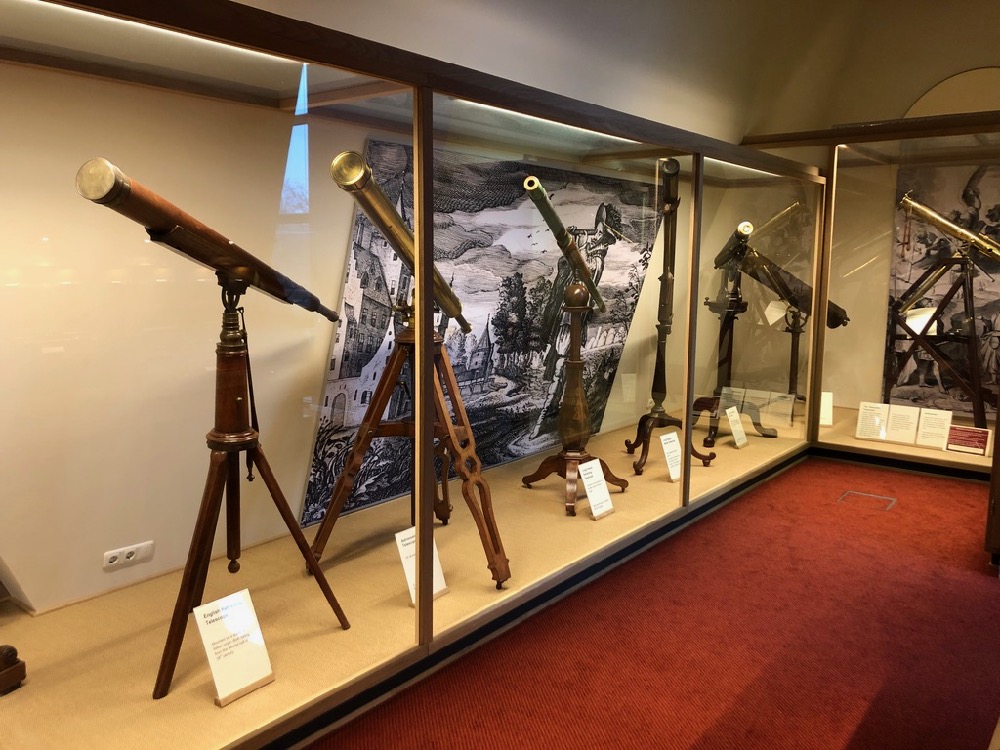
Evert Louwman is well known for his love of cars, and as a wealthy collector he created a magnificent museum in The Hague. The author first visited it especially for the telescope museum that his brother Peter had established on the first floor of the building. Peter had been responsible for the agricultural branch of the Louwman empire and, after his retirement, continued his passion for telescopes with great dedication. The author got to know him there, and they exchanged many emails about astronomy, but also about their shared love of Italy. Sadly, Peter Louwman passed away some time ago at an advanced age.

Peter Louwman’s Telescope Museum, The Hague
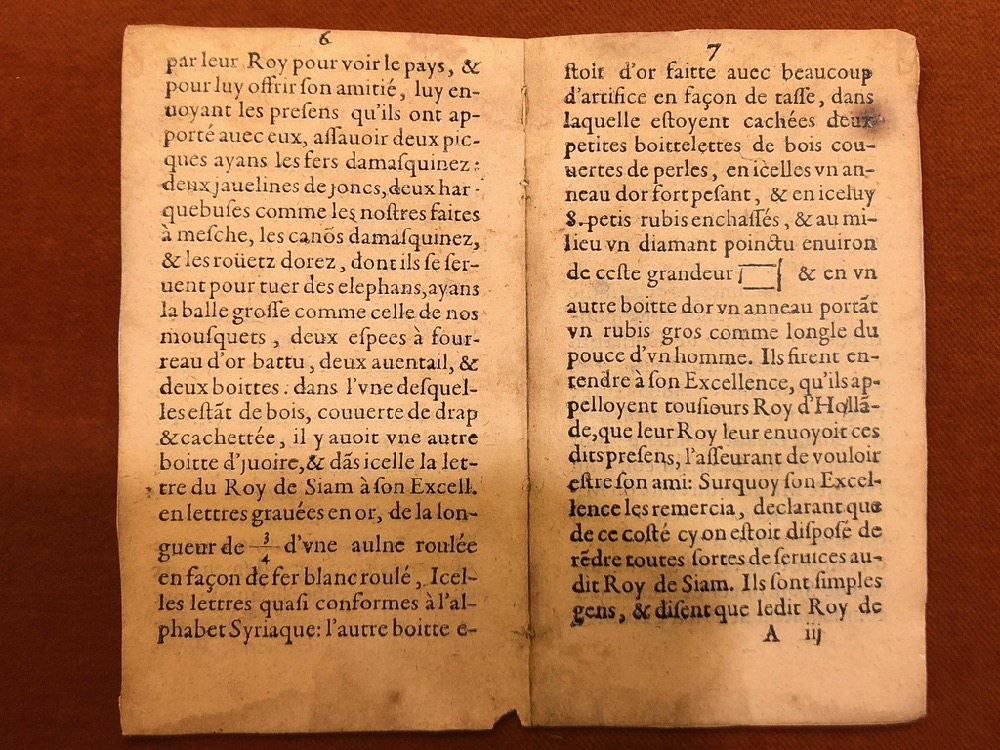
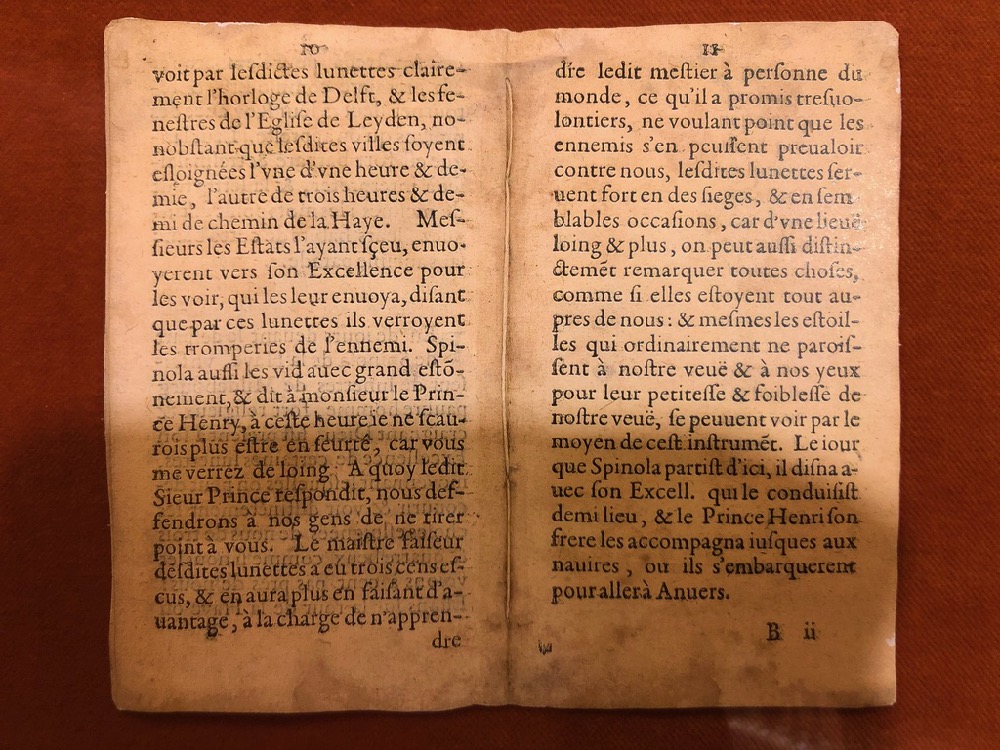
This is where the newsletter issued at the time by the royal court is kept. It contains the first known mention of the telescope, invented by Hans Lipperhey of Middelburg. It also describes the demonstration and Spinola’s reaction. A fine booklet about it is available in the museum shop.
“Exactly the sort of thing you are never supposed to do in a museum was now about to happen. With his gloved hands, he carefully reached for the telescope, searching for an irregularity, something that did not belong there. But he found nothing. He glanced over his shoulder. No one. Biting his lip, Finn lifted the telescope from its stand. Sacrilege, perhaps, but for a moment it had to be done.” (Chapter V)
The newsletter of Prince Maurits
The very first proof of the existence of the telescope, preserved to this day thanks to the efforts of Peter Louwman.
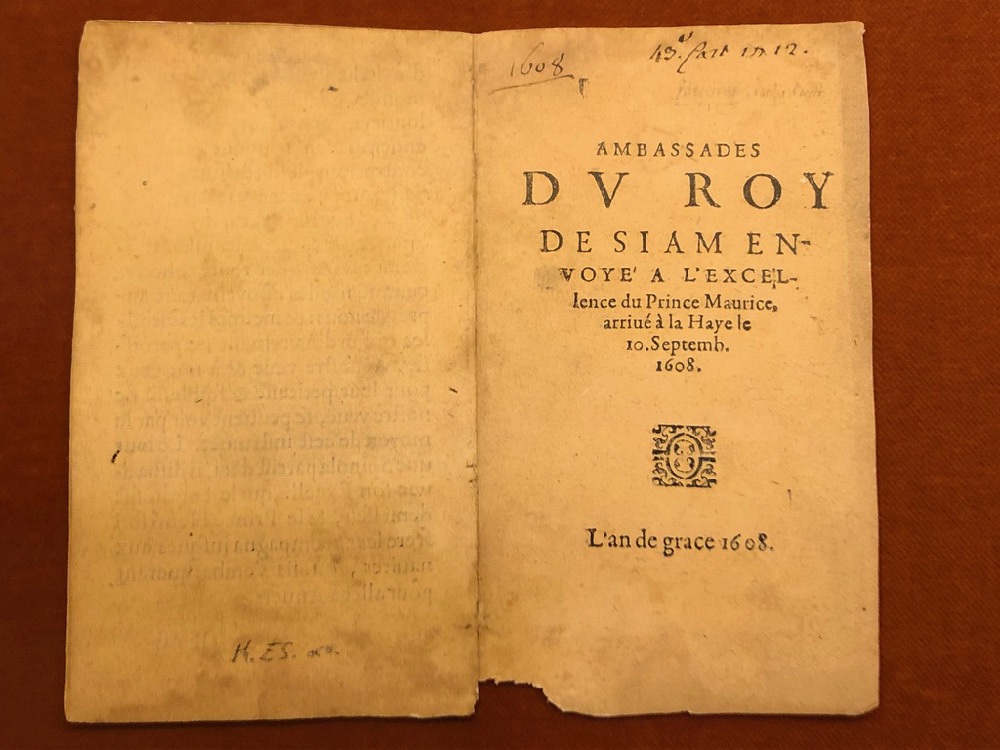
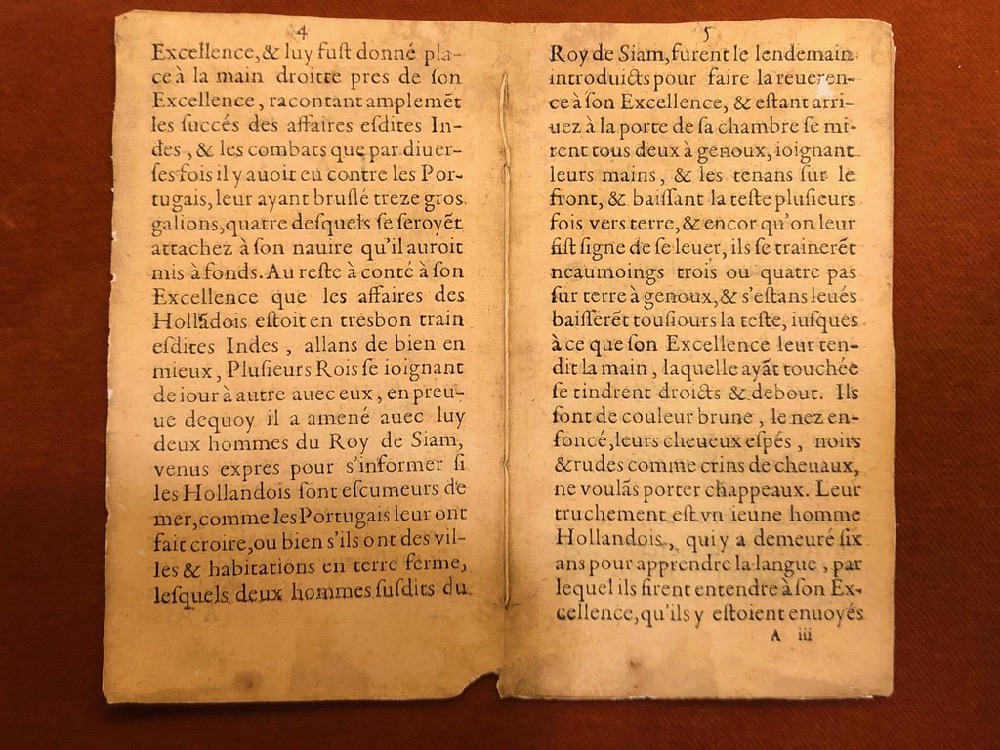
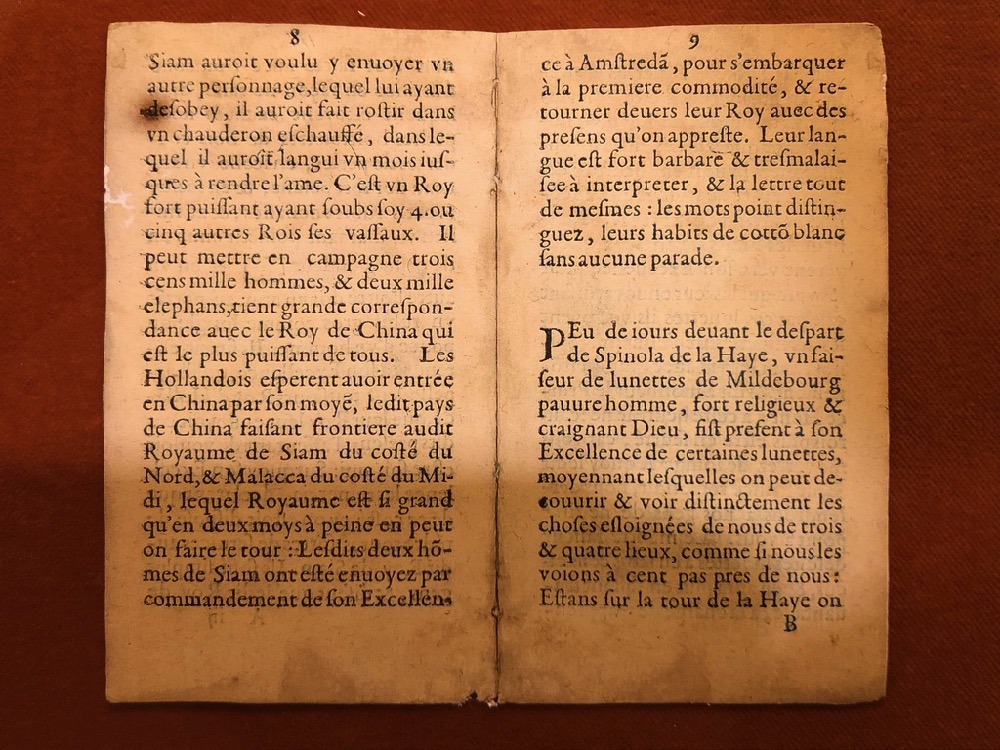
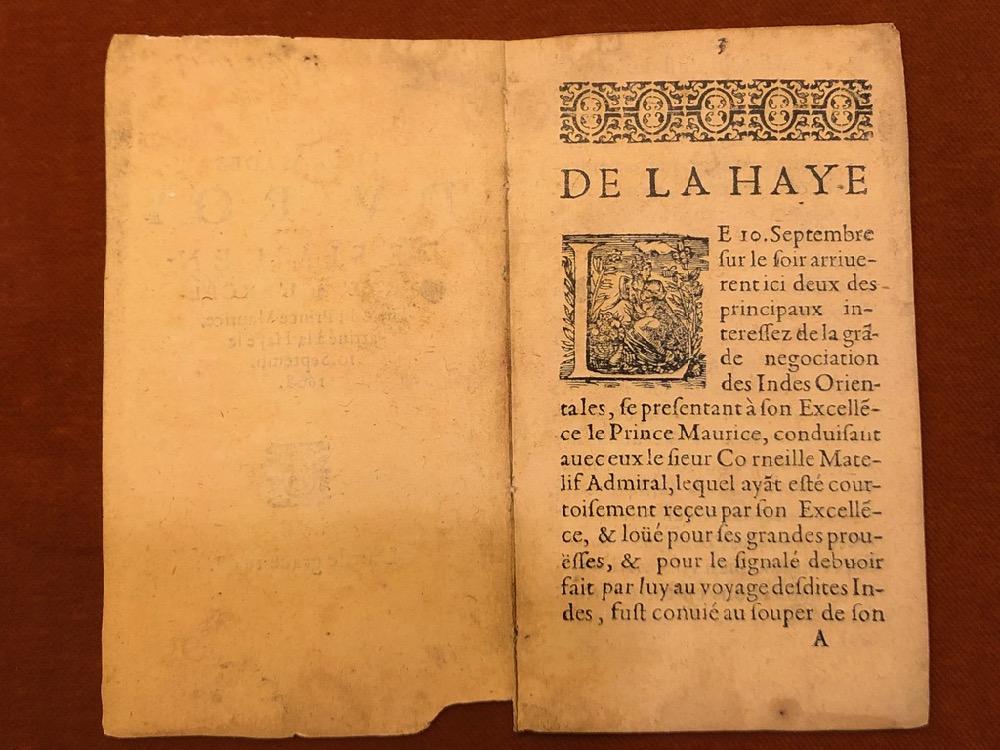
Maurits Toren, The Hague
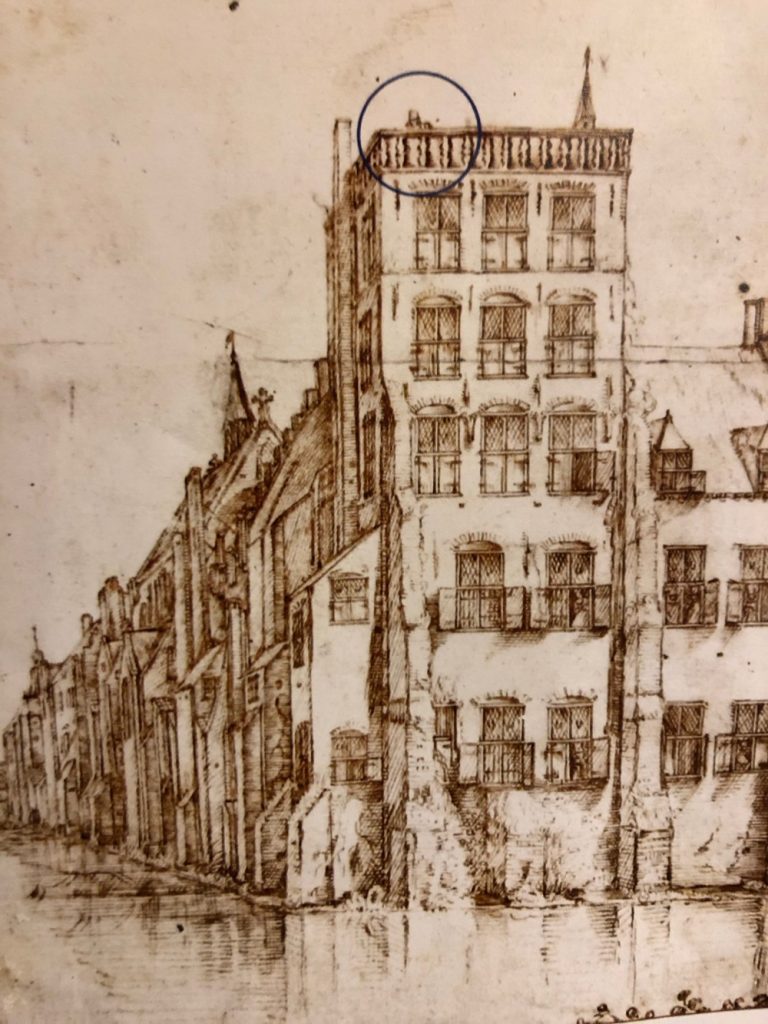
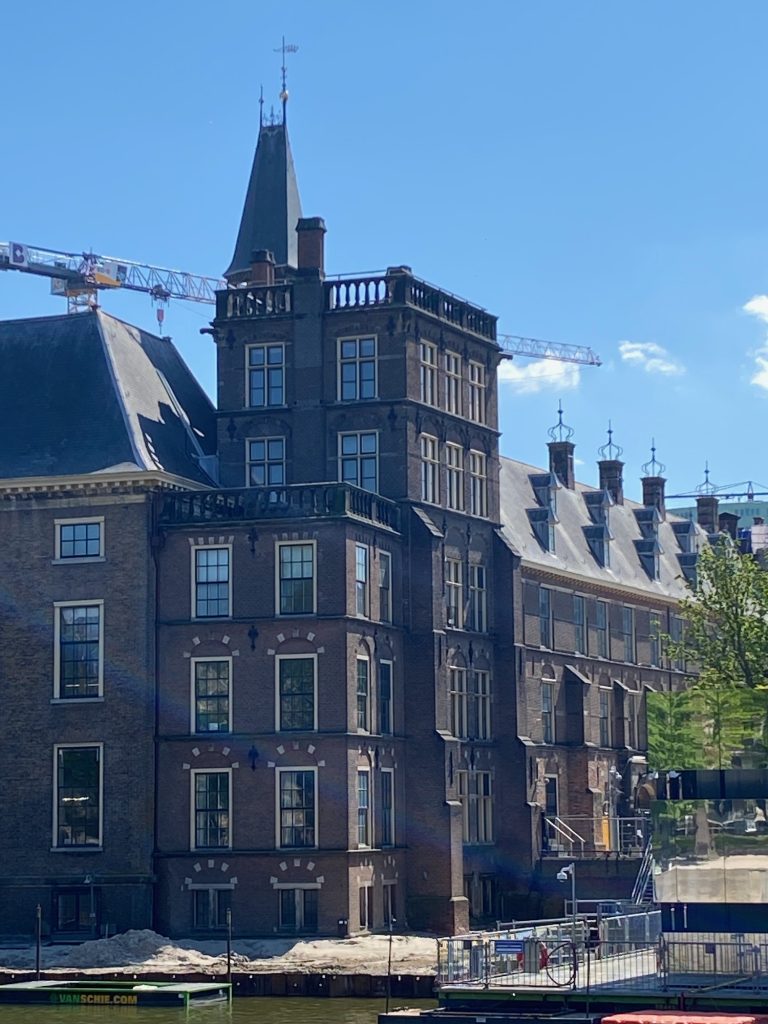
The government complex has been under renovation for years, so it was not possible to take good photographs, but you can still see that it is the same tower as it was four hundred years ago. The photograph of the old illustration was taken at the Louwman Museum.
“Spinola watched in silence, tugging his glove tight with thumb and forefinger. He raised his chin a fraction and let courtesy carry his Dutch. ‘Prince,’ he said, ‘if such an instrument comes into your hands alone, the truce will soon no longer be a negotiation, but a disadvantage.’ It did not sound like a threat. It sounded like the duty of a man who knows how advantage disguises itself. Maurice allowed himself the faintest smile. ‘As long as you cannot read the clocks on my towers, señor,’ he said, ‘you have nothing to fear.’” (Chapter V)
Leiden – Holland / Netherlands
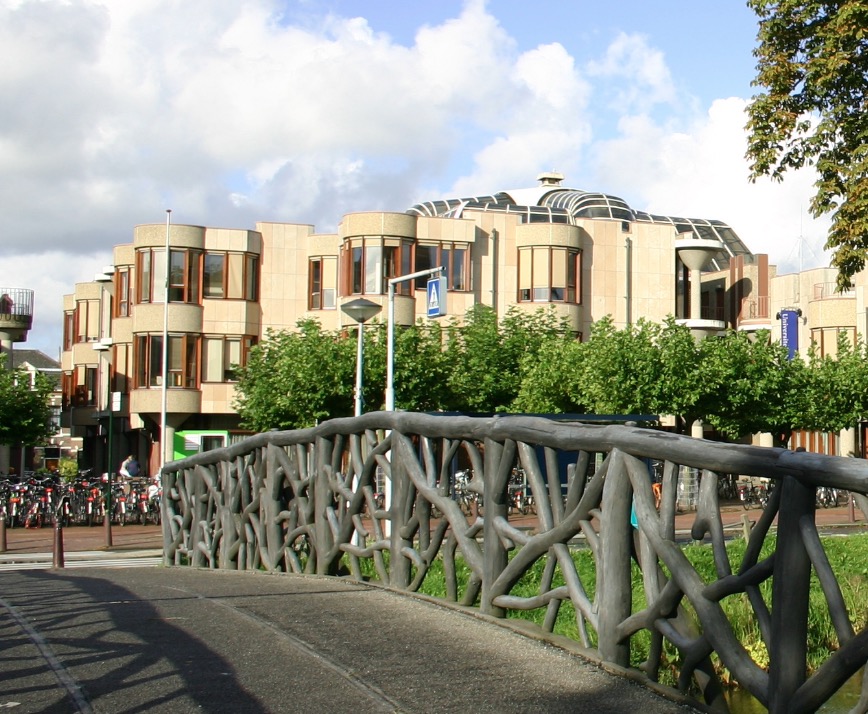
University Library, Leiden
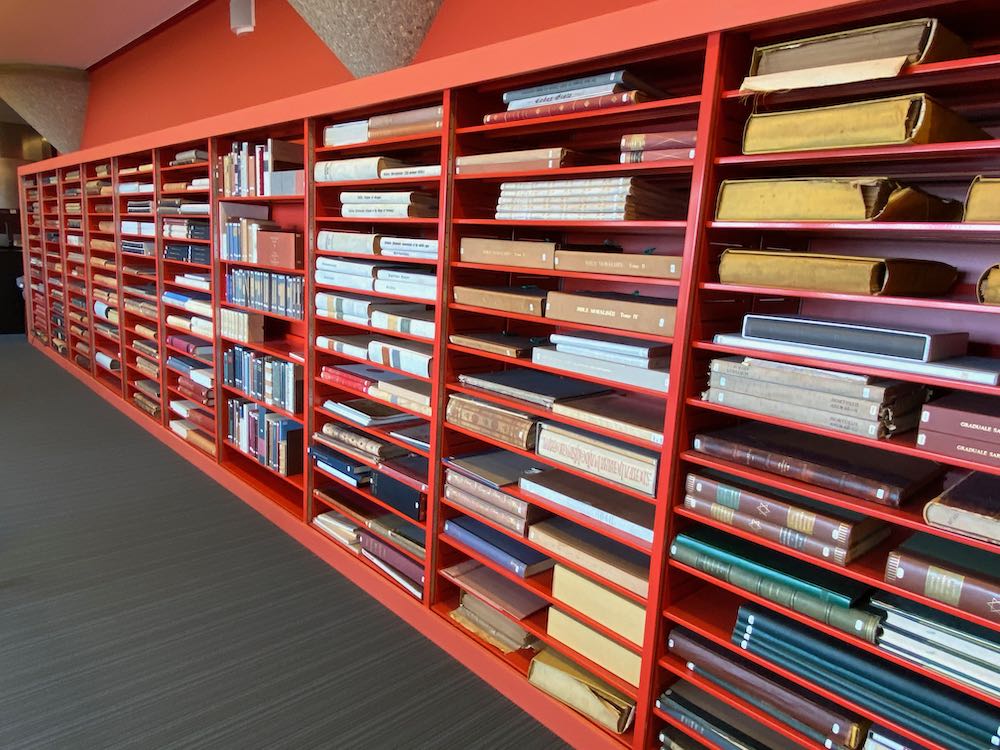
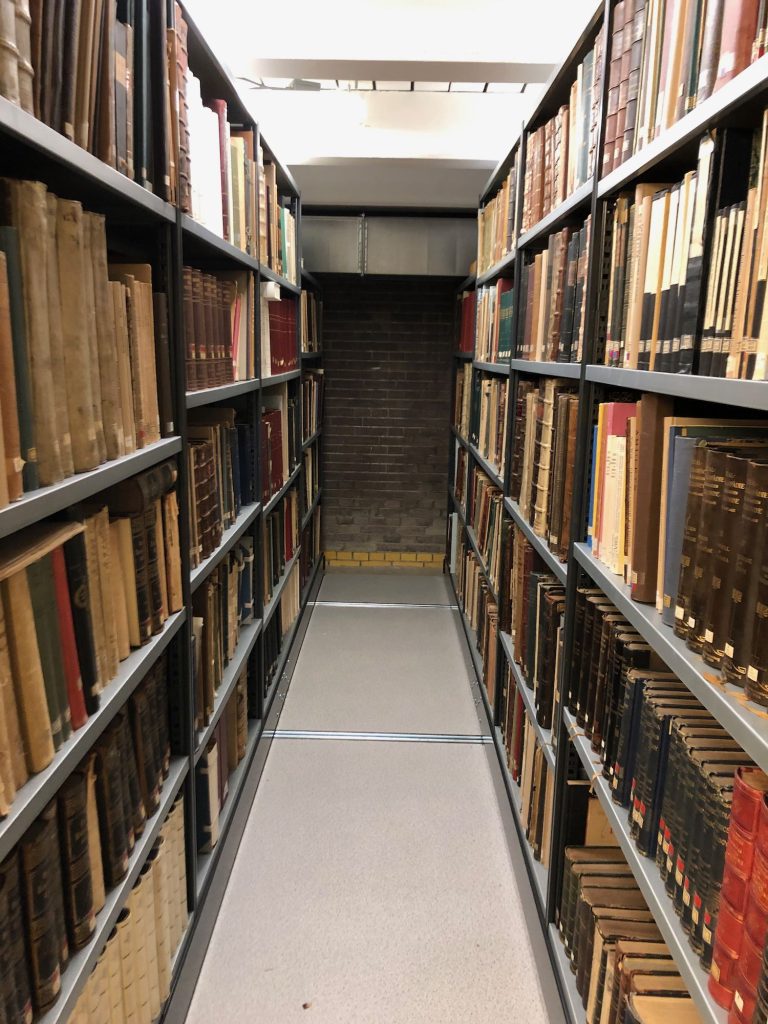
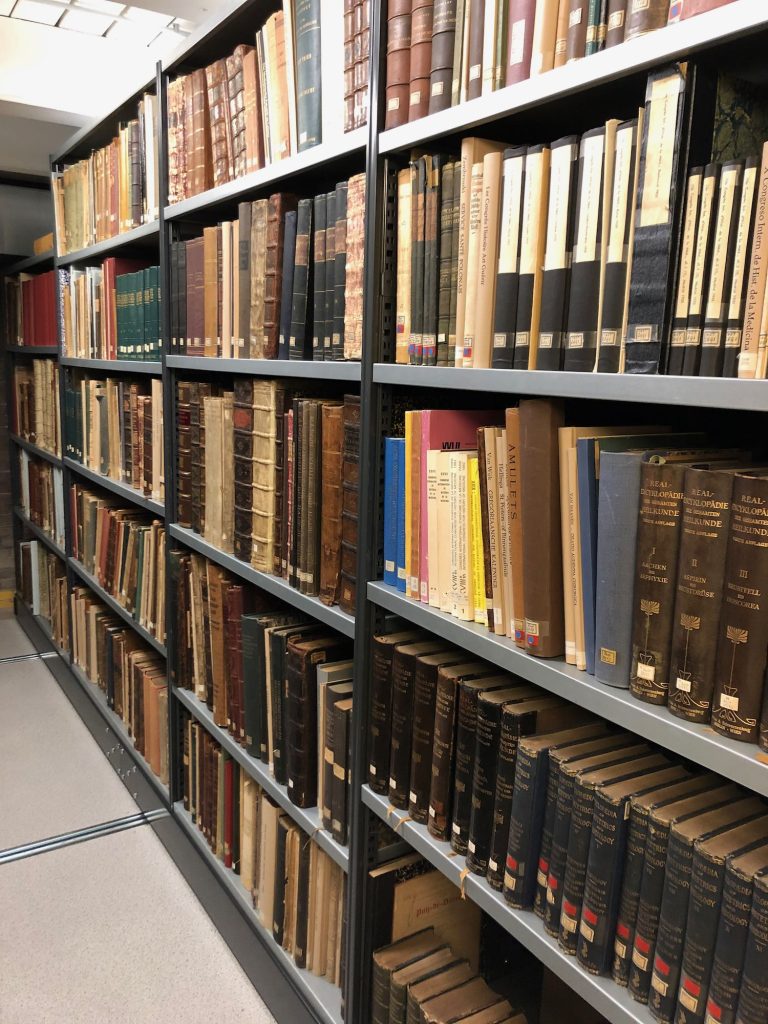
This was where Sienna was working with Finn when she received a message from Vincent in Padua. The photograph shows one wall of the Special Collections room.
“The curator rested his hand for a moment on the back of the chair, as if marking a boundary. ‘Wait here for me. I’ll be right back.’ Then he turned and walked away, his footsteps echoing hollow across the wooden floor until they dissolved into the silence of the room. Finn was left alone. The cloth lay before him. He hesitated, glanced around once more, and then folded it back. So much for waiting… This was his chance.” (Chapter XI)
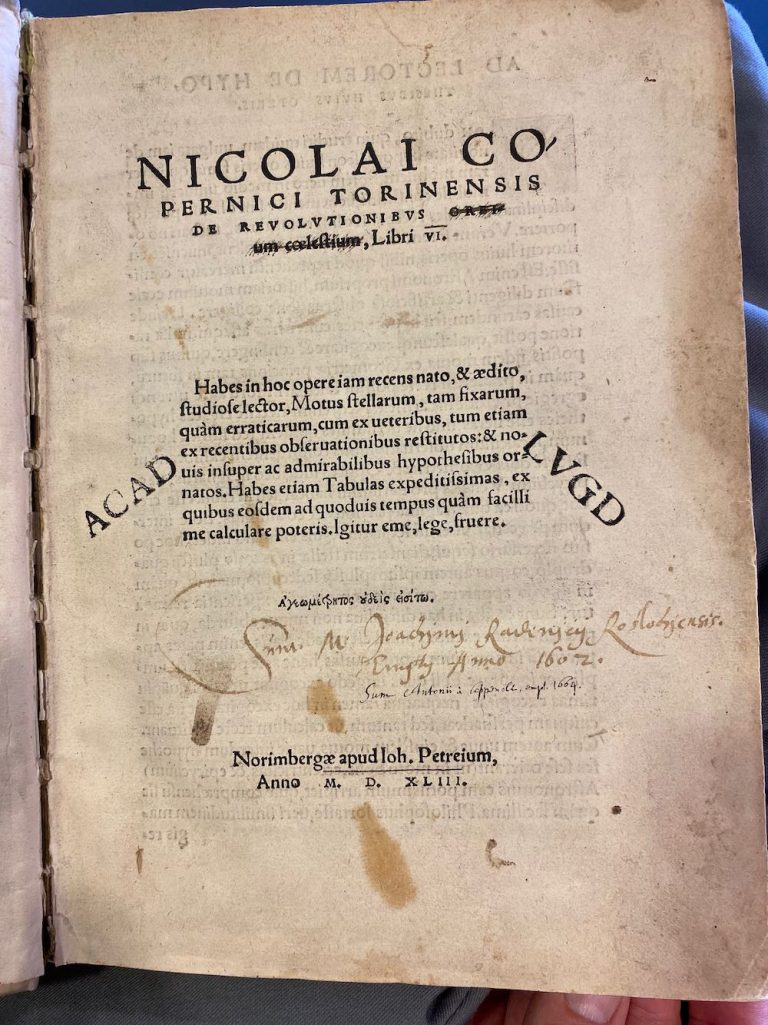
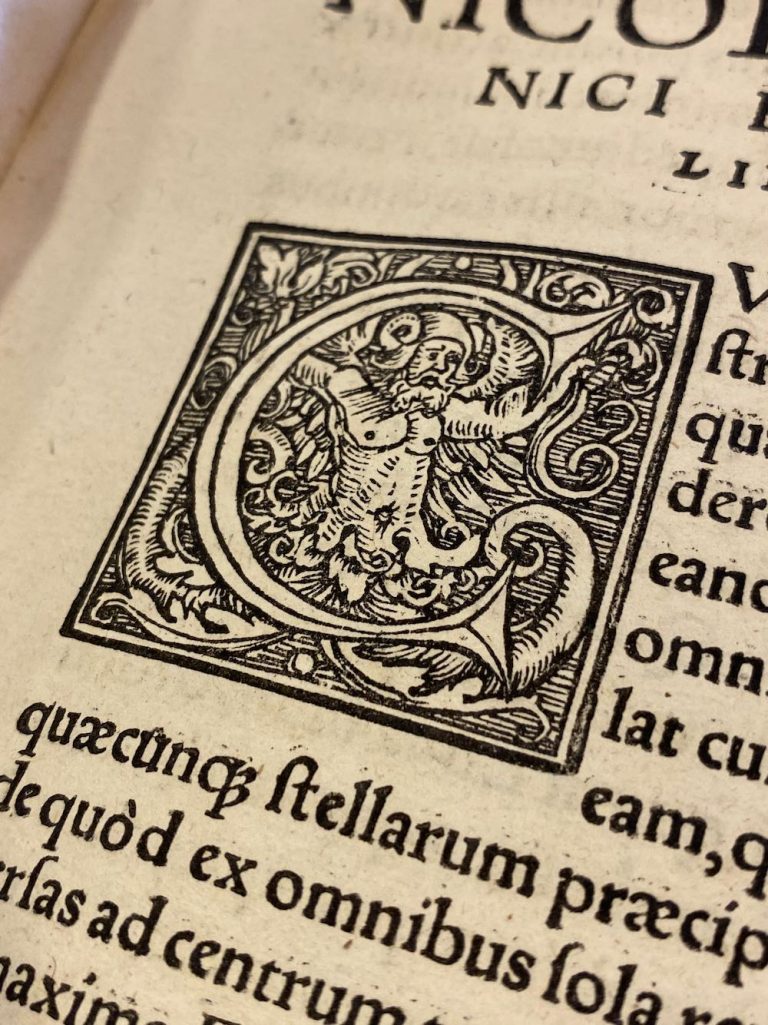
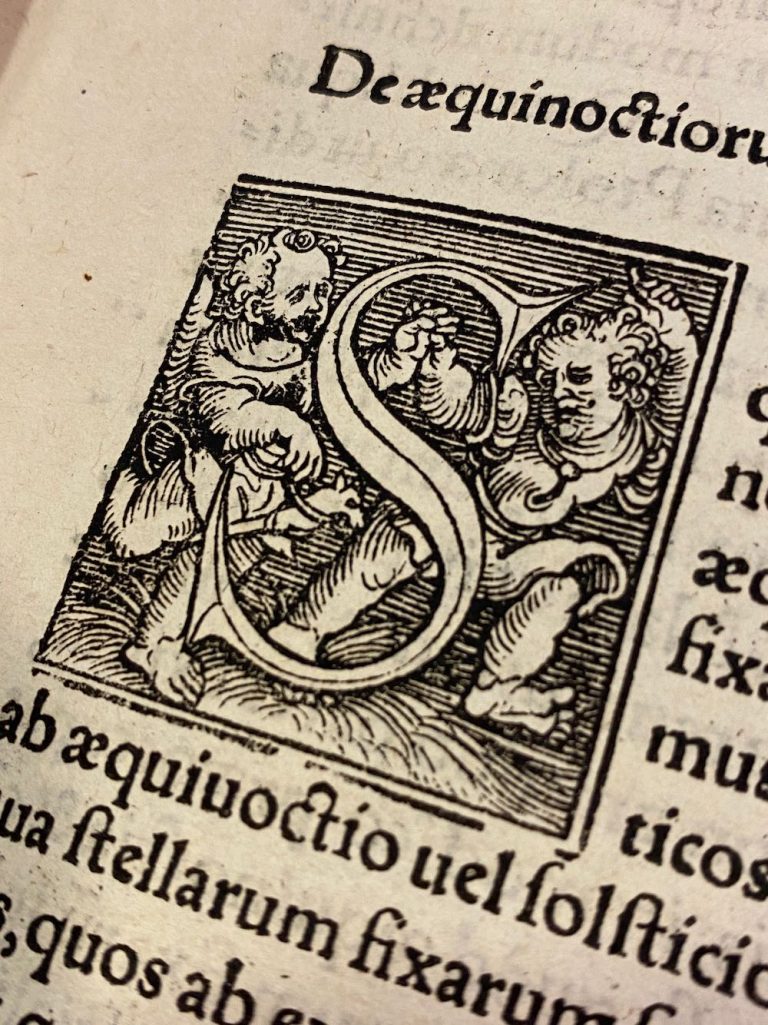
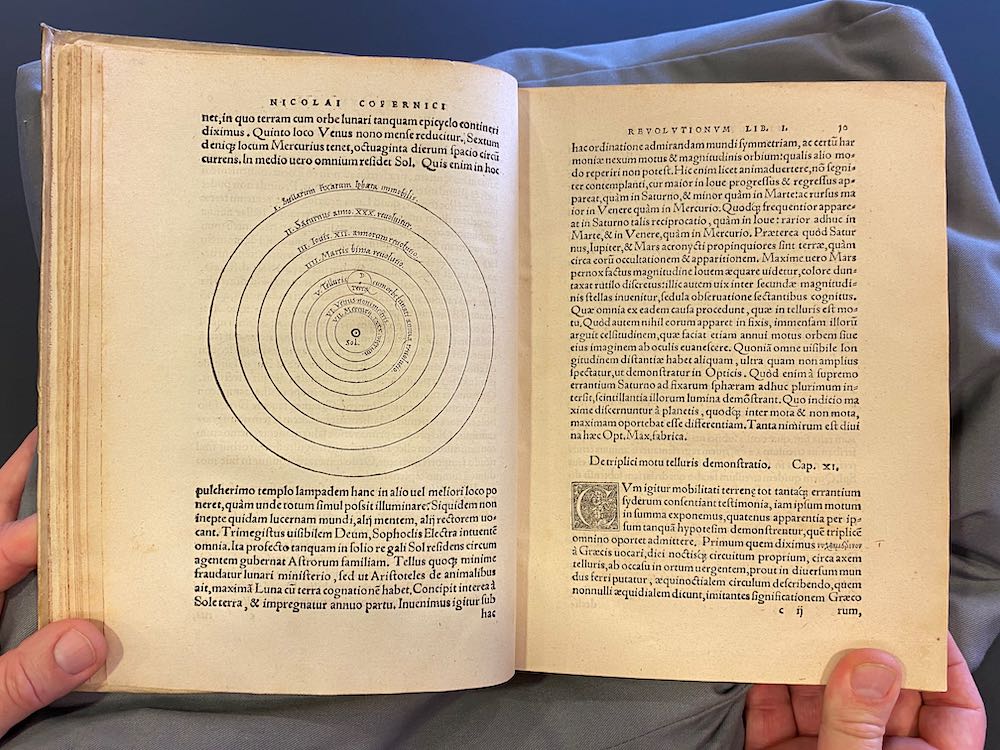
Nicolaus Copernicus’s The revolutionibus, from Poland
The most important book on the heliocentric model, which proposed that not the Earth but the Sun is the centre of our solar system, was published as early as 1543, no fewer than eighty-one years before the telescope was invented. Galileo later began to confirm this theory through his own observations, among them the phases of Venus, clear evidence that the planet must orbit the Sun. This was something the Church did not permit to be proclaimed. The book does not appear in the story itself, but it is so important that it deserves a place here as well.
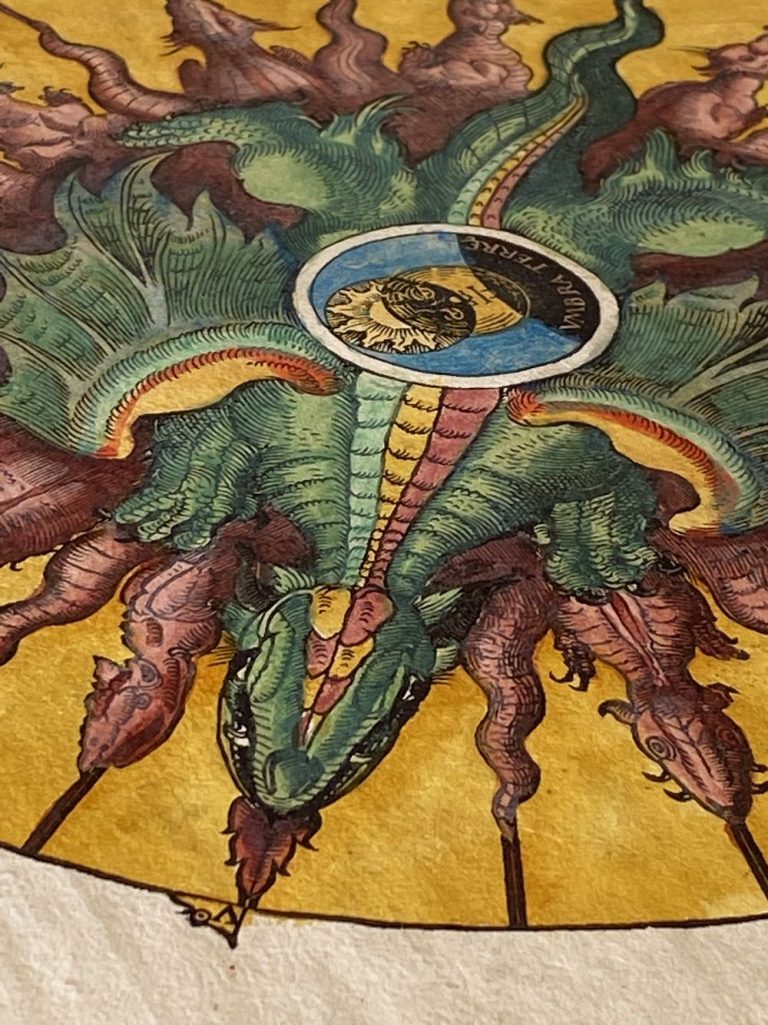
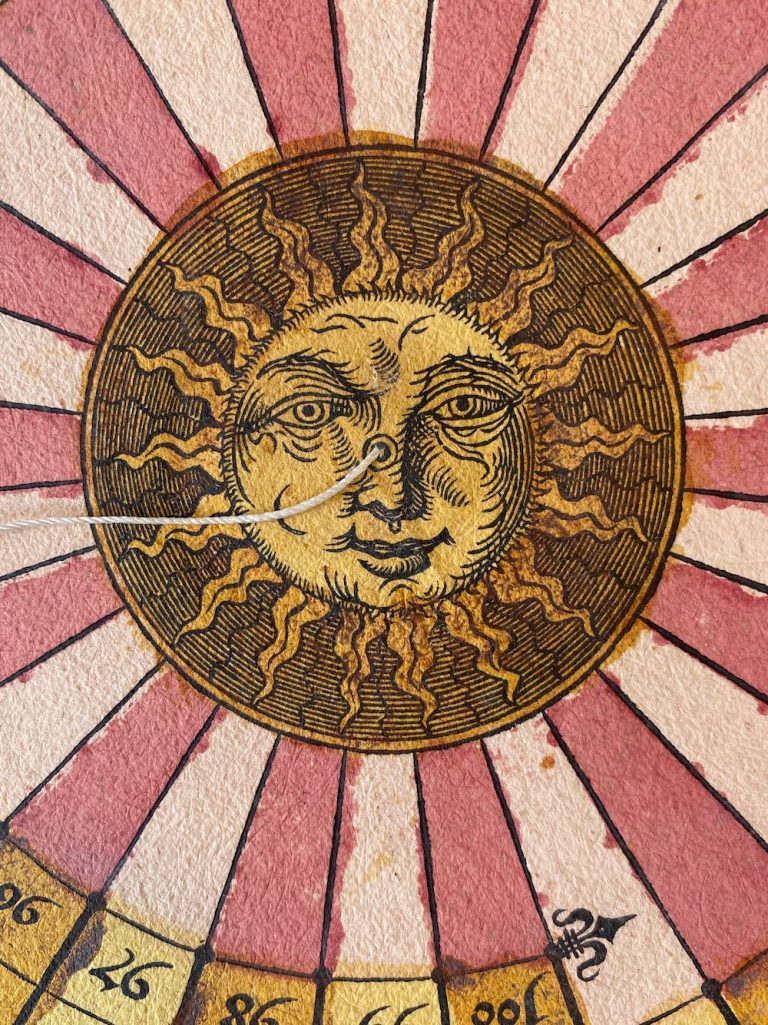
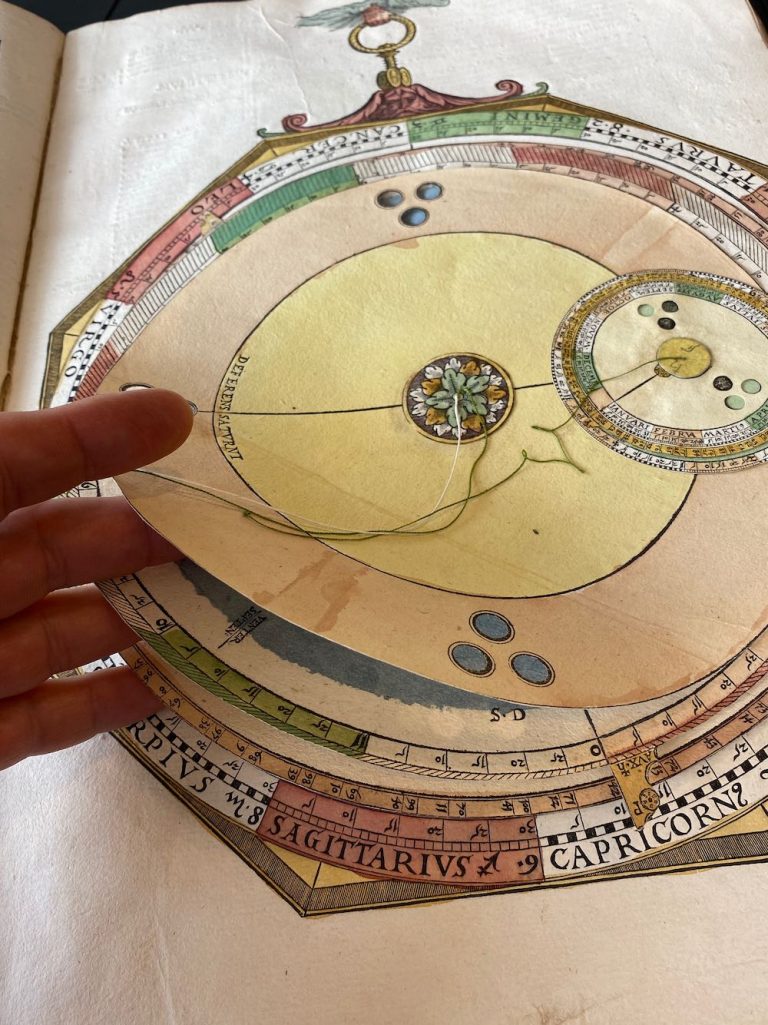
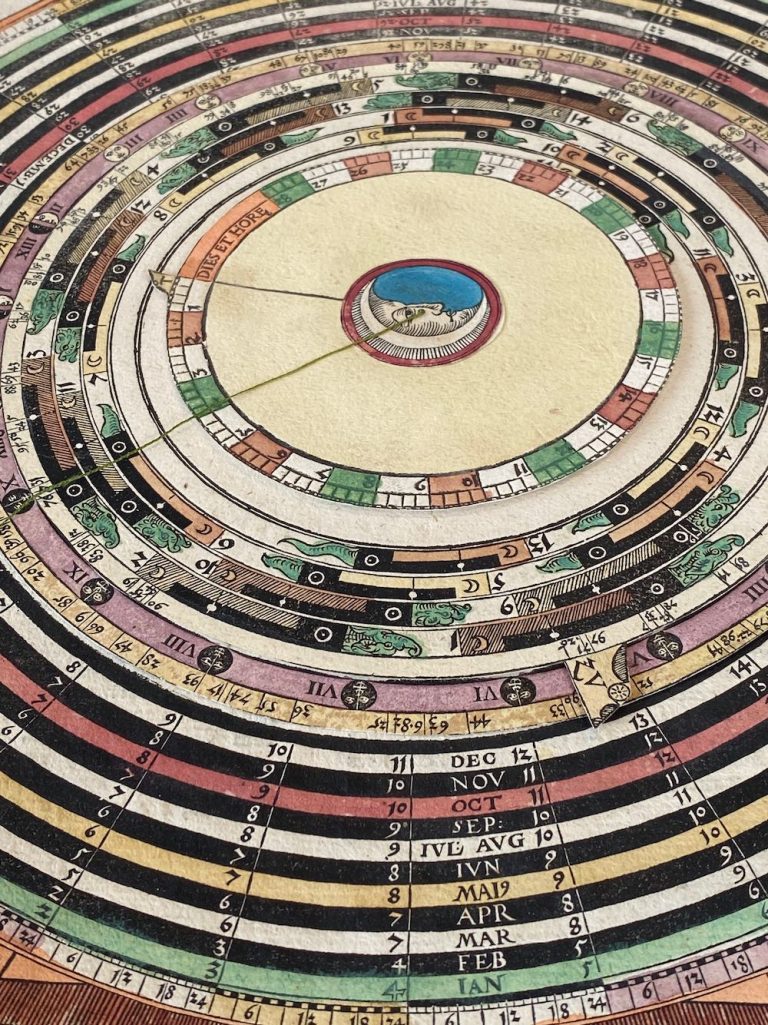
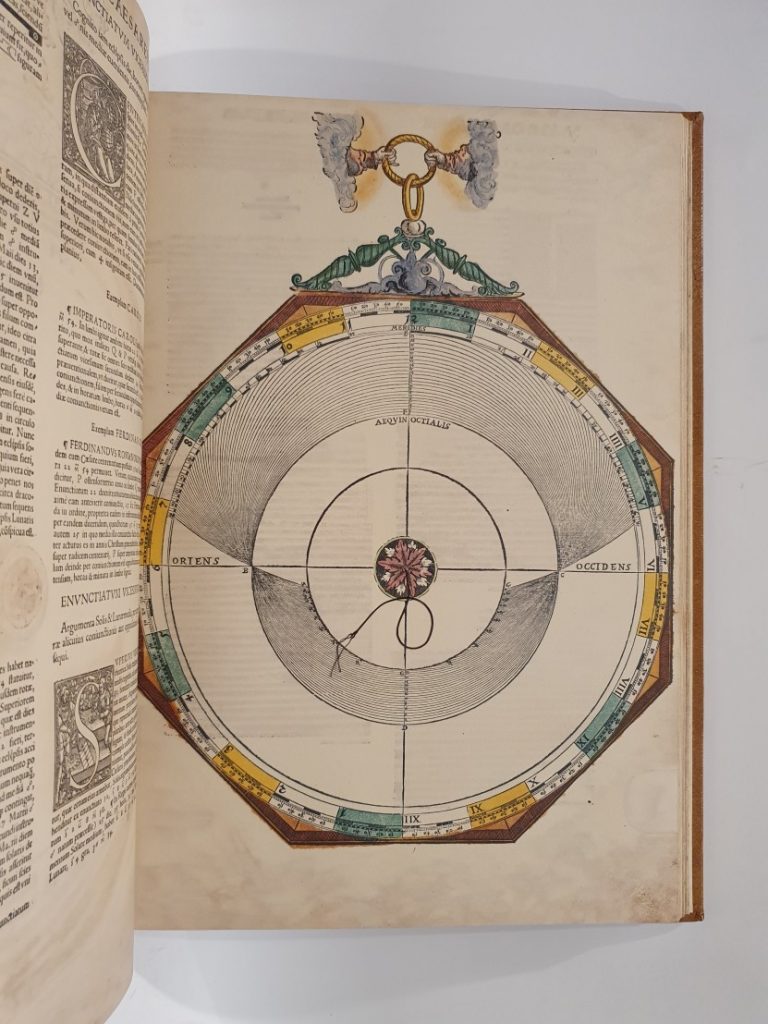
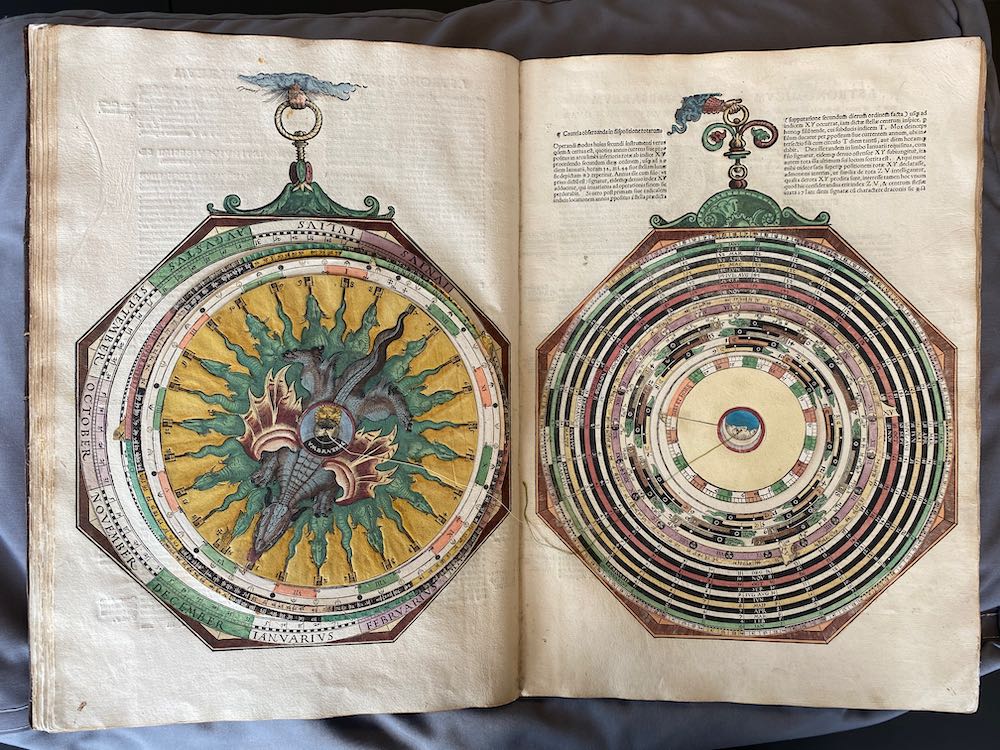
Petrus Apianus’s Astronomicum Caesareum
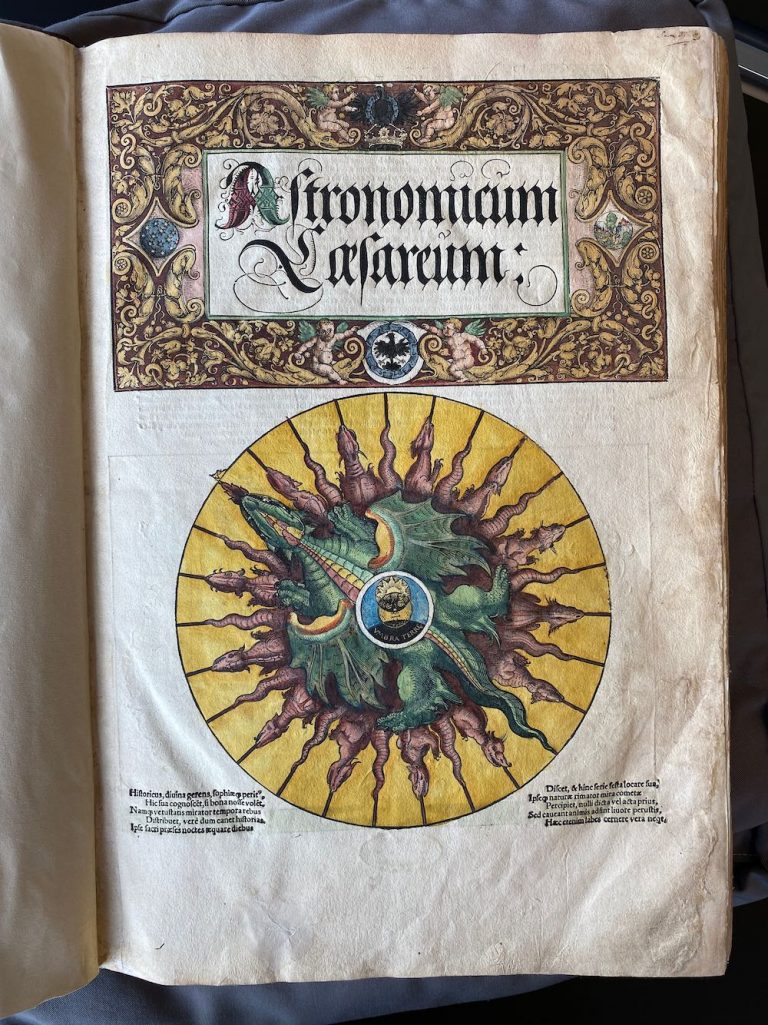
In Chapter II, Sienna is working with Finn on the truly magnificent Astronomicum Caesareum by Petrus Apianus of Ingolstadt in Germany. The book is a masterpiece from 1540 and was published only about ninety years after the invention of the printing press. Since then, few works have been printed that are both so complex and so beautiful. The author was able to consult two of the 111 surviving copies, one in Leiden and one in Florence.
“Is this normal?” Finn whispered. He was sitting too close to the page to take in the whole layout, and yet he had seen it. That was Finn: he missed nothing, he simply named it late. “Normal is rarely the right word when it comes to Apianus,” Sienna replied. She leaned in closer. The underlying scale showed a series of fine circles with irregular divisions. “A print from an early design? A forgotten device? Or something meant to remain hidden?” (Chapter II)
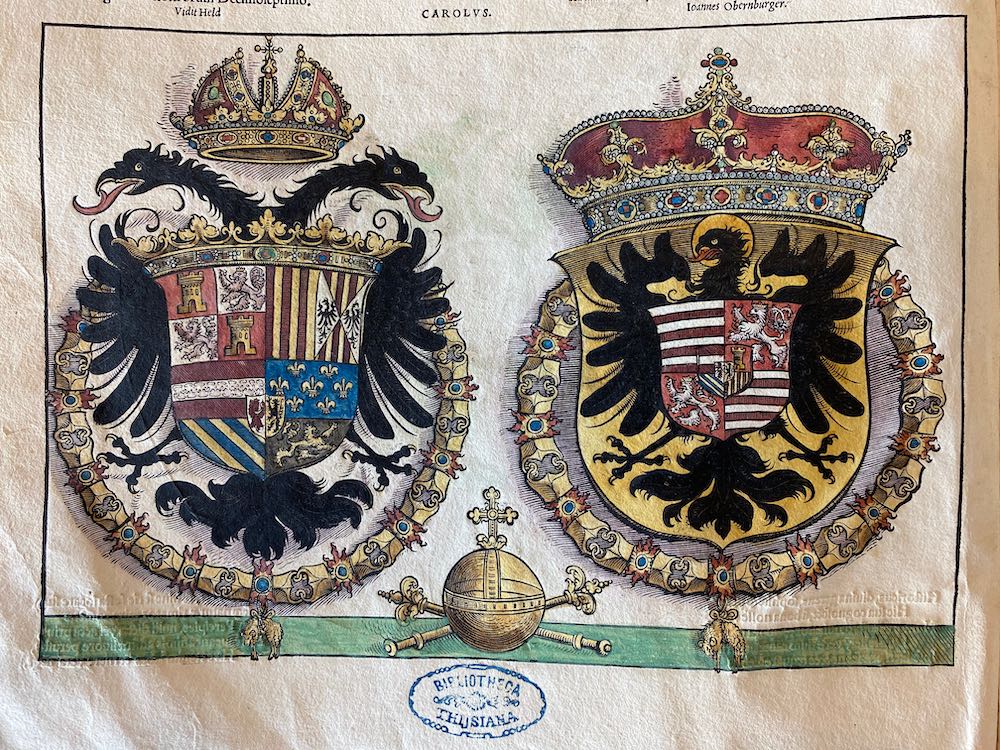
See above how deep the black still is after five hundred years. And how the twenty-eight volvelles, paper calculating devices used, for example, to work out the positions of the planets, are built up from as many as seven layers of hand-painted paper discs. The photograph at bottom right shows the volvelle referred to in the story. What you see there, in the facsimile, was never meant to be seen.
Museum Boerhaave, Leiden
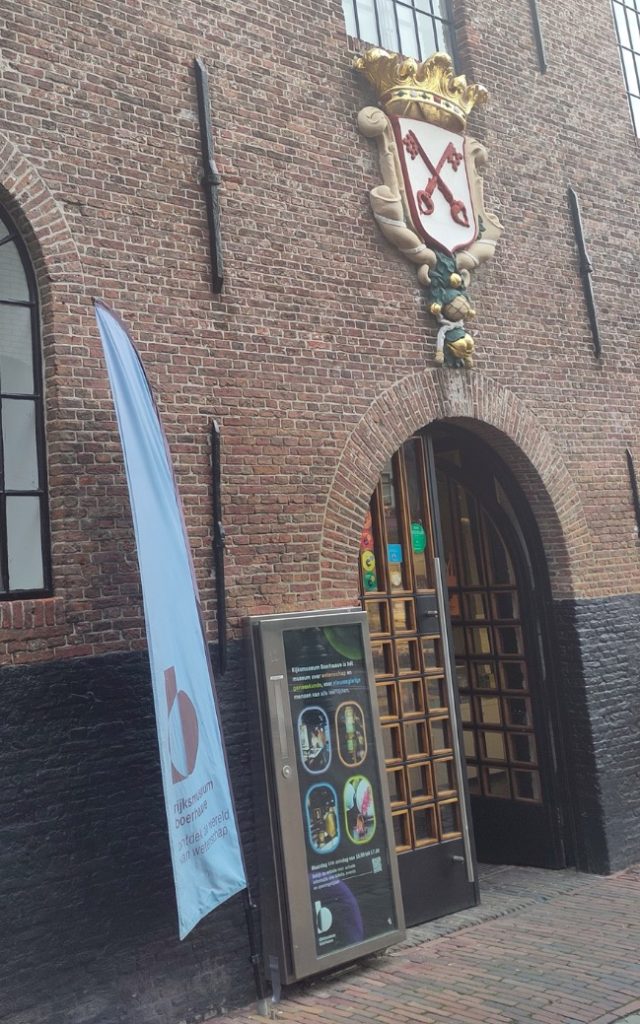
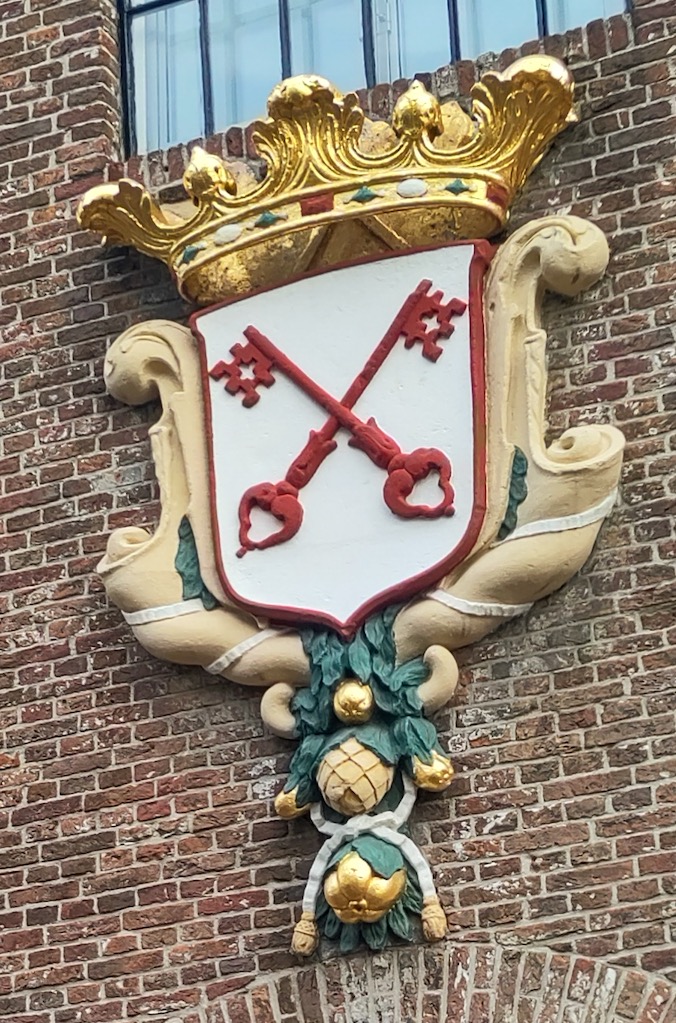
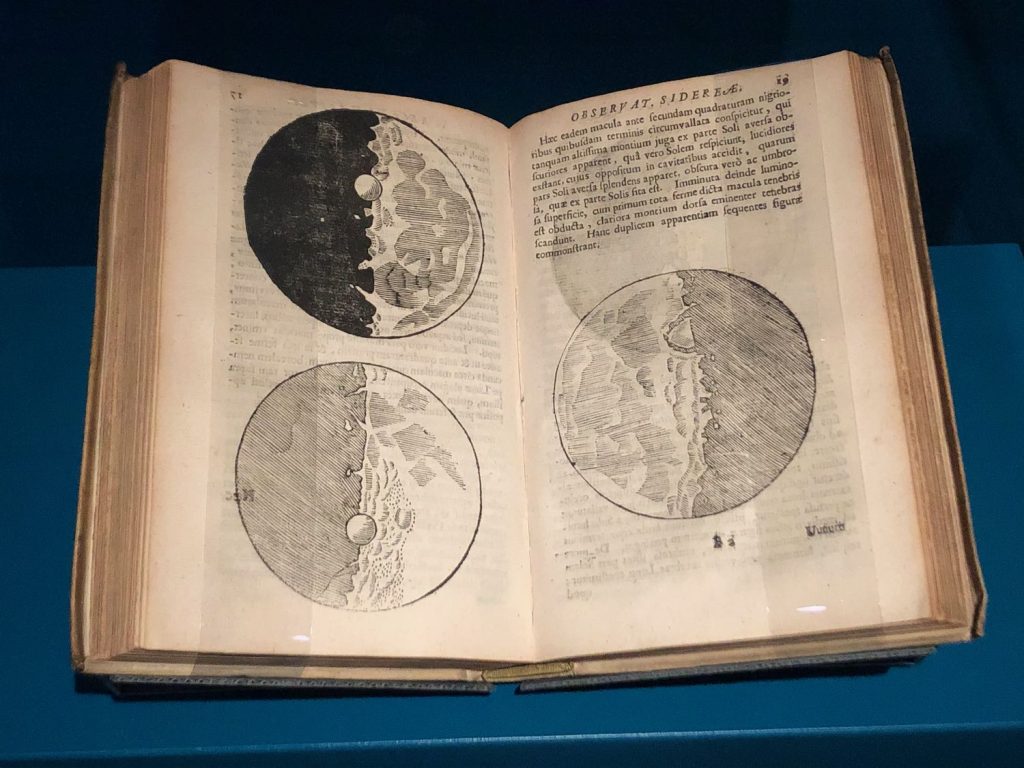
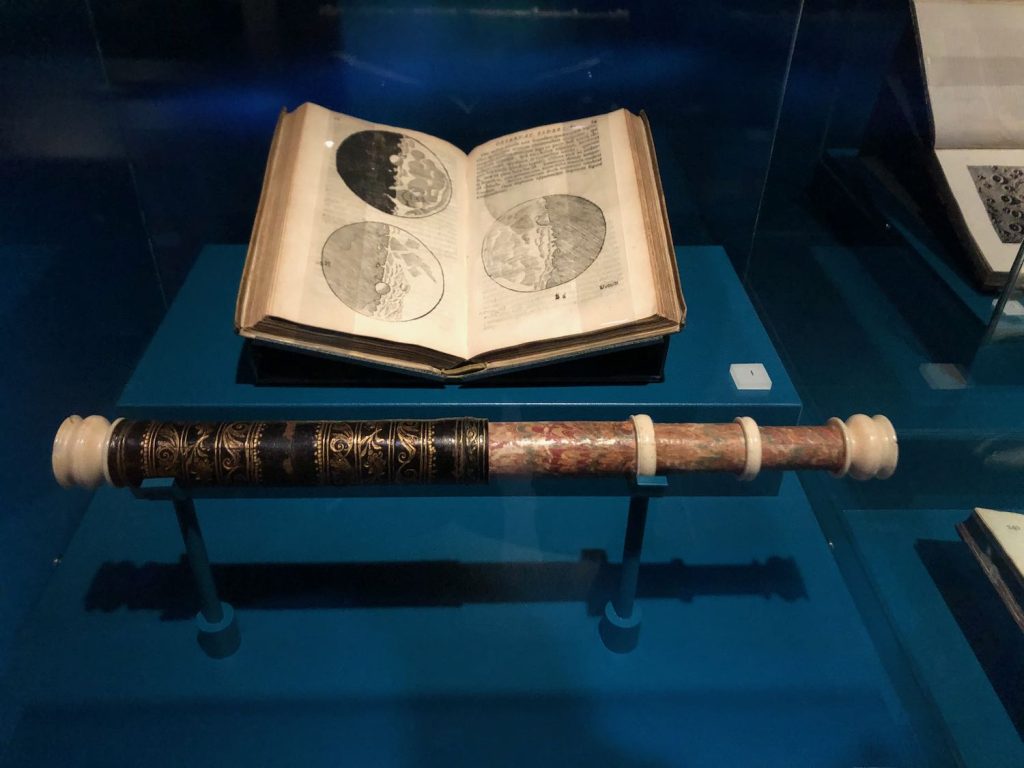
This is where Sienna and Vincent first met in the story. It is a beautifully situated museum on the edge of Leiden’s city centre. In addition to visiting the museum itself, you can also consult rare books by appointment. In 2019, the museum hosted an exhibition on Galileo, featuring telescopes on loan from the Peter Louwman Museum. The photograph also shows Sidereus Nuncius, the first book Galileo wrote quickly after the discoveries he made with his first telescope. It was published in 1610.
Middelburg – Holland / Netherlands
Abbey Garden, Middelburg
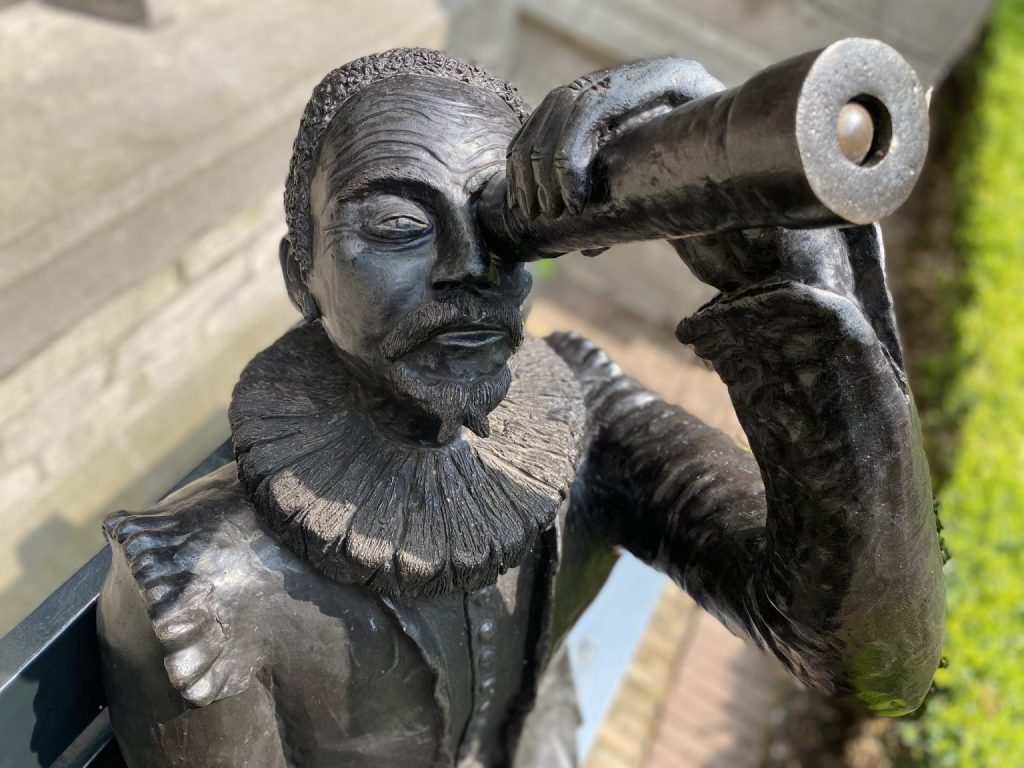
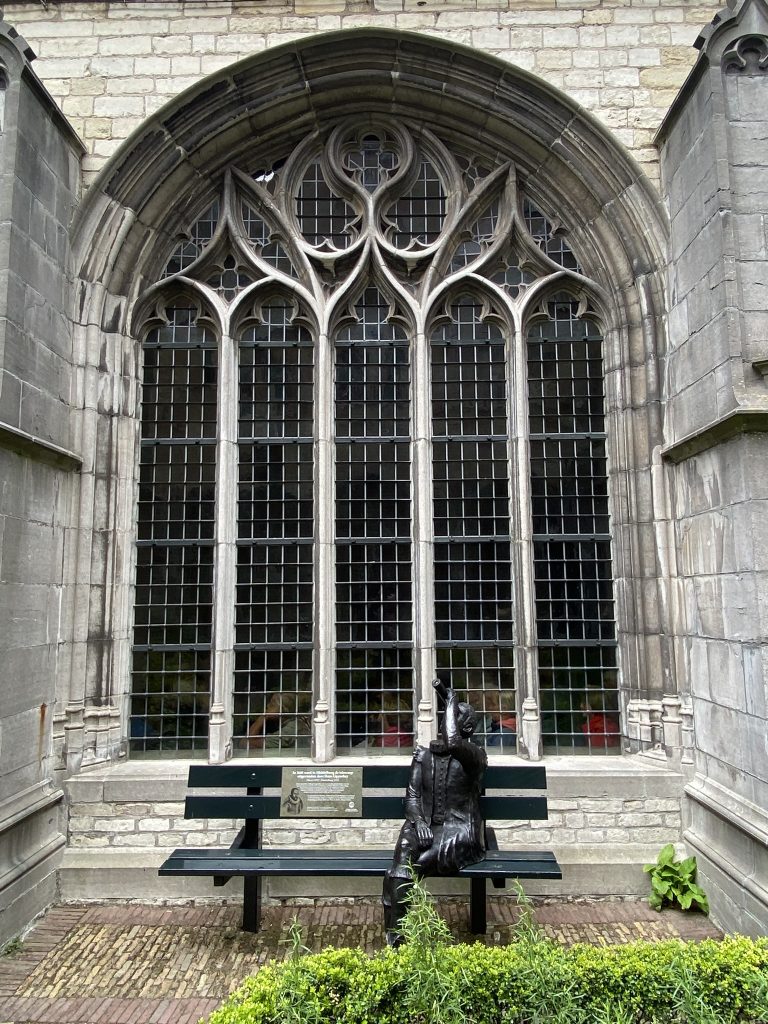
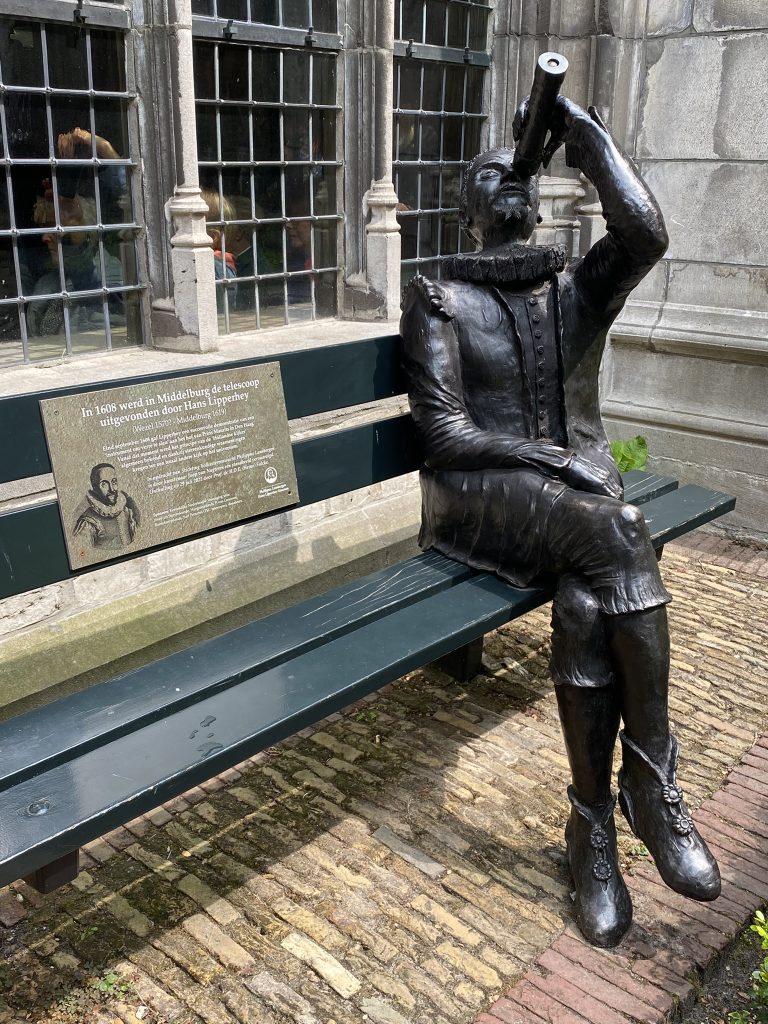
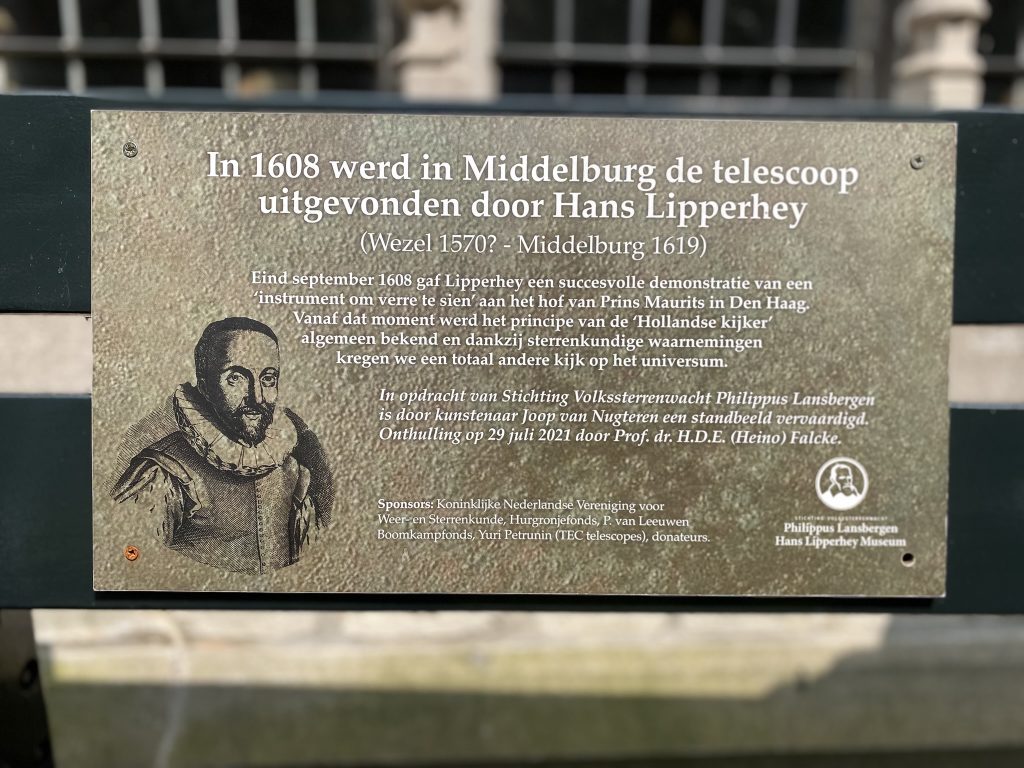
Hans Lipperhey was the man who invented the telescope in 1608, in Middelburg. There are no surviving places connected to him that can still be visited, but the city has honoured him in the abbey garden at the heart of the town, a place you can simply walk into during the day.
“In his workshop, smells mingled into a kind of ritual: resin and wood oil, tin and leather, damp cloths and the powdery scent of fine abrasive. On the workbench lay unground lenses, glass blanks still waiting for their purpose, half-ground pieces arranged in rows like little moons. He worked with discs and cloths, scattering fine abrasives in small circles and making polishing slurries that he patiently moved across the glass in steady, circular motions.” (Chapter V)
There is much more material available from the research the author gathered over three years: books, letters and locations. Send Bas an e-mail if you would like to explore Galileo in greater depth, and he will send you a link to more background on both the main character and the author.
Copyright on text and images
All images on this website were taken by Bas, unless stated otherwise (in three cases.) All photographs are protected by copyright. No part of this website / publication may be reproduced or made public in any form without the prior written permission of the publisher and the copyright holders.
© Griffioen Media. April 2026
Home – Book reviews – Order now – About the author – About Galileo – Story in pictures