
Bas Griffioen (1970, Netherlands) wrote The Third Anagram after research and on-site inspiration, with one clear aim: to bring greater recognition to the founder of modern science. Driven by his fascination with Galileo Galilei, his love of Italy and his interest in the way knowledge evolves across the centuries, he combines historical fact with literary suspense.
He visited the locations described in the novel and wrote this book in a distinctive voice in which history, imagination and truth converge. His debut novel is both a journey through time and an exploration of how different truths find one another.
Self-published
Bas published the book entirely independently through his company, Griffioen Media. “It is my story, and I have no desire to shop around to see whether someone might want to publish it. Publishers do not need to approve of it. I am doing this for myself, for interested readers, and to give Galileo Galilei the recognition he deserves. Of course, it is wonderful if the book truly resonates with readers. By investing in it myself, handling the promotion, and building this website, I remain in control. That matters too, especially if the book happens to take off.”
In addition to writing the novel, Bas also laid out all 240 pages himself, using a template provided by his designer. All the photographs in the bonus section on this website were taken by Bas as well. “I would not want it any other way. This is who I am.”
About the project
The novel is based on extensive historical research, inspired by the letters of Maria Celeste from the convent in Arcetri, Galileo’s Aula Magna in Padua, the invention of the telescope in Middelburg, and the illegal printing of his works by Elsevier in Leiden. The author worked in complete independence and in great peace. Although the storyline is entirely his own, he consciously used ChatGPT while writing as a tool for structure, style and enrichment, a modern form of collaboration between human and machine.
In an effort to experience something of what Maria Celeste, Galileo’s daughter, may have felt, the author also spent a week with the nuns of De Suore Oblate in Florence while working on his book. It is a beautiful, minimalist place to stay, just a stone’s throw from Florence Cathedral. Below is an impression of that unique place in Florence:
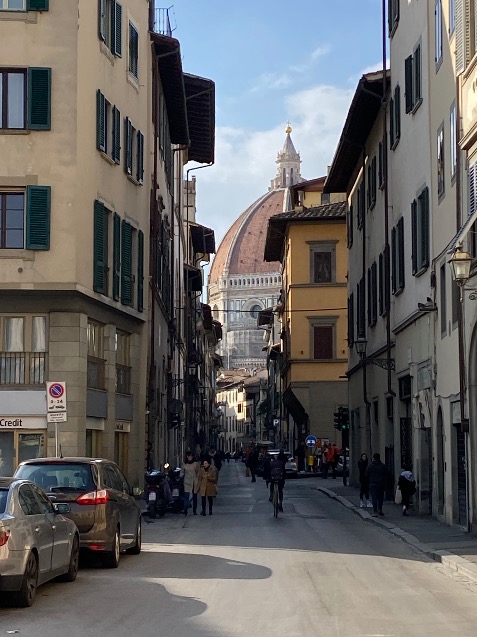
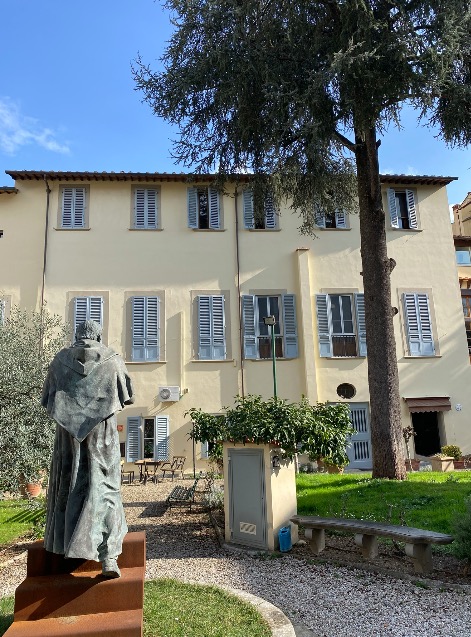
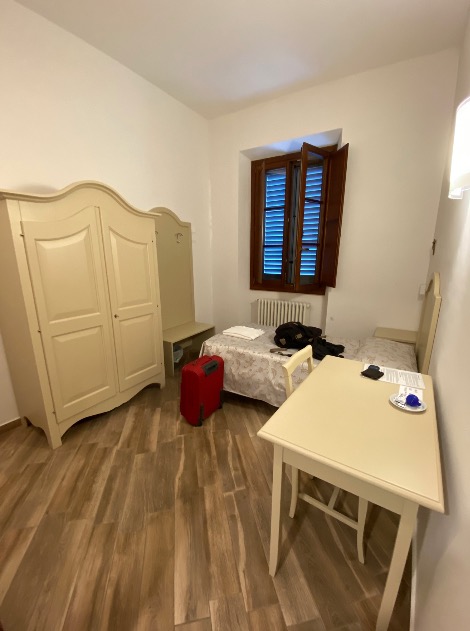
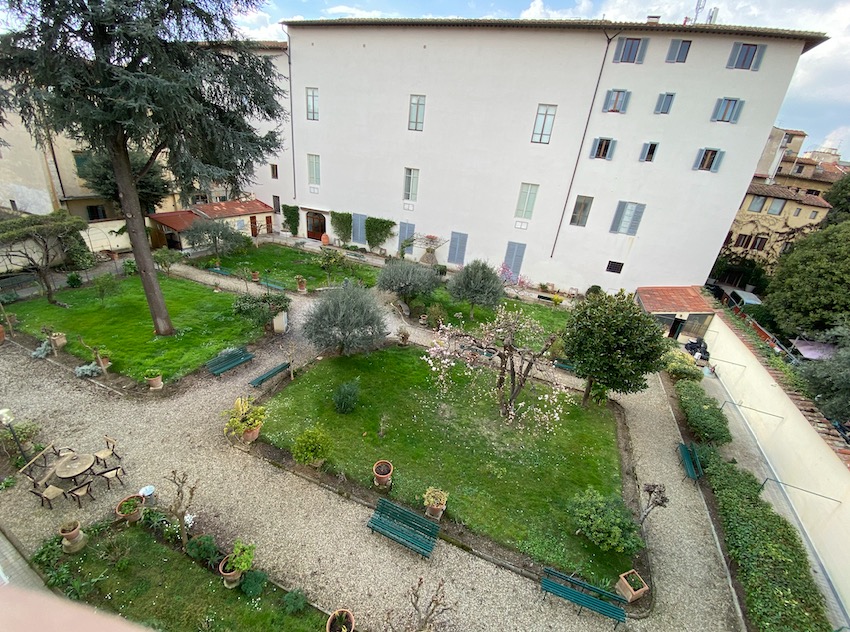
“I took those steps.
Past the convent of Maria Celeste, where the silence does not feel like emptiness, but presence.
Past the tomb in Santa Croce, where tourists take photographs without knowing that he was once denied burial there.
Past the telescopes in the Museo Galileo, where the glass still seems to carry the dust of his breath.
Past the façade of Viviani’s house, the lectern in Padua, the corner of the Mauritstoren in The Hague.”
(Epilogue)
Sources and acknowledgements
Nothing in this edition has been copied from other books. Bas read several books about Galileo and also carried out extensive research, both online and on location. He visited every place mentioned in the novel, as well as other cities where Galileo was active, such as Pisa, Siena and Rome. They do not feature in this book, but they were important in his life. Dava Sobel’s book comes highly recommended and inspired me to highlight the warmer, more human side of the man as well. The letters that appear in the novel are not real, but they were written in the style and with the emotional tone of the authentic letters by his daughter Maria Celeste that have survived.
A special thanks to
• Dominique, Senna en Finn, for their patience and inspiration.
• Special thanks to Roos, who edited the Dutch version.
• Harry, for designing the book so beautifully.
• Lex of the NIKI in Arcetri, who arranged access to the letters for me.
The Third Anagram is published by Griffioen Media. If you have a question or comment, please send us an e-mail.
Home – Book reviews – Order now – About the author – About Galileo – Story in pictures